Russia Under Suspicion: Secret Weapons Cache Discovered Near Berlin
Security authorities have discovered a hiding place containing two live weapons on the outskirts of Berlin, according to information obtained by WDR, NDR and the SZ. Authorities believe the cache was established by Russian agents for potential attacks.
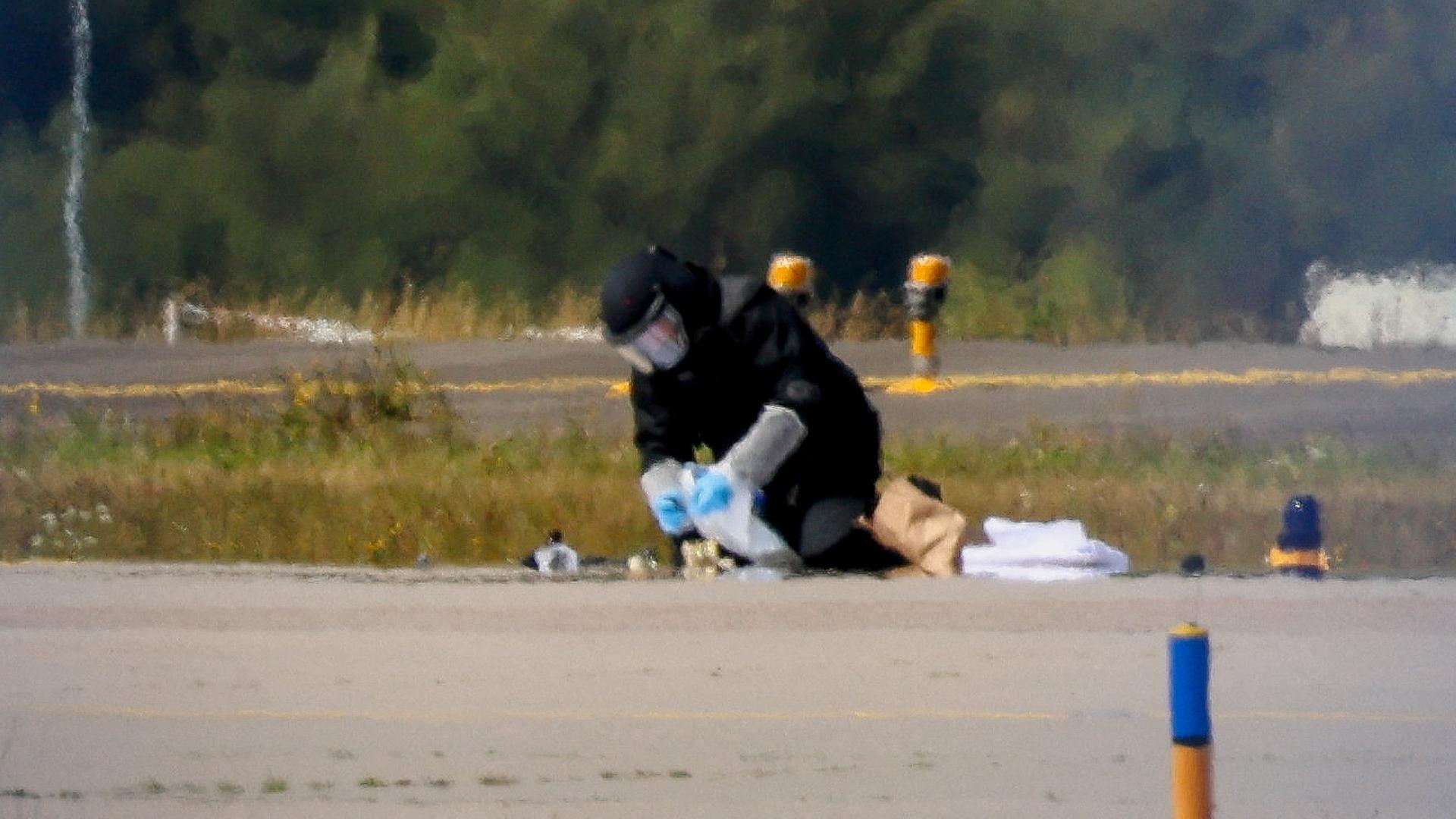
The scenes must have resembled something from a spy thriller when German officials made a explosive discovery in a wooded area on the state border between Brandenburg and Berlin in the late summer of last year. According to information obtained by WDR, NDR and the Süddeutsche Zeitung (SZ), they found a professionally concealed hiding place containing two live firearms in the green belt surrounding the capital.
The Federal Office for the Protection of the Constitution (BfV) is reported to have indications that the cache belongs to Russian intelligence services — a so-called dead drop with potentially lethal contents.
Those in the know are convinced that the weapons were likely stockpiled for agents tasked by Moscow to carry out so-called "kinetic operations" on German soil. The term refers to physical attacks such as assassinations.
Russian Embassy Remains Silent
Security authorities have been warning for months that Russian intelligence services are planning attacks within Germany as well, targeting, for example, arms industry managers or opposition figures living in exile. When contacted, the Federal Office for the Protection of the Constitution stated that it does not, as a matter of principle, publicly comment on matters involving any specific intelligence findings or activities. This statement does not constitute a confirmation or denial of whether the reported facts are accurate.
The Russian Embassy has so far left a request for comment on the allegations unanswered. In the past, the embassy has dismissed similar allegations as conspiracy theories, denying that Moscow is conducting any "hybrid attacks" against Germany.
Concrete Tips Led to the Site
In connection with the weapons find, a suspect was already arrested in Romania last autumn, according to information from WDR, NDR and SZ. According to German security authorities, the man may have been responsible for establishing the underground cache. The Federal Public Prosecutor has also been investigating the case since November. The charge: preparing a serious act of violence endangering the state.
According to the research, the Office for the Protection of the Constitution received specific information about the location last year. An on-site inspection is said to have confirmed the tip. According to security circles, two "handguns" — short-barreled weapons such as pistols or revolvers — were found in the cache. The constitutional protection officers alerted the police.
Cache Now Considered "Dead"
In order to identify any masterminds or individuals who might come to collect the weapons, security authorities reportedly left the hiding place intact after inspecting it. The site was placed under technical surveillance, sources say.
However, insiders now say the cache is considered "dead": it has become increasingly likely that those responsible became aware of the conspicuous police activity around the storage site last year. Experts also believe that Russian intelligence services almost certainly did not fail to notice the arrest of the man in Romania who is suspected of having been involved in establishing the cache.
To ensure that the weapons in the secret cache posed no danger, experts had manipulated them so they would no longer function, officials familiar with the matter reported. They had also been fitted with a GPS tracker to keep track of their location.
Methods from the Cold War
Secret weapons caches in Western Europe were already part of the Soviet Union's standard repertoire during the Cold War. Such camouflaged hiding places, often located in natural settings or at distinctive landscape points, have also been used repeatedly in recent years by Russian intelligence services — for example, in exchanges with so-called illegals, meaning Russian spies living in the West under false identities.
The role that weapons caches played even in the Soviet era became known, for example, through information provided by former KGB officer and later defector Vasili Mitrokhin. According to this information, Moscow made extensive preparations to operate in West Germany as well in the event of a crisis with NATO. Military installations, arms production sites, and critical infrastructure were already considered priority targets by Moscow at that time.
The items deposited back then reportedly included not only weapons and communications equipment, but also packages of explosives intended to attack railway infrastructure in the event of conflict, for example. In Switzerland, a former Soviet cache was discovered as recently as the 1990s based on the defector's tips.
A Explosive Find in Rhineland-Palatinate
In light of Russia's actions in recent years, Western security authorities see a continuation of methods and actions from the Soviet era, during which Russian President Vladimir Putin was trained in the KGB. Intelligence that had initially been considered less significant after the end of the Cold War was subjected to a fresh assessment: retired officials were consulted once more. And information such as that from Mitrokhin is no longer dismissed as outdated.
An explosive find in Rhineland-Palatinate two years ago attracted the attention of security authorities: during construction work near Bellheim, explosives and hand grenades were accidentally discovered. They had apparently been professionally packaged and concealed — near a NATO pipeline used to supply the alliance's armed forces with fuel.