France and Spain: First Successes in the Fight Against Wildfires
In France and Spain, thousands of emergency personnel are battling devastating wildfires. They are celebrating initial successes. However, the high temperatures are hampering firefighting efforts. And another heatwave is looming.
In the face of rising temperatures, French firefighters are using all available means to bring the wildfires raging along the Atlantic coast under control. While the larger of the two fires near Bordeaux flared up again in places, forcing the evacuation of thousands of additional tourists, firefighters brought the smaller blaze southwest of Bordeaux under control on Monday evening. There, 15,000 evacuees were able to return to their homes.
Due to the threatening wildfire situation near the seaside resort of Lacanau, the prefecture ordered the evacuation of campsites and holiday settlements there on Monday morning. Around 4,000 people are affected. The town of Lacanau itself and its residents were not initially subject to the evacuation order. As authorities emphasized, this is a precautionary evacuation. With another heatwave, a rise in temperatures and a drop in humidity are expected.
Macron: "We Will Win This Battle"
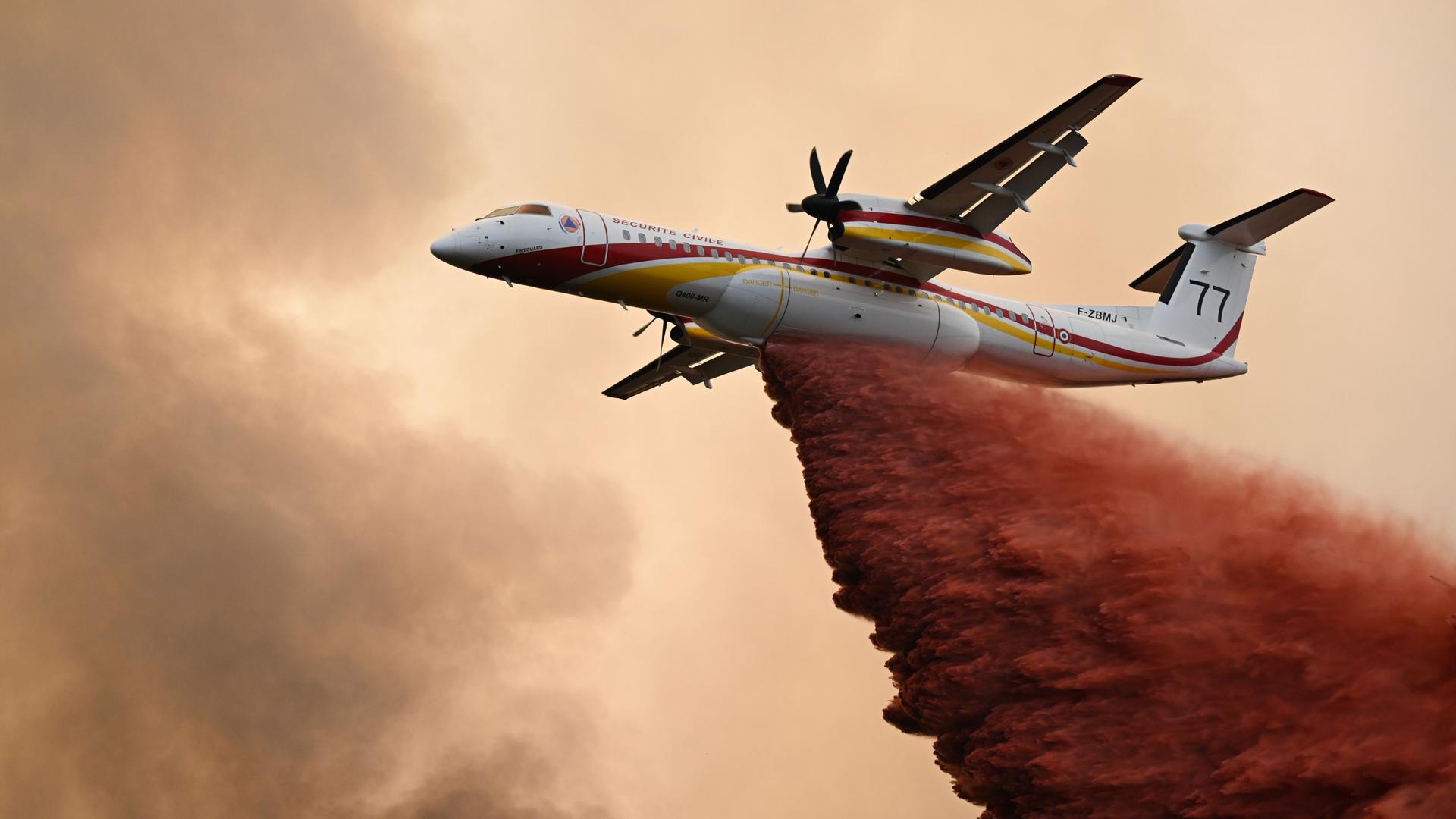
Deployed in the effort are 2,750 firefighters from across France and some from other European countries, 18 firefighting aircraft, 1,500 soldiers and 1,440 police officers. On Monday, two transport helicopters and an A400M transport aircraft carrying equipment arrived from Germany in the crisis region. In addition, two firefighting aircraft are to fly from Saxony-Anhalt to support efforts in the Bordeaux region.
"We will win this battle," declared French President Emmanuel Macron. He had previously described the situation as the country's worst wildfire crisis since World War II.
Since Wednesday, more than 220,000 people have been brought to safety in the Atlantic coast holiday region, which is also popular with Germans, including many tourists. The fire had advanced to within 15 kilometres of the city of Bordeaux and destroyed around 42,000 hectares of forest and scrubland. That is 420 square kilometres, an area larger than the city of Cologne.
Successes in Firefighting Efforts in Spain as Well
Emergency personnel in Spain are also reporting successes in combating several devastating wildfires. Prime Minister Pedro Sánchez expressed cautious optimism. "We are gradually seeing the light at the end of the tunnel in the fight against these fires," he said following a meeting of the crisis committee. The government would deploy all available resources "until the last flame."
The socialist politician also renewed his call for a cross-party climate pact. The denial of human-caused climate change was "the worst fuel of all."
Firefighting efforts in Spain are also becoming a race against time, as the weather service AEMET has announced the start of the summer's fourth heatwave for Wednesday. This is expected to last at least until Sunday. Temperatures of up to 42 degrees Celsius and falling humidity could significantly hamper firefighting operations.
Largest Fire Since Records Began
The wildfires are primarily affecting the province of Ávila west of Madrid, as well as the neighbouring regions of Madrid and Toledo. Since the weekend, however, the spread of the fires has slowed considerably. Around 90,000 people in the area surrounding the Spanish capital have been affected by evacuations or movement restrictions.
A total of eight major wildfires are raging in Spain. In Ávila alone, according to preliminary official estimates, an area of nearly 50,000 hectares has been destroyed. This corresponds to around 500 square kilometres – almost the size of Lake Constance. This fire is thus the largest in Spain's recent history, that is, since records began in 1968.
Nature is also burning in neighbouring Portugal – the fires there have so far been significantly smaller than those in Spain or France. In Portugal, more than 1,000 emergency personnel are involved in firefighting efforts, according to authorities.