Federal Statistical Office: Inflation Rises to 2.8 Percent in July
According to preliminary figures, inflation in Germany rose sharply in July. Economists attribute this primarily to the expiration of the fuel tax discount and the consequences of the ongoing Iran war.
Following the expiration of the fuel tax discount, the cost of living in Germany has risen sharply. In July, consumer prices were 2.8 percent above the level of the same month last year, the Federal Statistical Office announced based on preliminary figures.
In May and June, the reduction of the energy tax on petrol and diesel by nearly 17 cents per litre had dampened price pressures. The inflation rate fell to as low as 2.3 percent in June. As recently as April, the oil price shock resulting from the Iran war had driven the inflation rate to 2.9 percent, its highest level since January 2024.
"The Rise Is No Surprise"
The fuel tax discount expired at the end of June. At the same time, the still-unresolved Iran war continues to weigh on energy markets: at one point, the oil price climbed back above the 100 US dollar per barrel (159 litres) mark, before retreating again. Because many producers gradually pass higher energy costs on to their prices, food, for example, could become even more expensive in the coming months.
"The rise in inflation to 2.8 percent in July is no surprise, but rather attributable to the end of the fuel tax discount and the rise in crude oil prices following the rekindling of the Iran war," said inflation expert Silke Tober from the Institute for Macroeconomics and Business Cycle Research (IMK) at the Hans Böckler Foundation.
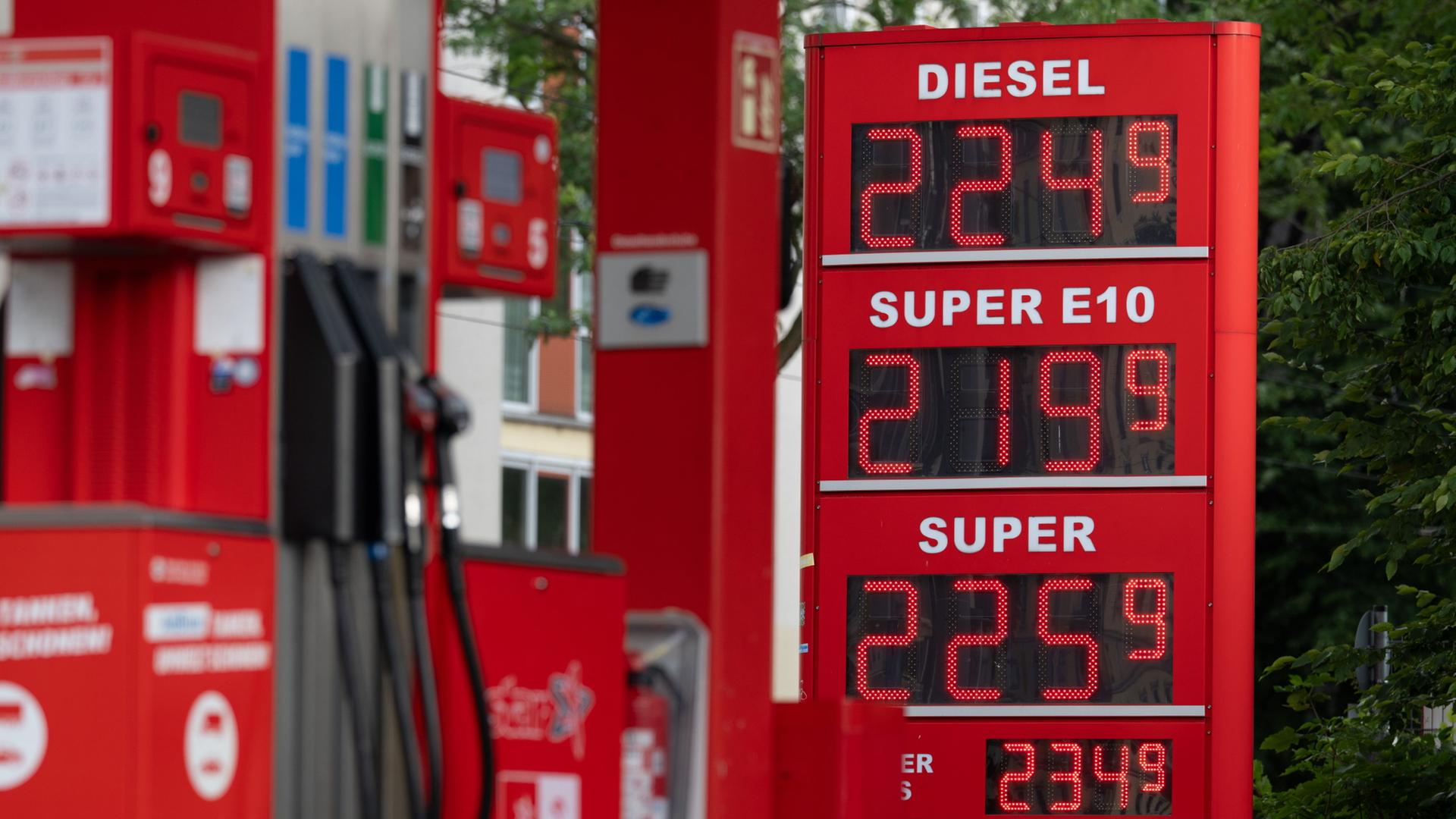
In July, energy prices in Germany were 8.3 percent above the level of the same month last year, according to calculations by the Wiesbaden-based statisticians. In June, the figure had been 3.4 percent. Prices above two euros per litre of fuel have once again become the norm at petrol stations. Higher wholesale prices for gas typically reach private households with a delay.
Food Inflation Rate Remains Unchanged
For food, people in Germany paid 0.4 percent more in July than in the same month last year, the same as in the two preceding months. Services, which include restaurant visits and travel, became 2.9 percent more expensive in July; in May and June the figure had been 3.1 percent.
Overall, consumer prices rose by 0.8 percent from June to July of the current year, based on the preliminary data from the Federal Statistical Office. According to economists, inflation in Germany will not fall sustainably until the war-driven rise in energy prices drops out of the year-on-year comparison after the turn of the year.
Inflation Could Rise Further
In the coming months, price increases could continue to climb. "Uncertainty remains high, and the effects of the energy shock on inflation have not yet fully materialised," European Central Bank (ECB) President Christine Lagarde said recently.
According to the Bundesbank's latest assessment, the harmonised index of consumer prices (HICP), used for European comparisons, is likely to rise above the three percent mark in Germany in the coming months. In July it stood at 2.8 percent.