Rain brings relief to the Rhine
Ferries running again – inland vessels still facing problems
The heatwave has taken a considerable toll on Germany's rivers. On the Rhine, ferry services are at least resuming. However, it could be weeks before the situation normalises for large inland vessels.
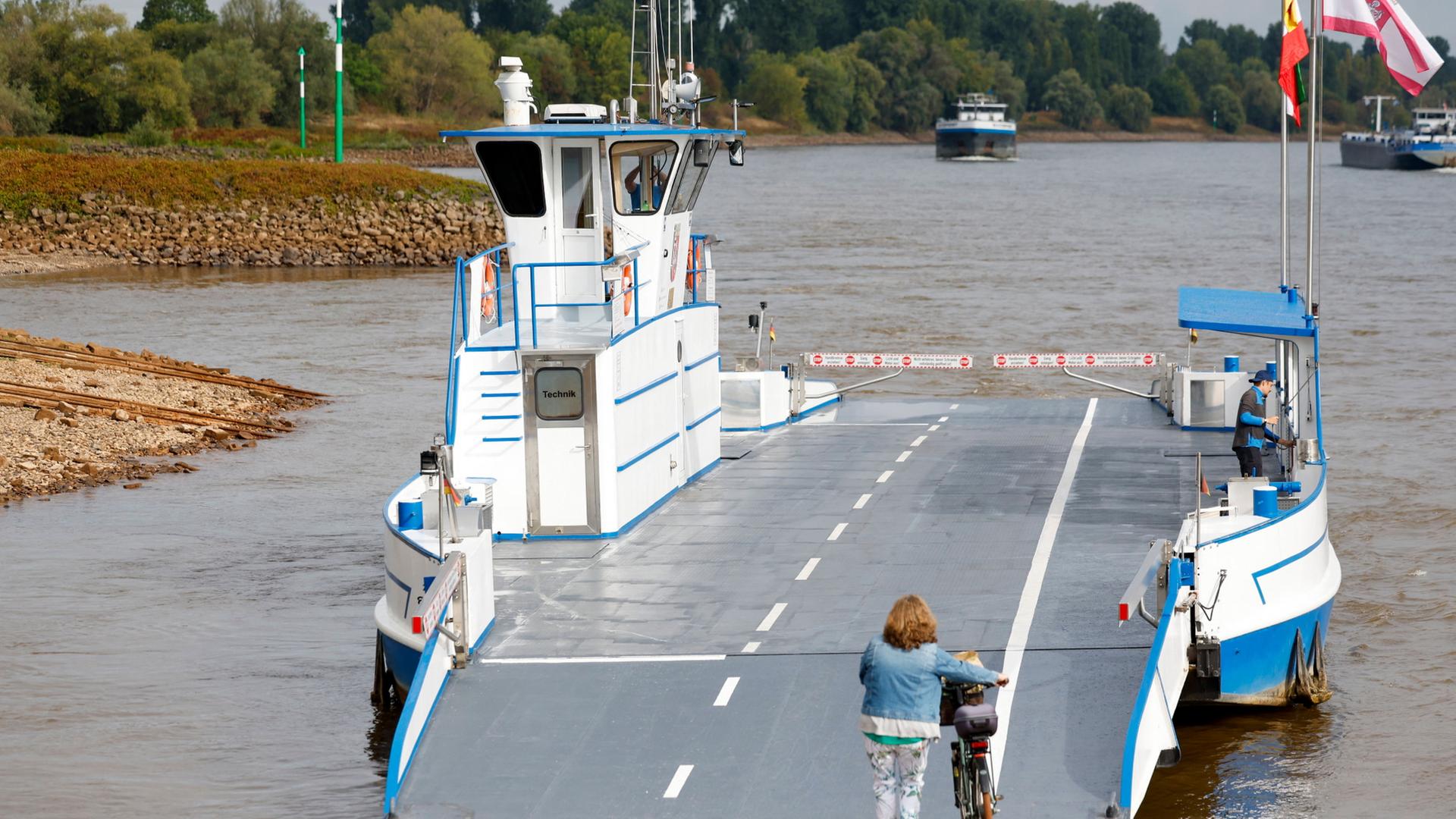
Heavy rainfall, particularly in southern Germany, has brought somewhat more water back to the Rhine after its historically low levels. Following weeks of enforced suspension, several ferries resumed service – among others in Cologne, Düsseldorf and Bad Honnef in North Rhine-Westphalia, as well as near Kaub in Rhineland-Palatinate.
"We were on the verge of applying for short-time work compensation," said Jens Jansen, operator of the Rhine ferry between Düsseldorf and Zons. The financial damage has been considerable in some cases. The city of Leverkusen, for example, estimates losses of around 30,000 euros due to the suspension of its passenger ferry service to Cologne. Because water levels in many places remain quite low, many ferries are still unable to carry motorhomes or vans.
Relief not expected until "end of September, early October"
Low water levels have been hampering inland shipping on the Rhine for weeks – and continue to do so. A large proportion of freight traffic has had to be shifted from Europe's most important inland waterway to lorries and trains, driving up transport costs. Counter-measures have been taken to avoid disruptions to the flow of traffic, with numerous federal states relaxing Sunday and public holiday driving bans for certain lorries.
According to the operating company of Duisburg, Germany's largest inland port, cargo vessels are currently carrying only around 20 percent of their usual load due to the low water levels. While a slight recovery is anticipated, said Joachim Holstein, the port group's authorised representative for inland shipping, on Friday, a genuine easing of the situation is not expected until "towards the end of September, early October." This depends primarily on the amount of rainfall in the Rhine's catchment area.
Kaub gauge back at 46 centimetres
Water levels on the Rhine had in some places fallen to values never previously recorded. Near Kaub, for instance, they dropped to levels at which most vessels could no longer navigate the river. There, the gauge reading in mid-August stood at just six centimetres. Kaub is considered a critical point on the Rhine.
On Sunday, the reading had recovered to 46 centimetres, according to gauge data from the Federal Waterways and Shipping Administration. However, this is still well below the so-called equivalent water level of 77 centimetres, which experts use as a reference value for shipping. Gauge readings do not directly indicate the depth of water in the river, as the navigation channels lie deeper.