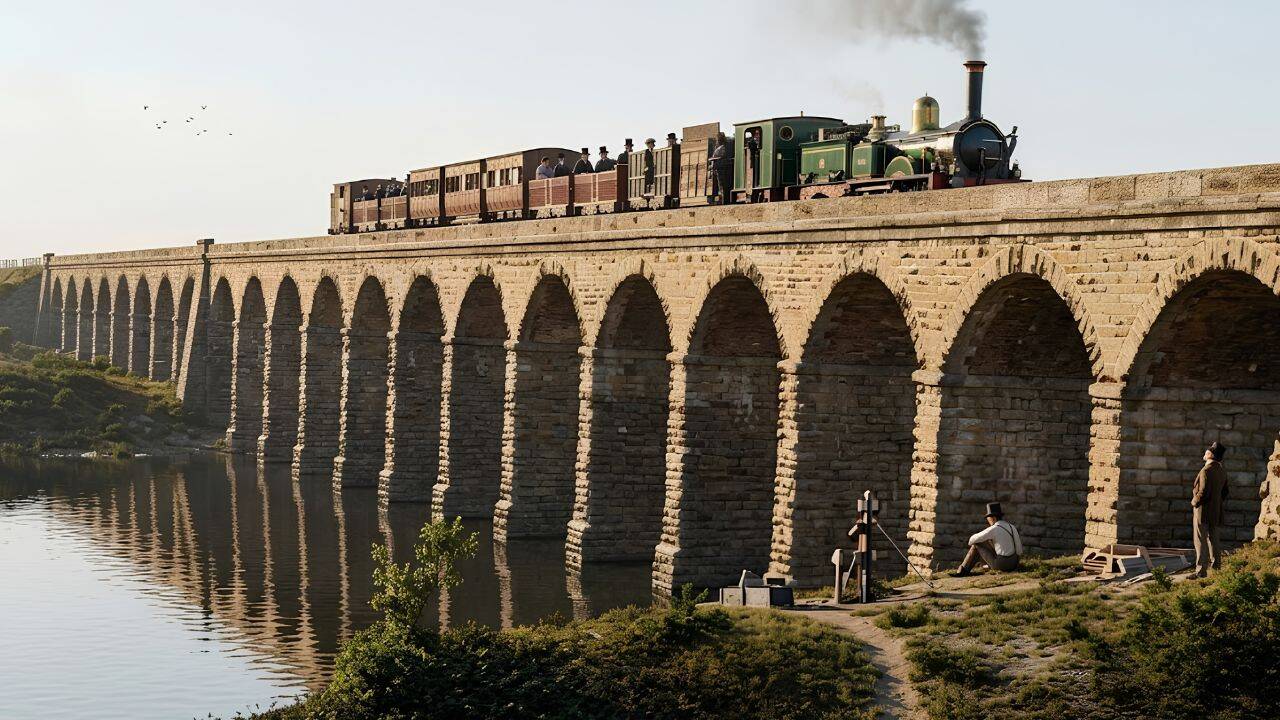
Long before Mumbai's suburban trains became the lifeline of millions, the city's
railway journey began with a 34-km steam-powered ride to Thane. On April 16, 1853, India's first commercial passenger train left Bori Bunder in Bombay, marking the beginning of a railway network that would eventually connect cities, towns and villages across the country. The train, operated by the Great Indian Peninsula Railway (GIPR), carried around 400 passengers in 14 carriages. It travelled from Bori Bunder, near present-day Chhatrapati Shivaji Maharaj Terminus, to Thane. The journey covered about 21 miles, or 34 km.
A grand beginning in Bombay
The launch was treated as a major public event. April 16 was declared a public holiday in Bombay, allowing people to witness the arrival of a new form of transport. Large crowds gathered around Bori Bunder to see the train depart. At the inauguration, a 21-gun salute accompanied the departure, adding a ceremonial touch to what would become one of the most consequential developments in India's transport history. The train was made up of 14 passenger coaches and was initially documented as being hauled by three steam locomotives named Sahib, Sindh and Sultan. Contemporary and historical accounts put the journey time at around 1 hour and 15 minutes.
For people watching from the sides of the railway line, the sight was unlike anything they had seen before. The steam locomotive, coaches and crowds marked the arrival of a technology that would eventually transform how people travelled across the subcontinent.
From Bori Bunder to Thane
The railway line between Bombay and Thane was only a modest beginning. The 34-km route connected the growing port city with Thane and demonstrated how rail transport could make movement of people and goods faster and more organised. The Great Indian Peninsula Railway would go on to expand its network beyond this first stretch. The railway system eventually became an important part of Bombay's growth, connecting the city to industrial areas and towns across the region. The route also laid the foundation for the railway system that would become central to Mumbai's identity. What began with a few hundred passengers on a short steam journey would eventually evolve into one of the world's busiest suburban railway systems.
The beginning of Mumbai's railway legacy
The 1853 journey is now regarded as the formal beginning of passenger rail services in India. Indian Railways' own historical material records April 16, 1853, as the date when the first passenger train travelled from Bombay to Thane with 14 coaches and around 400 passengers. There is, however, an important distinction in the history. The 1853 journey was not the first time a train had operated anywhere in India.
Earlier railway experiments and trains had been used for purposes such as transporting construction material. What made the Bombay-Thane journey significant was that it marked the beginning of commercial passenger railway service in the country. More than 170 years later, Mumbai's railway network bears little resemblance to the railway that left Bori Bunder in 1853. Yet the city's daily railway story still traces its roots to that 34-km journey. From a steam train carrying around 400 passengers to today's packed suburban services carrying millions, Mumbai's relationship with its railways has grown alongside the city itself.