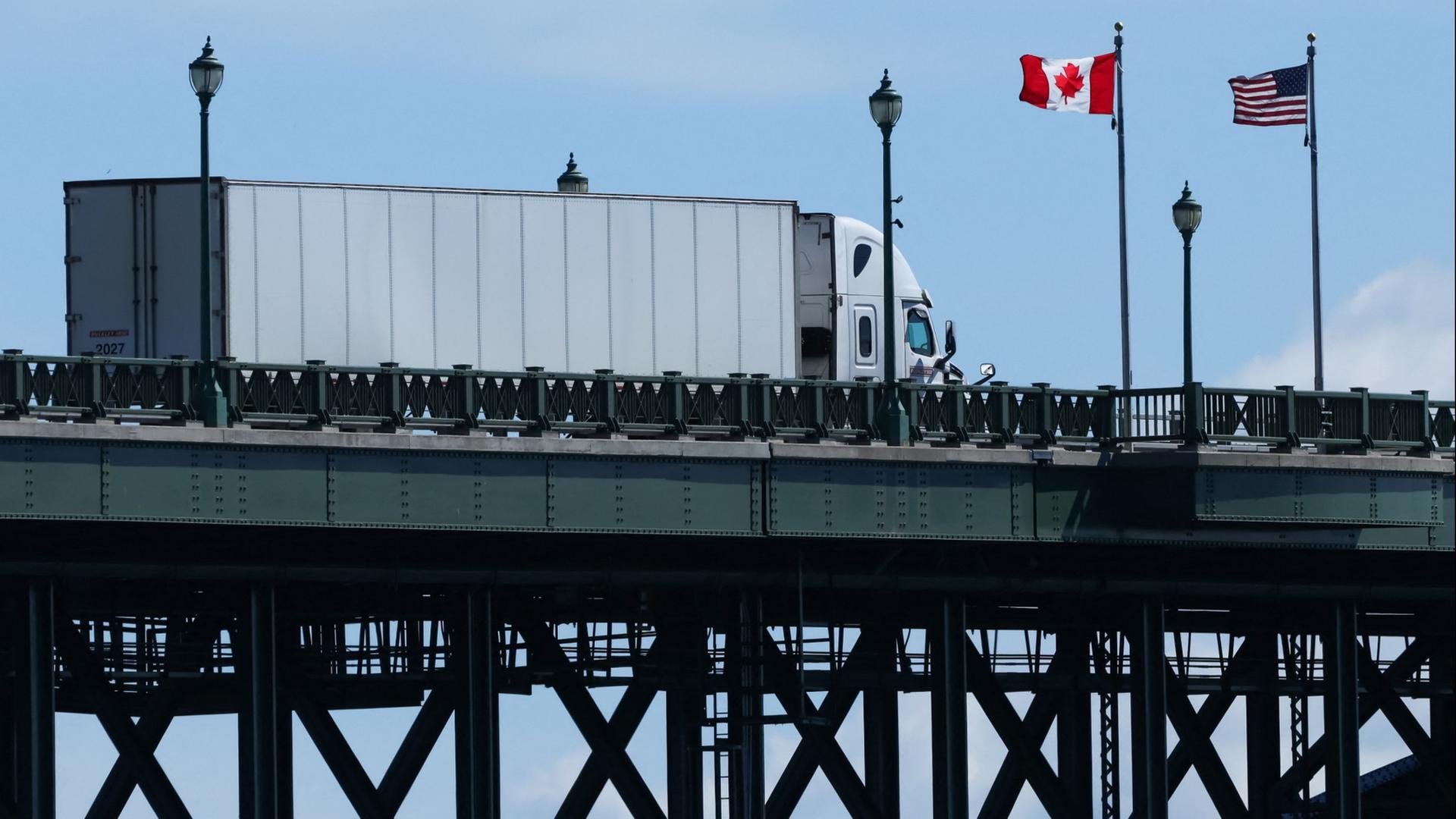
Next Stage in Trade Dispute: USA Doubles Tariffs on Canadian Cars
The tariff dispute between the USA and Canada flared up again over the weekend. Now US President Trump is escalating further, announcing significantly higher duties on cars and auto parts from the neighboring country.
US President Donald Trump is escalating the deadlocked trade conflict between the USA and Canada. On January 1, 2027, he intends to raise tariffs on cars, large and small trucks, auto parts, and steel to 50 percent, as he announced on his Truth Social platform. As in the past, companies could avoid the duties by producing in the United States, he added.
Currently, according to Canadian figures, the USA imposes tariffs of 25 percent on imported cars, trucks, and related parts under Section 232 of the Trade Expansion Act of 1962. In addition, import duties of between 10 and 50 percent are levied on steel, aluminum, and copper. Trump again justified his threat by claiming that Canada has been "exploiting" the United States for years, and continued to assert that his country does not depend on trade with its neighbor. Five major companies manufacture cars in Canada: Honda, Toyota, Ford, General Motors, and Stellantis.
Negotiations Collapsed on Saturday
The trade dispute between the USA and Canada escalated over the weekend following the breakdown of negotiations. In the early hours of Saturday, US tariffs of 50 percent came into effect on, among other things, alcoholic beverages, dairy products, hockey sticks, and plywood from Canada.
In response, Canadian Prime Minister Mark Carney promptly announced retaliatory tariffs. Starting September 8, these will particularly affect the US steel and dairy industries, as well as the paper sector, agricultural machinery, and electronics.
The economies of the USA and Canada are closely intertwined. Around 70 percent of all Canadian exports go to the United States. Under Trump, however, relations have deteriorated dramatically. This has been further fueled by the US president's repeated statements that the neighboring country should become part of the United States.