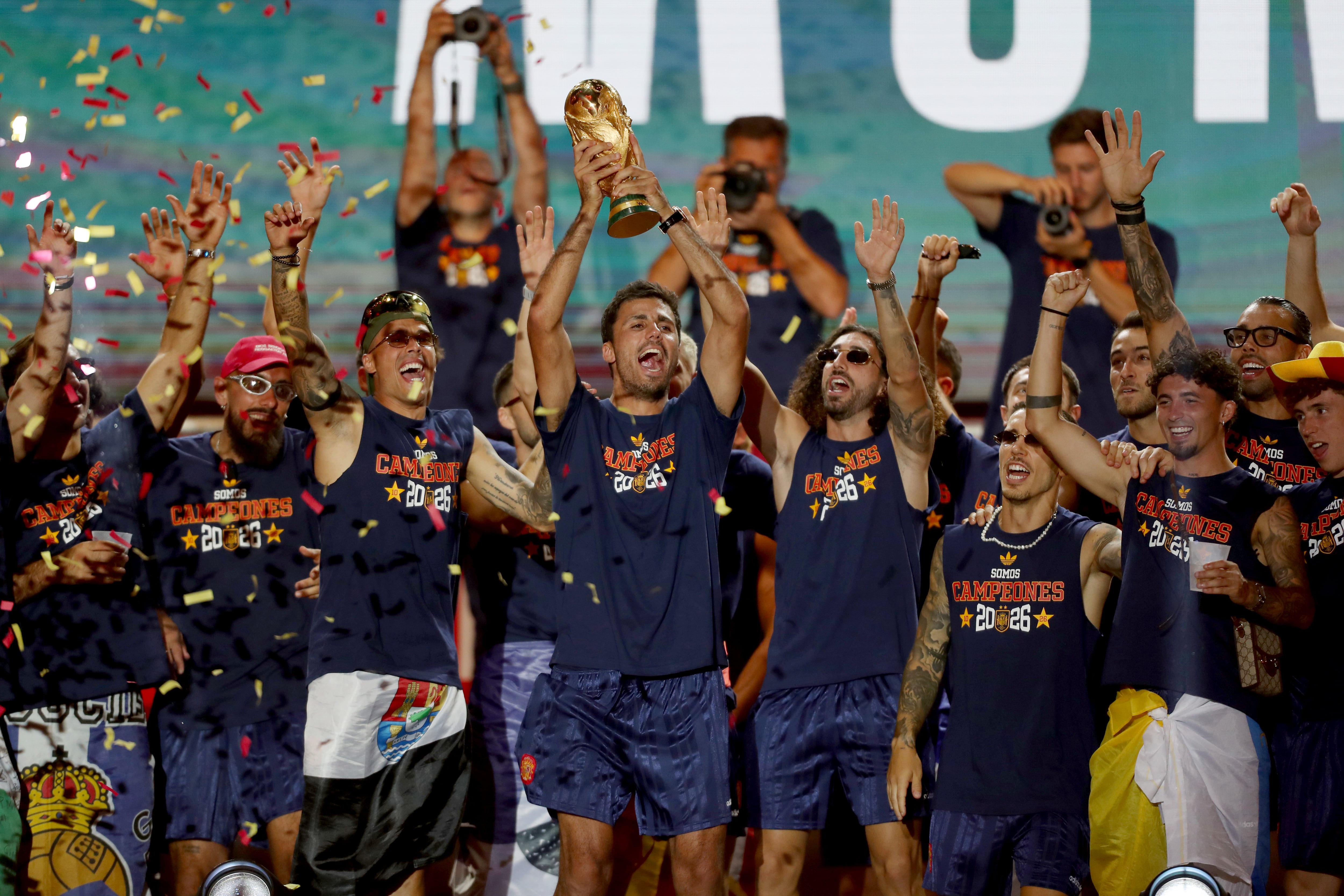
Spain has proclaimed itself world football champion, and this has an undeniable impact on our international image, both for what it is and above all for how it happened. The championship has also served to demonstrate the enormous soft power capital accumulated by Spain. Our country became the second team for many supporters whose own national teams did not compete or were eliminated from the tournament. Our country brand is on the rise, but not because of the World Cup. Or not only because of it.
Winning the World Cup is a milestone, a spectacular impact, but in Spain it seems we only concern ourselves with our international reputation when we analyse the impact of a particular milestone which, however magnificent it may be, remains a one-off event or tied to a very specific dimension. But reputation is a very serious matter. It is so for companies and it is so for individuals, but it is also so for countries. We must concern ourselves with it and attend to it, because it has a direct economic impact, as it influences our capacity to attract investment, tourism and talent, and also the competitiveness of our companies when they venture abroad through what is known as the made-in effect or country-of-origin effect.
Reputation is the emotional perception that stakeholders hold of a country, generated from experiences, narratives and expectations. It translates into attitudes and behaviours and, when positive, generates feelings of admiration, respect and trust. Before analysing what Spain's international reputation actually is, I would like to highlight four ideas that contradict certain commonly held beliefs: 1. Reputation is built over the long term, and therefore the impact of one-off events is relative if they have no continuity over time, and depends on the reputational capital we have been generating; 2. Reputation is multidimensional — you can have a good reputation in one dimension and a weaker one in another; 3. Reputation varies according to audiences and also according to the countries or geographical areas in which it is being assessed; 4. A country's reputation concerns us all — we all have, to a greater or lesser degree, the capacity to contribute to or erode that reputation.
So what is Spain's international reputation? The short answer is that it ranges from positive to very positive, and this represents a competitive strength for our country. According to the RepCore Nations 2026 study, recently presented and based on public opinion surveys across 36 countries, Spain ranks among the countries with the best reputations in the world — specifically in 12th place in a ranking that incorporates the 60 largest economies in the world, led by countries such as Japan, Canada, Switzerland, Australia and Denmark, and in which our country sits ahead of the United Kingdom, Germany and France, and well ahead of the United States.
Its main strengths are concentrated in lifestyle, leisure, culture and gastronomy, safety, respect for human rights, social welfare and cultural heritage. From here, the nuances emerge. Spain's reputation is excellent in countries such as Germany and Poland, and good in countries such as Canada, Australia, Morocco and most European nations. However, in countries such as the United States or most Latin American countries, Spain's reputation is moderate, and it is weak in countries such as China, largely due to a lack of familiarity.
Spain ranks above average in almost all the variables analyzed, but scores lower on attributes such as being a "technologically advanced" country, "quality of the education system" or "quality of products and services," especially when compared to G-7 countries. In other words, the made-in or country-of-origin effect is relatively weak in Spain's case when compared to its overall reputation.
Room for improvement
Starting from a generally positive diagnosis, the task at hand is to understand where we have room for improvement and areas of opportunity. I would highlight three key areas of opportunity: 1. The quality of Spanish products and services is excellent, and Spain has benchmark companies and brands that are even world leaders in their respective sectors. If that economic and business dimension is not currently one of Spain's reputational strengths, it is mainly due to a lack of awareness of our reality, even among the Spanish public itself. We can and should develop a communication strategy based on surprise and positive discovery, on making that reality known, while at the same time raising the competitive positioning of our products and brands.
2. The main drivers of a country's reputation are linked to direct experience — that is, whether one has visited or lived in that country, whether one has friends, acquaintances or colleagues from that country, whether one has done business with companies from that country, or whether one has purchased products from that country. Direct experience provides greater credibility than any other point of contact (far more than news published about that country, promotional campaigns or, indeed, what artificial intelligence might say). This represents an enormous opportunity for Spain, as our country receives millions of tourists — both leisure and business travelers — is able to attract talent (students as well as professionals), thousands of Spanish companies are now operating internationally, and more than three million Spaniards reside abroad. We have countless opportunities to generate impact through direct experience. Whether that impact is positive depends on each one of us and on our understanding that this is a matter of pure self-interest.
3. Sporting and cultural successes, or the hosting of major events in Spain, generate soft power and, if properly leveraged, produce a ripple and multiplier effect on economic dimensions, particularly for the sectors most closely associated with lifestyle.