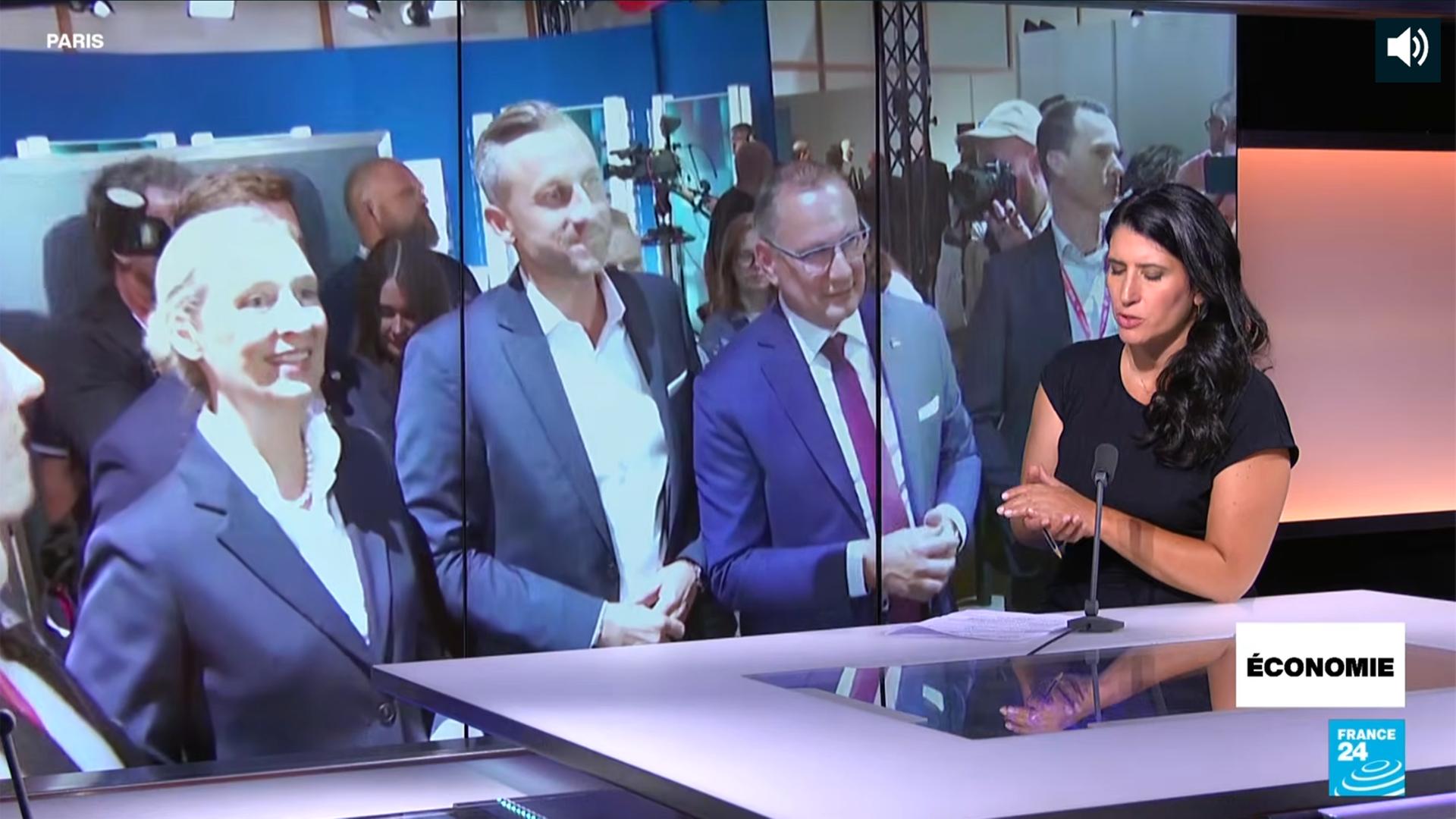
Reactions to German State Elections Concern France
"Very alarming" and "a grave moment for Europe": many in France fear the consequences of the AfD's strong gains in the state elections. Only the right wing in the country is conspicuously restrained.
"Mecklembourg-Poméranie-Occidentale": for the French radio presenter, the name is a challenge. But two weeks ago he already had to get used to "La Saxe-Anhalt". Two German federal states that hardly anyone in France would normally know anything about. And yet they are now making the top news.
Normally, interest in Germany is rather subdued in French radio and television. Now it is different: the newspaper Le Monde sees "a historic defeat" for Chancellor Friedrich Merz and his party following the CDU's elimination from the Mecklenburg-Vorpommern state parliament.
"Germany in shock" is the headline in the conservative Figaro after the election in Saxsen-Anhalt. Interest in Germany in the French media is currently greater than a France correspondent has probably rarely experienced before. The AfD's march of triumph is putting Germany in French headlines everywhere.
"A grave moment for all of Europe"
Some representatives of French politics are also showing signs of being "in shock". The government camp is concerned about the political stability of its most important partner, even though France itself is hardly a shining example in this regard.
If a German federal state were to fall into the hands of parties like the AfD, that would be "very alarming," French Finance Minister Roland Lescure concludes in reaction to the election in Saxony-Anhalt. His cabinet colleague, European Affairs Minister Benjamin Haddad, even fears "a grave moment for all of Europe."
Others see their scepticism toward Germany confirmed: for Jean-Luc Mélenchon, the presidential candidate of the far-left party LFI, the far right is back in Germany, and he concludes from this that Germany must under no circumstances build the strongest conventional army in Europe. Mélenchon even speaks on X of "the rise of fascism."
This would be "unacceptable" for France. His party colleague Manuel Bompard calls the AfD "openly neo-Nazi." The fear of Germany sliding back into far-right nationalism is perceptible in various statements made in France. Long-vanished ghosts of the past suddenly seem to be stirring once again on the other side of the Rhine.
No congratulations from the RN
Only one party displays conspicuous restraint: Marine Le Pen's right-wing nationalist Rassemblement National (RN). It has by now penetrated deep into the bourgeois camp in France. Le Pen calls this strategy "de-demonisation" and wants to remain unaffected by the AfD's poor image in France.
The AfD's connections to neo-Nazis attract particular attention in France, which is also why there are no congratulations or acknowledgement whatsoever from the RN for those who were partners just a few years ago. On the contrary: RN chairman Jordan Bardella emphasises the distance his party has from the AfD.
Shared policy positions
Both parties have clear programmatic common ground in their positions on the EU and their demands for a restrictive immigration policy. For political scientist Valérie Igounet, who researches right-wing extremism in France, the difference lies primarily in their presentation: the AfD, she argues, now displays its radicalism — particularly its xenophobia — very openly.
Marine Le Pen expresses things "differently, and they are perceived differently by part of the population." While Le Pen wants to make immigration to France drastically more difficult and restrict certain social benefits to French citizens only, she and the RN do not speak — at least not as openly — of the mass deportations and removals that the AfD demands.
It is partly because of this more moderate language, Igounet believes, that a portion of French voters have "crossed the Rubicon": although they previously declared themselves firmly resolved never to vote for the right, they are now prepared to do so.
"Nothing Good for Europe"
For this segment of French voters, there need be no contradiction in expressing shock at the AfD's electoral success in Germany today, while still planning to vote for Marine Le Pen in France's presidential election next May.
Alongside concern about the rise of right-wing parties, France has been watching — at the latest since the second electoral debacle for the CDU in the eastern German state elections — the twilight of a chancellorship approaching. Merz is now only a chancellor on probation, analyses Le Monde, while in France, President Emmanuel Macron is approaching the end of his term without a parliamentary majority.
Never since the end of the Second World War have the leaders of Germany and France been so weakened. For Europe, the conclusion runs, this bodes nothing good.