The Council of Arab Ambassadors in Madrid has sent a letter to Foreign Affairs Minister José Manuel Albares in defense of Casa Árabe, which is facing eviction by Madrid's mayor, José Luis Martínez-Almeida. In the letter, signed by the ambassadors of 17 Arab countries and the representative of the Arab League, the diplomats assert that Casa Árabe is not only "one of the most prestigious cultural institutions in Spain" but also "an instrument of undeniable value for strengthening relations between the Kingdom of Spain and the Arab states."
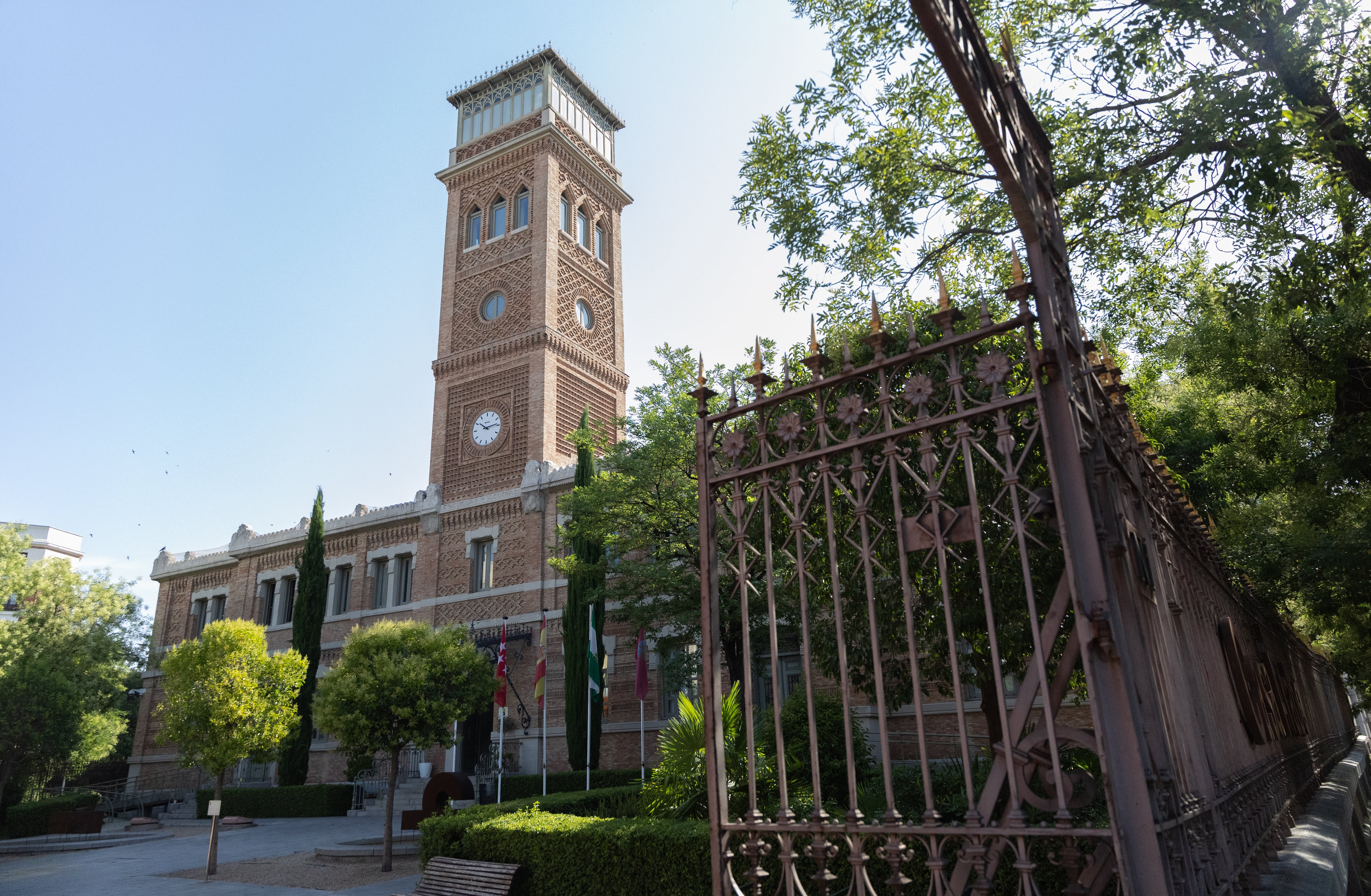
The ambassadors emphasize that its current headquarters, the Escuelas Aguirre, a Neo-Mudéjar building next to El Retiro Park, "constitutes an inseparable element of the identity of this emblematic institution" and contributes "to reinforcing Madrid's projection as a capital open to dialogue between cultures, to international cooperation and to coexistence among peoples, values that have historically distinguished the city." For all these reasons, they trust that a solution can be found "that allows, as far as possible, the continuity of the institution at its current headquarters," while warning of the implications that a potential relocation could entail.
Madrid Mayor José Luis Martínez-Almeida has set a deadline of September 1 to vacate the municipal property, citing lack of maintenance and the need to carry out conservation and consolidation works. The City Council states that the building presents "significant structural problems" and that it has been trying for some time to reach an agreement with the Ministry of Foreign Affairs, on which Casa Árabe depends, without success. "We have tried to reach an agreement with the Ministry, but Minister Albares is neither present nor expected to be in this matter," the mayor has declared.
Sources from the Foreign Ministry deny this version and assert that Almeida announced "surprisingly" his decision to reclaim the property, which they describe as "absolute institutional disloyalty." In response to criticism directed by the mayor against the former director, Irene Lozano, they note that the City Council is part of Casa Árabe's Governing Board and "has always participated in all decisions regarding its administration and management, which have been made collectively." Therefore, they emphasize, it has been involved over these years "in its oversight and monitoring, signing its minutes, and without expressing any disagreement of any kind."
The Foreign Ministry considers the decision "especially incomprehensible" at a time when Casa Árabe's management is acting "with commendable efficiency," in their words, "to improve its management and administration," following the Governing Board's guidelines.
Diplomatic sources emphasize that the transfer of the Escuelas Aguirre is "a key element" of the Madrid City Council's contribution, "including in terms of financial contribution," and therefore "the implications" of this decision for the Consortium "will need to be studied." The same sources add that "over recent years, the Madrid City Council has not provided the technical, administrative or financial collaboration that would have allowed for the adaptation of the spaces, contributing decisively to their lack of maintenance and progressive deterioration."
Facing Almeida's claim that Albares has been unwilling to negotiate a solution, the Foreign Ministry maintains that "the Ministry sent letters in recent months to the mayor, requesting action that is essential for the proper maintenance of the building." In the most recent letter, which went unanswered, Albares requested a meeting "to address the situation of Casa Árabe." After reiterating his support for the work it carries out and "its indispensable nature for Spain's foreign policy," the ministry headed by Albares "commits to finding a solution that allows the continuity of its work." For the Foreign Ministry, this decision, like the one taken a few months ago by the Madrid regional president, Isabel Díaz Ayuso, who withdrew from the institution's board of trustees, "has a distinctly partisan character, calls into question its commitment to working constructively toward the development of friendly relations and dialogue between Spain and the Arab world, and represents an attack on the Ministry's efforts" to "build a state foreign policy."
Arabic students at Casa Árabe have requested a meeting with the Foreign Ministry to find a way for the institution to continue and for their courses to be guaranteed, the same sources add. Created 20 years ago, Casa Árabe is a public entity conceived as a place of encounter and exchange between Arab and Spanish culture, governed by a consortium that includes the Ministry of Foreign Affairs, the Spanish Agency for International Development Cooperation (AECID), the Junta de Andalucía, and the city councils of Madrid and Córdoba. It forms part of the so-called Network of Houses of Public Diplomacy, alongside Casa de América, Casa Asia, Casa Mediterráneo, and the Sefarad-Israel centre.