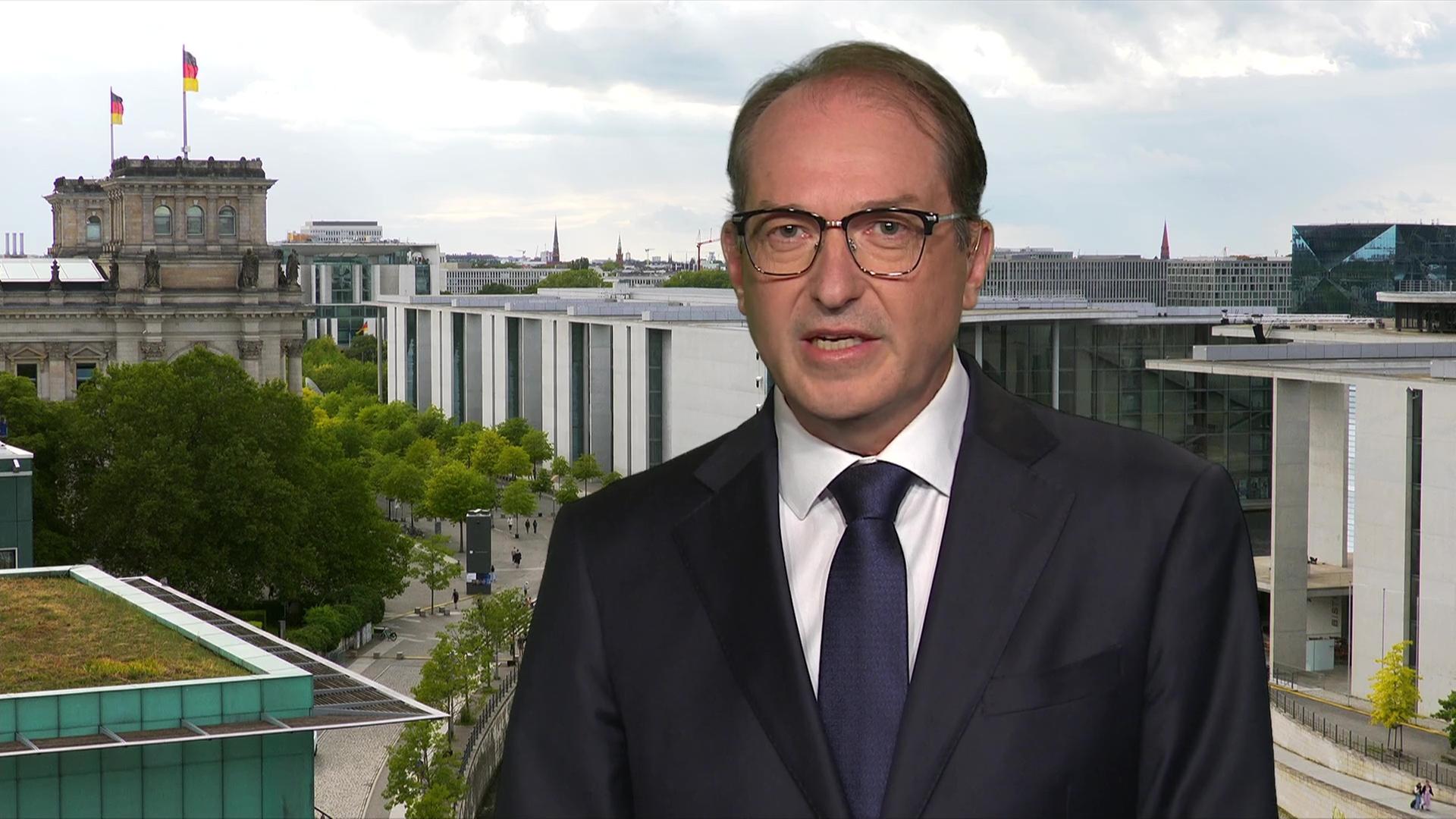
Dobrindt in tagesthemen interview: "Preventive detention for dangerous individuals absolutely necessary"
Although the suspected CSD attacker had been classified as a "high-risk individual" by authorities, he was free to move about. Interior Minister Dobrindt therefore advocates restricting the freedom of movement of dangerous individuals — up to and including preventive detention.
Following the suspected Islamist terrorist attack in Berlin on Saturday evening, Federal Interior Minister Alexander Dobrindt called for tougher punitive measures, particularly in the area of prevention. The suspected perpetrator, who allegedly killed a woman and seriously injured numerous people, had been known to authorities.
According to research by WDR, NDR and the Süddeutsche Zeitung (SZ), Abdul B. was assessed as a "high-risk individual" by a BKA analysis tool just a few weeks before the attack at the Berlin CSD. Surveillance measures against the Islamist had been in place until the very end.
"Quite a number of questions rightly arise"
Quite a number of questions rightly arise as a result, Dobrindt said in an interview with tagesthemen. It would have made sense to take Abdul B. into custody, said the CSU politician. The surveillance measures that had been carried out had not been sufficient.
Rules were needed "so that dangerous individuals are not treated under juvenile criminal law and certainly not released on probation." The Federal Interior Minister also advocated for "restrictions on freedom of movement" and cited electronic ankle tags as one option.
Dobrindt also stated: "In my view, preventive detention for dangerous individuals is absolutely necessary."
Reserved on Söder's proposal
Dobrindt was rather reserved regarding the proposal by CSU leader Markus Söder to strip dangerous individuals of their German citizenship. This would only be possible if a second citizenship existed in the first place and if deportation could then actually be carried out. That was a "very complex undertaking."


