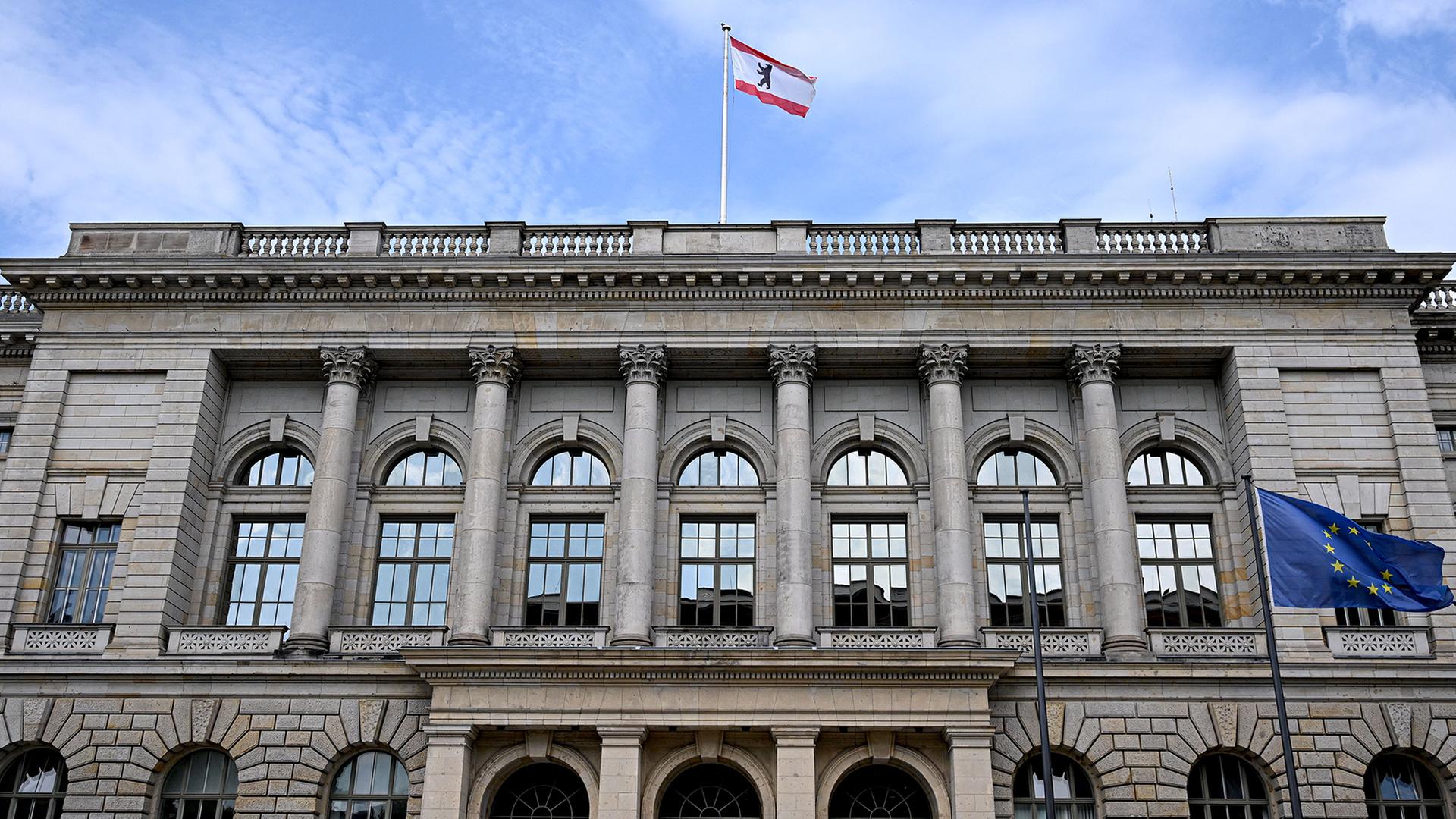
Berlin Election 2026: Who Will Win the Capital?
Four parties are running neck and neck in the polls, with the CDU and the Left competing for the top spot: the Berlin election promises to be an exciting one. How the election will work and why its outcome could change a great deal.
What is the current situation?
Berlin has been governed since 2023 by a coalition of the CDU and SPD. The Governing Mayor is CDU politician Kai Wegner, who however stepped down as lead candidate in July. Repeated revelations about his false statements regarding the crisis management during the major power outage in January had placed him under increasing pressure.
Finance Senator Stefan Evers stepped in at short notice — the man who had organised Wegner's successful election campaign three years ago. His sharpest rival according to polls is Elif Eralp of the Left Party. The lawyer had remained largely in the background as deputy parliamentary group leader until the election campaign.
The SPD has somewhat sidelined its former governing mayor Franziska Giffey, who is also well known at the national level, and is entering the race with the initially little-known Steffen Krach. He is facing an investigation by the Hanover public prosecutor's office relating to his former role as regional president in Hanover. The investigation concerns an initial suspicion of accepting improper benefits; Krach denies all allegations.
Werner Graf is standing for the Greens, who ranked fourth in the most recent BerlinTrend poll. He is the parliamentary group leader of his party.
Almost all parties placed the housing shortage and excessive rents at the centre of their campaigns. The neglect and littering of public spaces was another major issue.
Why is there another election so soon?
For Berliners, this is the sixth polling day within five years. The reason: in 2021, the election to the House of Representatives and the federal election took place simultaneously — and ended in disaster. Serious problems occurred: in some cases ballot papers were missing, in others they were mixed up, and in others there were long queues outside polling stations.
The elections to the state parliament as well as to the district parliaments subsequently had to be held again in full in February 2023, and the federal election partially repeated a year later. The length of the legislative term, which in Berlin lasts five years, remained unchanged however. As a result, a new House of Representatives is now being elected after three and a half years rather than five.
What is being elected and who is eligible to vote?
One direct candidate for the House of Representatives — as the Berlin state parliament is known — is elected in each of 78 constituencies. The second votes of the approximately 2.5 million eligible voters determine the distribution of seats. There are ordinarily 130 members of parliament; currently, due to overhang and levelling mandates, there are 159.
Voters will also determine the composition of the local parliaments in the twelve districts. Around 2,542 polling stations are planned — one tenth more than at the repeat election in 2023. They will be open from 8:00 a.m. to 6:00 p.m. In addition, there are 1,572 postal voting offices. Up to 40,000 polling assistants will be deployed.
Only half as many parties are standing with their own lists as three years ago. This time, 17 parties are contesting seats in the House of Representatives. By comparison: at the repeat election ordered by the courts in 2023 due to irregularities, 33 parties were competing. Only parties that receive at least five percent of the second votes will be taken into account.
For the first time, 16- and 17-year-olds are allowed to vote; this group accounts for approximately two percent of eligible voters. This has already been the case for district elections for some time. At the district level, EU citizens are also permitted to vote.
Who could govern?
Three-party coalitions are considered the most likely options — either CDU, Greens and SPD together, or alternatively the Left Party, Greens and SPD. The AfD is expected to be excluded from any government formation, as the other parties reject cooperation with the far-right party. Polls do not see the FDP or BSW entering parliament.
In the most recent surveys, the CDU and the Left Party are ranked in varying order between 20 and 23 percent, with the AfD and the Greens somewhat behind. The SPD can only hope for fifth place with 10 to 15 percent.
What happens after the election?
According to Article 54 of the state constitution, the newly elected House of Representatives must convene no later than six weeks after the election, under the chairmanship of the oldest member of parliament. The constitutive session is planned for October 29. The members of parliament will then elect a president and two vice-presidents from among their ranks. The parliamentary groups have the right to make nominations in order of their size.
There is no fixed deadline for the election of the new Governing Mayor. He or she is elected by a majority of members of parliament. If such an election fails, a second round takes place. If that also fails, the bar is set somewhat lower and the candidate who receives the most votes is elected.
What impact could the election have at the federal level?
The election in the capital — as well as the simultaneous state parliament election in Mecklenburg-Vorpommern — will send strong signals into federal politics as well. If the CDU loses the Red City Hall to the Left Party, pressure on Federal Chancellor and CDU leader Friedrich Merz is likely to increase further.
The mood is not much better among coalition partner SPD. The leadership duo of Lars Klingbeil and Bärbel Bas has been under criticism for some time. More decisive for that, however, is likely to be the performance of Minister-President Manuela Schwesig in Mecklenburg-Vorpommern.