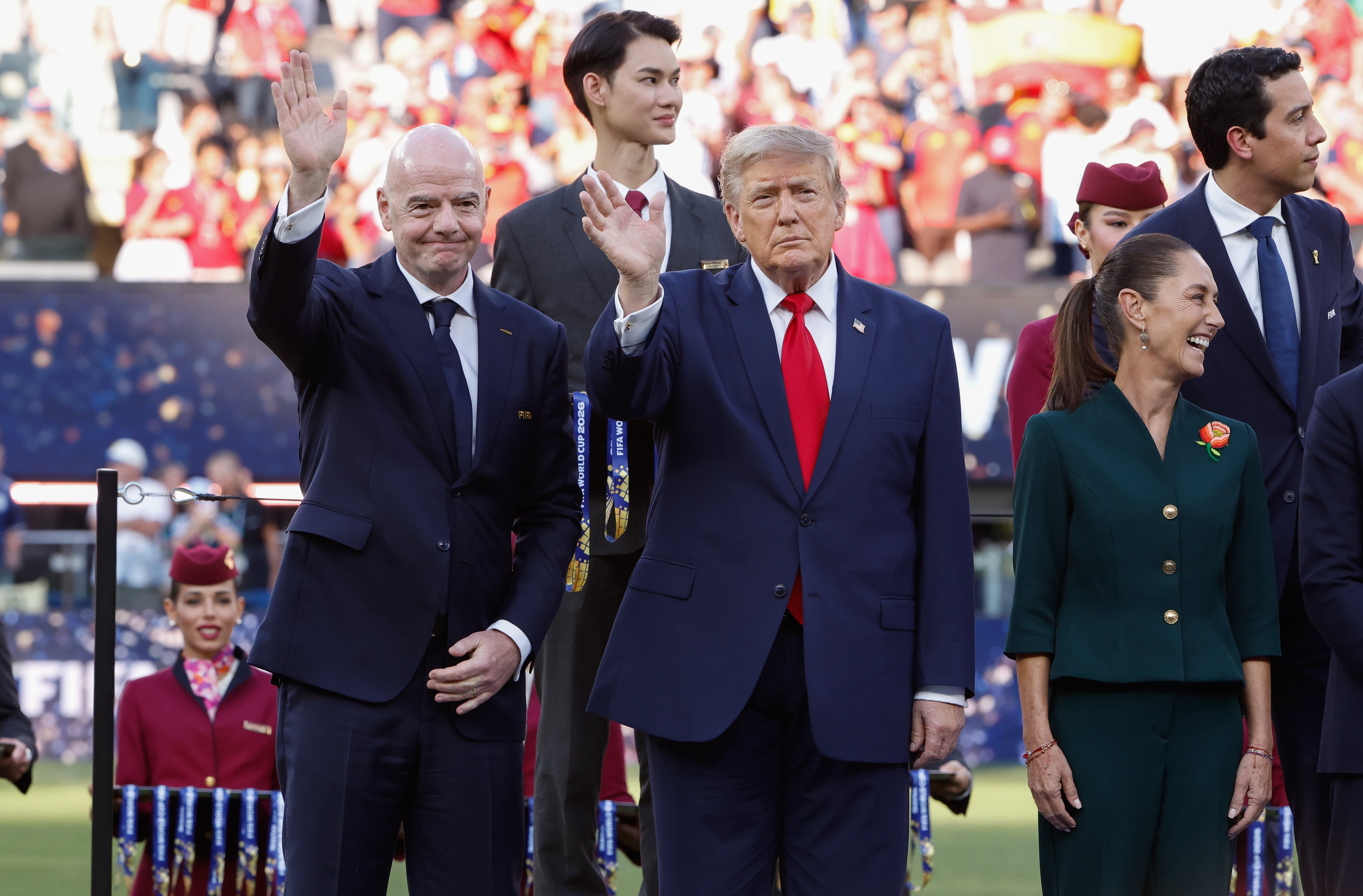
The 2026 FIFA World Cup was won by Spain, and above all by FIFA itself. With 48 participating teams, it broke its revenue record with $15 billion, compared to the projected $10 billion, thanks to its immense capacity for finding new income streams. The politicization of the competition, driven by the inimitable Donald Trump (who, once again, attempted to insert himself into the champions' photo) and his friend FIFA president Gianni Infantino, contributed to casting a shadow over a tournament that, it must be said, does help promote the sport worldwide, generating money for football in countries like Cape Verde.
The Spanish national team managed to bring dignity, through its team play rooted in technique rather than in the other kind of football — the cynical kind — to a championship that reached its most jaw-dropping moment with the lifting of the suspension handed to United States player Folarin Balogun, following intervention by the country's president, who, far from feeling any shame about it, boasted openly of his maneuver. The ignoble treatment of the Iranian national team and the veto on the entry of a Somali referee were further examples of how FIFA, which prides itself on championing the depoliticization of sport, submits to — or directly cooperates with — governmental arbitrariness when it is exercised by the most powerful. The previous awarding of the tournament to countries such as Russia and Qatar signals a complete lack of regard for democratic values or human rights as a condition of doing business.
FIFA is even considering expanding the number of participating teams to 64 as early as 2030, when the host venues will be Spain, Portugal and Morocco, along with a handful of matches in South America. It is understood that audiences will respond regardless: ticket demand at stadiums in the United States was also more than adequately met, which drove prices to exorbitant levels that fans — whether because their purchasing power allowed it, or because they sacrificed themselves at the cost of going into debt — paid willingly. FIFA has little reason, then, to lower its prices, just as it has little reason to change its controversial refereeing system, which is growing ever more sophisticated on the back of technology that lends it a supposed veneer of objectivity while in practice continuing to generate considerable doubt.
The show must go on, even if there are multiple reasons for mistrust. At least, with some regularity, and in spite of everything, the best team wins.