The New Cologne Opera: From Billion-Euro Disaster to a "Stage for Everyone"?
14 years of construction chaos, costs of up to 1.5 billion euros: the renovation of the Cologne Opera is considered one of the greatest municipal construction disasters in Germany. Now performances are resuming – and the city is calling for a "stage for everyone." Can it succeed?
"I am not building an opera house, but a house for everyone," architect Wilhelm Riphahn is said to have remarked about the Cologne Opera. A democratic cultural venue for the city – that was the vision. Around 50 years later, the building had fallen into disrepair and needed to be renovated, and with that began a very costly, 14-year-long tragedy. Now, with Richard Strauss's "Der Rosenkavalier" on September 27, the first season following the reopening at Offenbachplatz is set to begin.
**A Money Pit in the City Centre**
The city did not exactly cover itself in glory during the renovation, and for many years the scandal-ridden construction site made national headlines. "Cologne made a fool of itself," says Frank Deja of the initiative "Köln kann auch anders" (Cologne Can Do Better) in a WDR interview – even though he is now very satisfied with the final result.
The "Köln kann auch anders" initiative had collected more than 50,000 signatures from Cologne citizens in 2010 to preserve the ensemble of the listed opera house and theatre, thereby opposing the city's plan for a partial new build.
The pure construction costs amount to approximately 800 million euros. Adding the operating costs of the interim venues and interest payments brings the total to the considerably higher sum of around 1.5 billion euros.
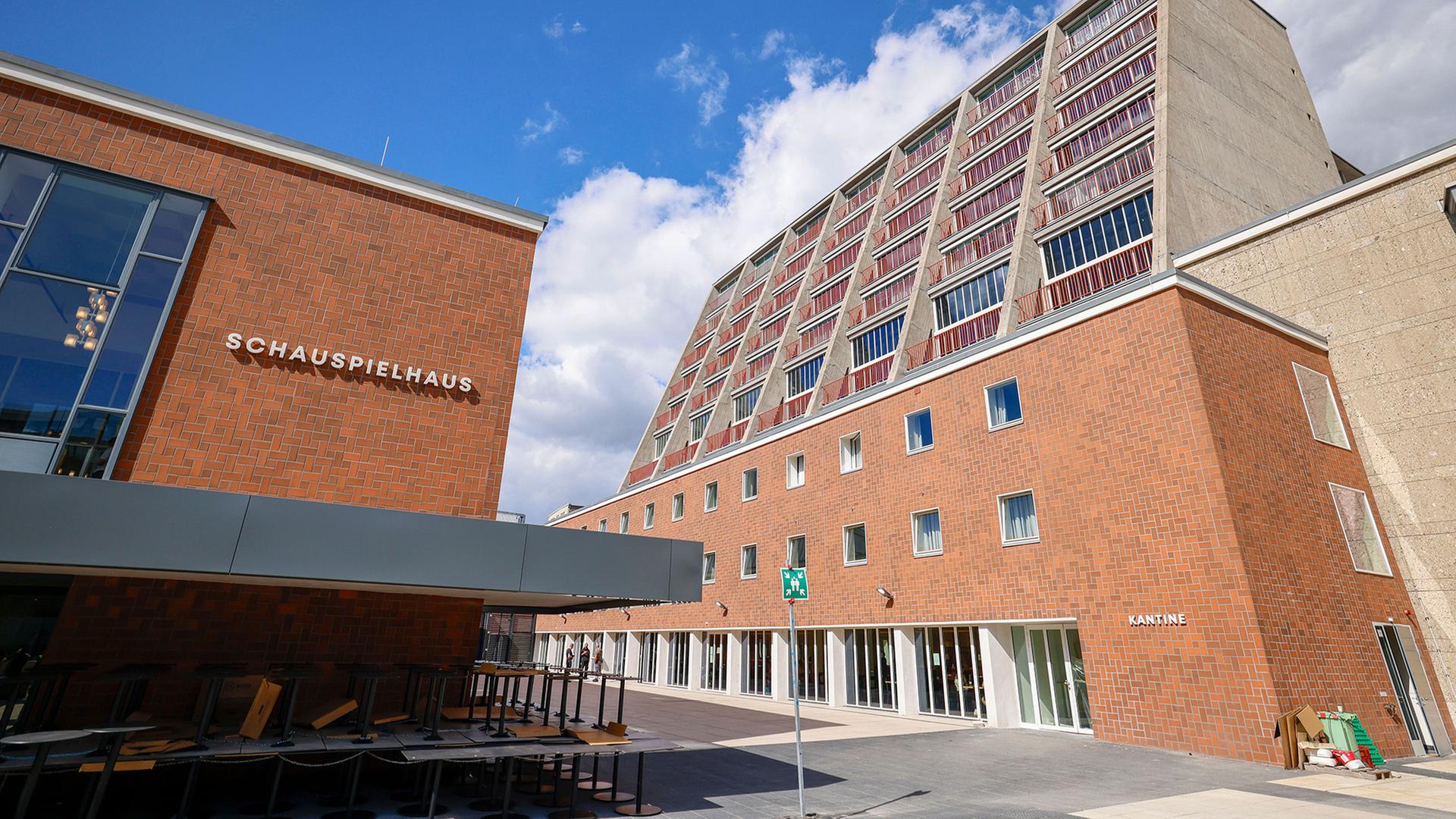
Awaiting the first visitors: the new foyer of the Cologne Opera.
**Can Cologne Match Hamburg?**
It is hardly surprising that comparisons are being drawn in many quarters between the renovation of the Cologne Opera and the construction of the Elbphilharmonie. Both attracted attention for years due to exploding costs and missed deadlines.
Beyond the construction difficulties, however, the similarities largely end there. Just as the architecture of the two buildings differs greatly, so too does their significance for their respective cities. Unlike the Elbphilharmonie, the Cologne Opera is unlikely to become a tourist landmark in its own right. What will matter far more is whether the opening also allows the years-long debate on the Rhine about costs and construction chaos to gradually fade into the background. And the question of whether the opera can become a stage for everyone will be decided not only by the building itself, but also by its programme.
The city did not cover itself in glory during the opera's renovation: the construction site generated negative headlines nationwide for many years.
**How the City Is Processing the Financial Debacle**
Cologne's governing Mayor, Torsten Burmester (SPD), argues in a WDR interview that, as a consequence of the high construction costs, Bühnen Köln must offer programming for a broad audience. "It must be an opera – or rather a stage, a theatre, a children's opera, a small house – that exists for the people of Cologne, and not just for a small circle of subscribers."
And there it is again, the oft-invoked phrase: "opera for everyone." For the opening weekend, the city is holding a large festival on Offenbachplatz, which will conclude on Sunday with popular local Cologne band Kasalla as the headline act. To what extent the open foyers will then establish themselves as a space for the Cologne public remains to be seen – to say nothing of the seats in the auditorium.
Despite all the celebratory spirit for which the Rhineland is well known, the rubble from the construction catastrophe still needs to be swept up a little. "It was a planning failure — there's no need to discuss that," Mayor Burmester told WDR. Bärbel Hildebrand from the Taxpayers' Association of North Rhine-Westphalia shares this view: "These cultural funds could have gone to museum projects, dance, or the independent scene."
Opera must be a living art form
Alongside the aforementioned Rosenkavalier, the next major premiere of this season is "The Tales of Hoffmann" by Jacques Offenbach, the namesake of the Offenbachplatz. It is a highly successful production that has already delighted critics and audiences at the Bregenz Festival.
The Dutchman Hein Mulders has been Intendant of Cologne Opera since 2022. But he is not only known for bringing in successful productions. "I also stand for world premieres. Every year we have at least one. Contemporary music is very important because opera must be a living art form." He is also a great lover of Baroque music — after all, Baroque opera comprises a considerable part of opera history.
A full house to be expected? A 2018 Cologne survey found that only one in five residents attends the opera at least once a year. Two thirds never go.
"Grand opera for a grand audience"
The catchphrase "opera for everyone," which many in Cologne like to use, sounds slightly different coming from Mulders: "Grand opera for a grand audience." And unlike at the interim venue, Cologne can now work on international co-productions under comparable conditions and "compete in the international league."
While the opera house relies on classic repertoire for its fresh start, the theatre under Intendant Kay Voges is making a more assertive effort to reach new target groups — for example through its programmatic focus, supported by EU funds, on linking theatre and journalism.
Why opera can (not) be a stage for everyone
Can all of this push the drama surrounding the renovation into the background? Cologne's city conservator Thomas Werner hopes that one day people will talk not about costs but about architecture. "Thoroughly composed, of the highest design quality — that is something people will come to appreciate greatly."
The fact remains: most people will only see the Cologne Opera House from the outside. A 2018 Cologne survey found that only one in five residents attends the opera at least once a year. Two thirds never go. Whether the new, old opera house will now also spark curiosity among people who have not previously been part of its audience will be revealed over the coming months and years. It remains to be seen how much of Riphahn's "house for everyone" will actually become reality.