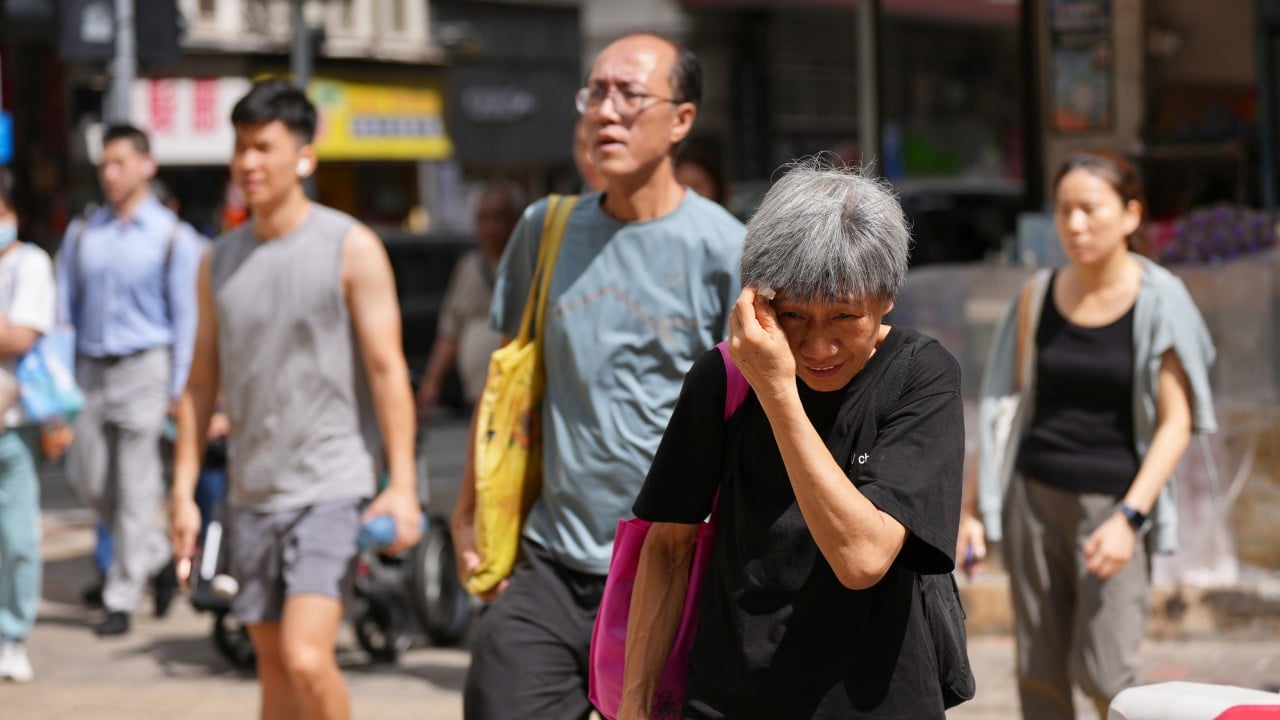
Environmentalists and academics have criticised the omission of a systemic heat-health action plan in Hong Kong’s
first five-year plan and latest policy address, warning that relying on “common sense” is failing to protect vulnerable residents from rising temperatures.
Their comments came as new research from the
University of Hong Kong (HKU) found that extreme heat may have contributed to as many as 3,238 excess deaths in the city over the past decade.
In response to the South China Morning Post’s queries about the lack of a cross-departmental heat action plan for vulnerable groups, a government spokesman said there were ongoing efforts to “elevate the response capabilities of the government and the community”.
Environmentalists noted that neither the five-year blueprint nor the
annual policy address, both delivered by Chief Executive John Lee Ka-chiu in September, included a comprehensive plan for a systemic, overarching heat-health action plan to address urban heat. A new management system known as the “
city brain”, which aims to improve interdepartmental collaboration during extreme weather, was proposed in the policy address.