After the elections ++ Klüssendorf: "Cannot continue like this" ++
SPD Secretary-General Klüssendorf questions the federal government's course following the election results. Bundestag Vice-President Ramelow rejects warnings from the Central Council of Jews about antisemitic positions within Berlin's Left party.
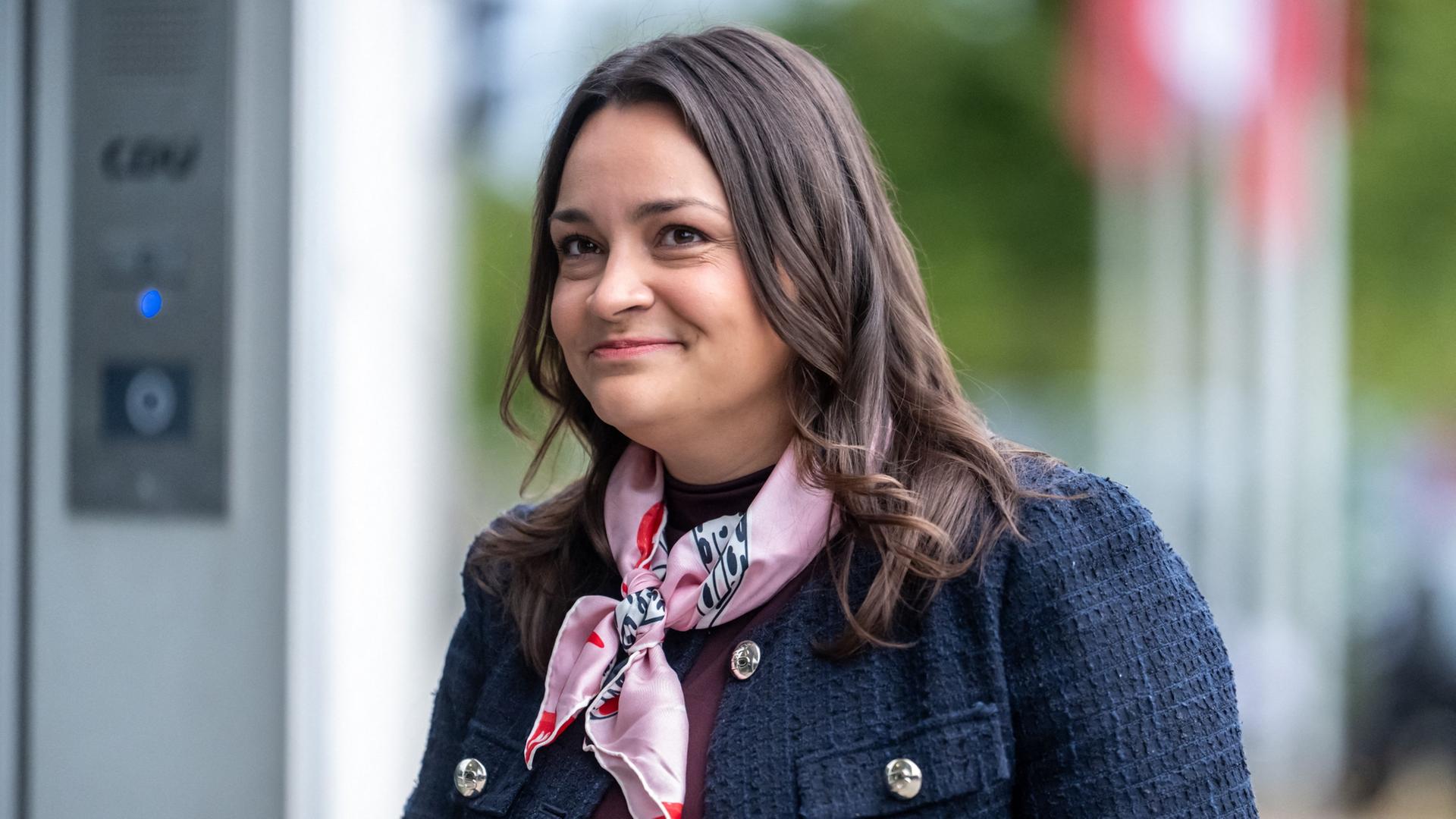
SPD Deputy Chair Anke Rehlinger has called for a change of course by the federal government. "Simply carrying on as before is not an option," said the Saarland Minister-President on the Politico Berlin Playbook podcast. The poor results were above all a verdict on federal policy. People are dissatisfied, particularly with the federal government's policies and especially those of Chancellor Merz. Rehlinger called for the SPD to develop a stronger profile. "I believe we need greater clarity in our positions on the issues," she said. "Simply being the socially just repair service for the Union is not enough."
The IG Metall Küste trade union is demanding consequences from the other parties following the AfD's strong performance in the Mecklenburg-Vorpommern state election. "The democratic parties must now win back lost trust by listening more to people and taking their concerns seriously," said regional director Daniel Friedrich. Through policies promoting good jobs, a strong industry, social security and affordable housing, they must show "that they can solve people's concrete problems."
In view of a possible emerging red-red-green governing majority, DGB Nord chair Laura Pooth saw "good chances that Mecklenburg-Vorpommern will in future have a state government that governs in a socially just, economically sound and democratic manner." It must keep the state's future viability in mind and take the interests of workers seriously. "For that we need secure jobs, good working conditions, fair wages, affordable housing and good education," said Pooth.
Following the AfD's electoral victory in the Mecklenburg-Vorpommern state election, lead candidate Leif-Erik Holm does not believe his party will be part of a governing coalition. The party had made great efforts to be capable of governing and had drawn up a workable programme, he said on NDR Info. "I think we could govern. However, it currently does not look as though that will be the case." It currently appears that a red-red-green majority will come together, said Holm. "That is certainly not a good direction for our state to take." Holm intends to remain a member of the Bundestag and fulfil his role as a directly elected representative in Schwerin and West Mecklenburg.
Following the CDU's historic electoral disaster in Mecklenburg-Vorpommern, Union parliamentary group deputy chair Mathias Middelberg (CDU) has rallied behind Federal Chancellor Friedrich Merz. The election result was indeed a "dramatic event" for the CDU and "a disaster" for the state association, said Middelberg on the ARD programme Caren Miosga. However, he disputed the portrayal of an open dispute over Merz's position at the party's helm. The CDU presidium had "one hundred percent" supported the Chancellor's statement on election night, said Middelberg. "We are essentially all united in the view that we need these reforms." The goal is to put Germany back on a growth path and secure jobs.
SPD Secretary-General Tim Klüssendorf has called into question the federal government's course of action. "We cannot simply carry on as before after these election results," he said on the ARD programme Caren Miosga. The elections had also been a vote on federal political issues. It was therefore not just a matter of communication, but also of the substance of the reform agenda. Klüssendorf called on the federal government to set out a clear vision for the remaining three years of the legislative term. People needed to be able to recognise "where we are going with this coalition."
Following Chancellor Friedrich Merz's (CDU) declaration that the reform course would continue despite the CDU's electoral debacle, the SPD is warning against overburdening citizens. Many people would recognise that reforms needed to be set in motion, said SPD parliamentary manager Dirk Wiese to the Rheinische Post. However, citizens must not be alienated.
It was necessary to listen and to take seriously the concerns and fears of those "who worry about the future of care. Or those who have worked for years and can no longer work until the standard retirement age." At the same time, the trust of the younger generation in the statutory pension insurance system must be strengthened. What was needed was "more pragmatism at all levels and keeping people's concerns in mind," the SPD parliamentary manager emphasised.
Bundestag Vice-President Bodo Ramelow (Left Party) has rejected warnings from the Central Council of Jews about antisemitic positions within the Berlin state association of the Left Party. "I have zero understanding for such a statement," Ramelow told the Redaktionsnetzwerk Deutschland. The Left Party's lead candidate in Berlin, Elif Eralp, had approached the Jewish state community with an outstretched hand. Ramelow called on potential coalition partners to enter into negotiations. Eralp had presented a clear five-point plan against antisemitism in Berlin.
According to the preliminary result, the Left Party won the Berlin House of Representatives election. The governing parties CDU and SPD suffered significant losses.
According to the preliminary result, the AfD has become the strongest force in the state parliament election in Mecklenburg-Vorpommern, followed by the SPD of Minister-President Schwesig. The CDU failed to clear the five percent threshold and was voted out of a state parliament for the first time. The BSW also failed to gain entry.