Wind Energy Industry: Billion-Euro Poker Over Offshore Parks
BP wanted to build two enormous wind farms in the German North Sea. But work on the projects has apparently been halted for months. This is what research by NDR, WDR and SZ reveals.
From the outside, there is nothing to suggest that the future of Germany's offshore wind industry was supposed to take shape in the modern white office building in the Überseequartier in Hamburg's HafenCity district. A real estate agent advertises his properties in the shop window. A company sign for BP Offshore Wind GmbH or its successor Jera Nex BP is nowhere to be found.
Four years ago, in autumn 2022, the situation was very different. At that time, the oil company BP announced in a press release that it wanted to open an offshore wind office in Hamburg and was looking for "committed employees who want to help shape the transition." Just under a year later, in August 2023, BP bid almost 6.8 billion euros for two areas in the German North Sea, was awarded the contracts and gave the projects the resonant names Oceanbeat East and Oceanbeat West.
This gave BP the right — and also the obligation — to build wind farms with a combined capacity of 4 gigawatts. But work on the projects at the Hamburg office was apparently stopped months ago, as research by NDR, WDR and Süddeutsche Zeitung (SZ) shows. And there is much to suggest that the company will not resume it.
Wholesale Electricity Price Could Rise
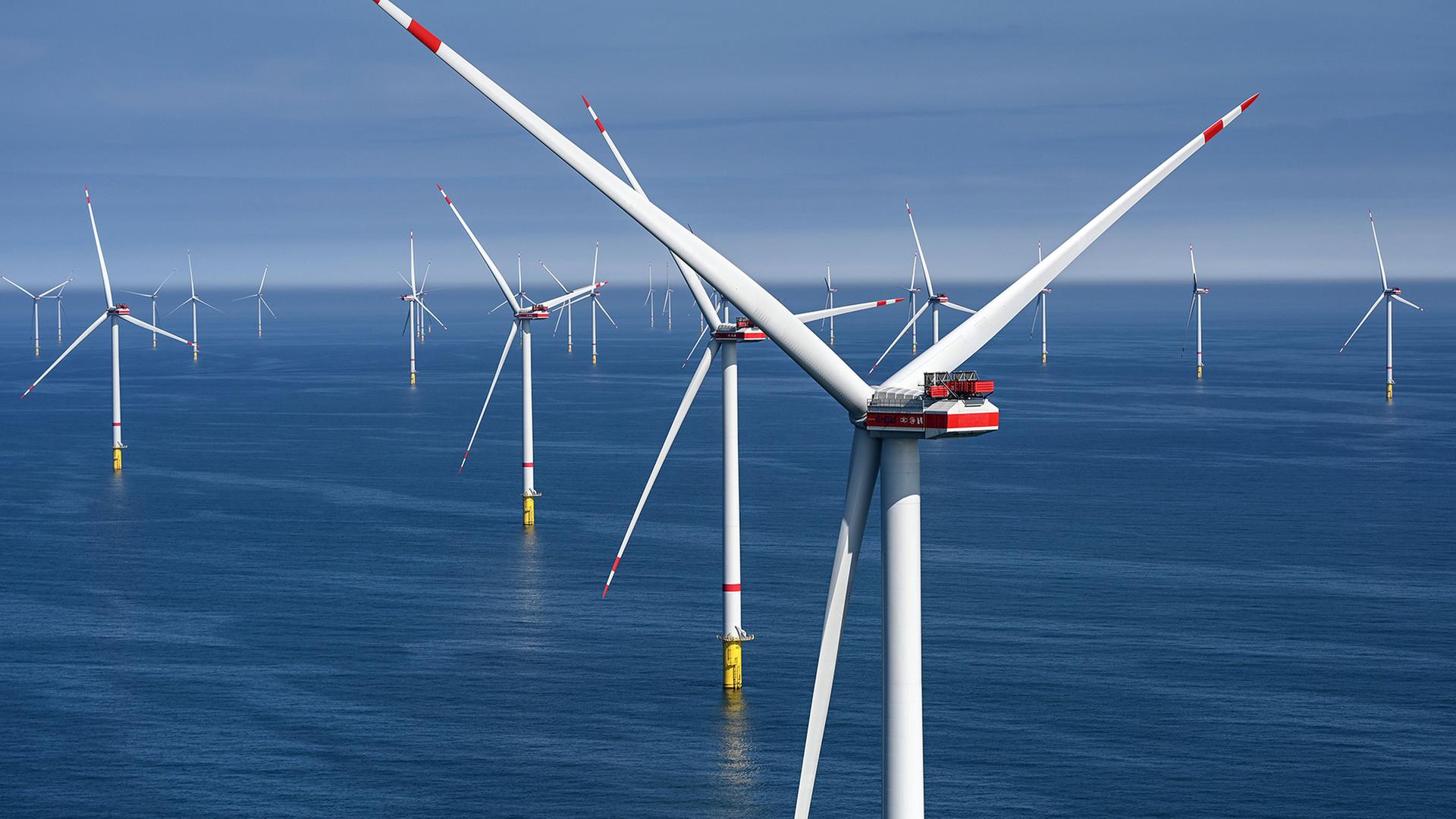
This would be devastating for the expansion of offshore wind power in Germany. Currently, wind turbines with a capacity of just over 10 gigawatts stand off Germany's coasts. The Oceanbeat projects would therefore increase capacity by 40 percent. And this new offshore wind power has long been factored into planning: the Offshore Wind Energy Act stipulates that by 2045, wind turbines with a capacity of 70 gigawatts should be supplying electricity to Germany. If the projects fail, this could have a direct impact on electricity prices for everyone.
According to information from NDR, WDR and SZ, industry insiders estimate that the wholesale electricity price could rise by 500 to 600 million euros per year for each missing gigawatt. If the 4-GW projects by Jera Nex BP are not realised, this could therefore result in additional electricity costs of 2.2 billion euros per year.
Green Party Politician Speaks of "Interference Signals"
Publicly, Jera Nex BP had continued to communicate until recently that it intended to press ahead with the projects. But members of the Bundestag are reporting otherwise. Michael Kellner, who as parliamentary state secretary in the Economics Ministry under Habeck accompanied the offshore wind auctions and continues to be in contact with the company in his role as the Greens' energy policy spokesperson in the Bundestag, says there had been "interference signals" regarding these projects for quite some time. "What is new is that I have heard from within the company that they no longer want to implement the projects."
Other members of the Bundestag reported similar conversations to NDR, WDR and SZ. Delays in grid expansion and the costs that have since risen were cited as reasons. The company is reportedly attempting to negotiate a handback with the federal government. This is not currently permitted by law. Kellner therefore demands that a mechanism for such a handback be created as part of the current amendment to the Offshore Wind Energy Act.
That the company does not deny that corresponding talks with members of the Bundestag took place. However, Jera Nex BP writes in response to an inquiry that no decision has been made not to build the projects. The company says it continues to evaluate various options for the projects.
Apparently no staff remaining in the Hamburg office
However, at least at the Hamburg office, there appears to be no staff currently capable of advancing the projects. The operational personnel of the responsible BP joint venture were laid off or placed on leave at the end of July 2026, according to several former employees. When asked specifically about layoffs, Jera Nex BP responds only indirectly, writing: "Our current staffing levels do not impair the ability to carry out the required processes."
In the summer of 2025, BP divested its offshore business and transferred it to the joint venture Jera Nex BP. Since then, signals have been mounting that the company is losing interest in the projects. The dissolution of the Hamburg office appears to confirm this.
The former employees further report that the projects are not only far behind schedule, but have in fact been halted. Neither foundations, turbines, nor vessel capacity for the construction and commissioning of the wind farms have been ordered or secured through preliminary contracts. There are also no contracts yet for the sale of the electricity. In the view of various industry experts, all of these processes would need to be underway if the wind farms are to go into operation in 2032 as planned.
Jera Nex BP points in this context to delays in grid expansion, stating that it has adjusted the necessary processes to realistic timelines.
No cancellation of the project so far, according to grid operator
Grid operator Tennet, a business partner of Jera Nex BP, apparently sees things differently. Tennet has internally been planning for the failure of the projects for some time, as shown by so-called scenario calculations from the company that are available to NDR, WDR and SZ. The company is currently building the grid connections for the Oceanbeat projects — at an estimated cost of 20 to 30 billion euros. The work could not and may not be halted at this stage, the company says, adding that multi-tonne components for gigantic offshore transformer substations are currently being welded together.
Tennet further states that no cancellation of the projects by BP has been received to date. Tim Meyerjürgens, CEO of Tennet Germany, says: "Offshore areas and grid connections are too valuable to be blocked unused for years. We therefore need greater commitment and early clarity about the prospects of the projects being realised." Tennet is therefore calling, through the upcoming amendment to the Offshore Wind Energy Act, which will shortly enter the parliamentary process, for an additional deadline to be introduced. Developers would then be required to demonstrate significantly earlier that they actually intend to build their wind farms. If they fail to do so, project rights could be revoked at an earlier stage.
Offshore wind industry association expresses scepticism
The German Offshore Wind Association (BWO) is also taking a skeptical view of developments. Stefan Thimm, the association's managing director, says: "Within our association, we naturally also have discussions about this (...) and we have known for some time that these projects are doomed to fail if the underlying conditions do not fundamentally change." The association had therefore already called in the summer for rules to be developed governing the return of projects.
The Federal Ministry of Economic Affairs declined to comment on the projects of individual companies when asked. A spokesperson emphasized that the ministry had already accommodated companies that had bid for sites in 2023/24 in various ways. In principle, the return of projects is not provided for by law. Nor is any corresponding regulation planned in the draft amendment to the Offshore Wind Energy Act.
How the project that Jera Nex BP apparently wants to relinquish will proceed legally therefore remains entirely unclear. Under current legislation, the federal government would have the option of revoking the company's project rights and re-tendering the sites at the earliest in the autumn of next year. It could then be years before a new developer resumes work.