Attacks on Wildberries: Ukraine Targets Russia's Online Retail
In Russia, the online retailer Wildberries holds a similar significance to what Amazon does in this part of the world. Now Ukraine is deliberately and repeatedly attacking the retailer — and many small business owners are paying the price.
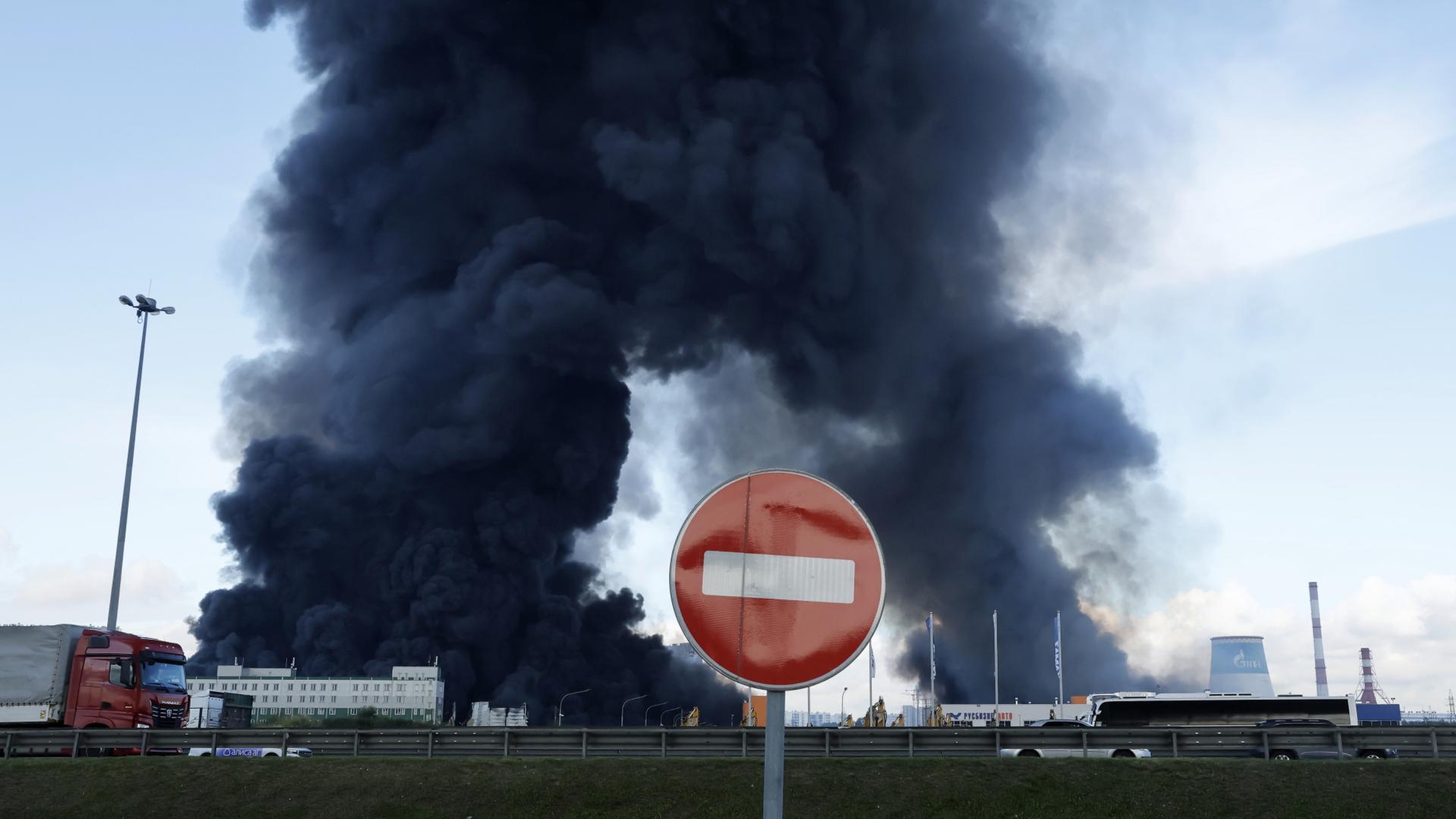
Dense black and grey clouds of smoke on the outskirts of Moscow and St. Petersburg and in other regions of the country: videos of this are circulating primarily on social media — Russia's state broadcasters are not showing the Ukrainian drone strikes that last week struck Wildberries distribution centres in particular.
According to official figures, nine people were killed and more than 80 were injured. Analysts estimate the value of the burned goods at up to four billion euros.
A Major Loss for Small Business Owners
Online giant Wildberries has not disclosed how many people work for the company in total. Many warehouse workers, couriers and other staff at pickup points are employed through partner companies.
In the wake of the attacks, videos are now multiplying of Russian business owners who lost nearly everything in the fire — like Julia Stepanova: "Almost all of my products have burned, only very little is left," she says. "I'm leaving the Wildberries platform and will most likely quit — this is the end."
Another woman uses her phone to film the enormous clouds of smoke in the distance. She lost 4,000 fur coats in the fire. She had driven to the site of the attack to say "goodbye" to her coats — and apparently to her entire livelihood as well.
The situation for small and medium-sized businesses in Russia is visibly deteriorating: one in six has overdue loans, writes the daily newspaper Nezavisimaya Gazeta. And Russia's central bank has just announced that in the corporate sector as a whole, one in four borrowers is already in arrears on payments.
The delivery service has several tens of thousands of pickup points across all of Russia.
20 Million Orders Per Day
Wildberries receives around 20 million orders every day. Whether in the backyards of major cities or on main streets in villages, on plastic bags or billboards: the purple-pink logo is visible almost everywhere in Russia. There are more than 90,000 pickup points across the country. Often it is just a small basement room, strewn with countless parcels and fitting rooms. Whether car parts, ironing boards, books, phone cases, children's products or kitchen accessories: Wildberries offers almost everything — even now, after the attacks.
For some customers, delivery times have increased, as in the case of English teacher Armine: several gifts she had wanted to bring her relatives on holiday have still not arrived. She has seen videos of the drone attacks on social media. They frightened her: "It happened not far from us. That's why it's naturally frightening."
Student Lera from Moscow no longer wants to use Wildberries, even though she ordered almost all the furnishings for her apartment there. She fears that goods may no longer arrive, or may simply no longer exist: "Many of the founders of the brands based there simply had millions of items in those warehouses, and a large portion of that has burned — if not all of it. That's why so many are closing now."
Now Also a Matter for the Kremlin
Even though the Kremlin repeatedly attempts to downplay the economic consequences of the Ukrainian attacks, spokesman Dmitry Peskov was forced to address the issue this week. The situation was indeed difficult, "due to the losses suffered by both the company itself and small and medium-sized businesses." The government, Peskov said, was dealing with the matter.
The company has announced compensation, but some of those affected are already reporting that the payments will be very low. Student Lera says the attacks are being discussed everywhere. Wildberries has become an indispensable part of every household. Therefore, every attack on the company also affects "every resident of our country."