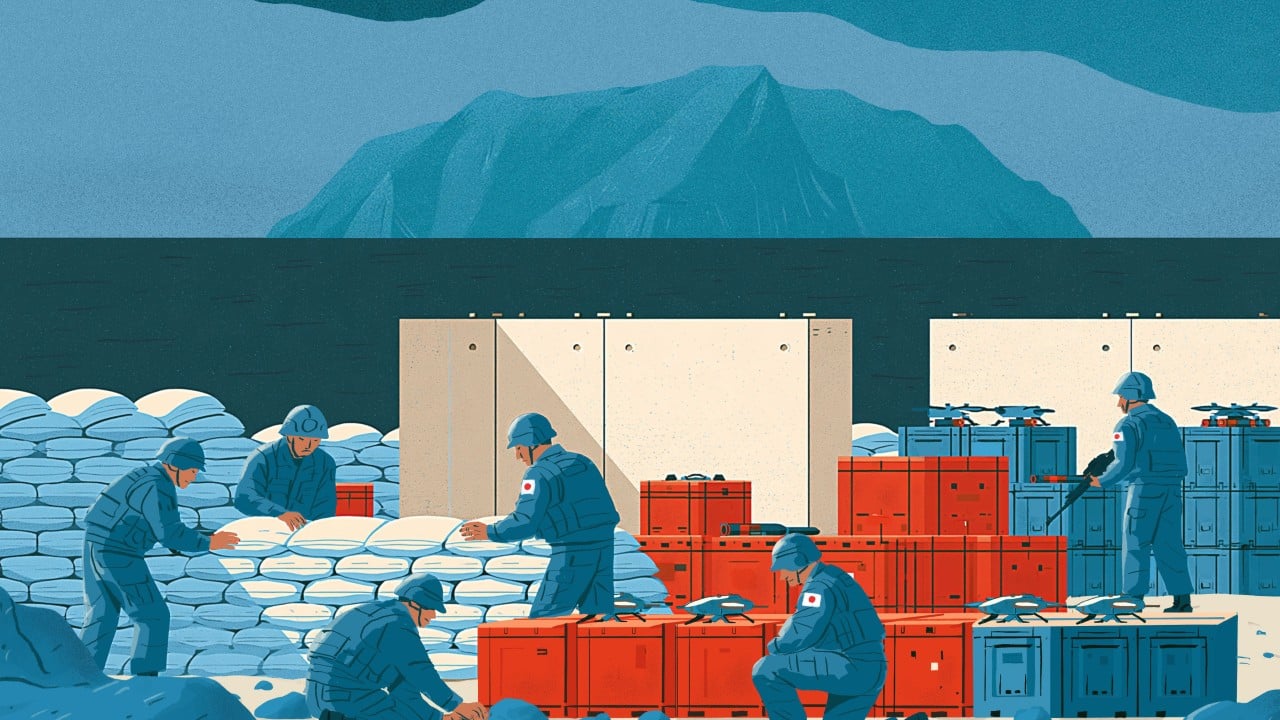
The risk of a conflict over Taiwan is shaping Japanese defence planning, with Tokyo shoring up security at home and abroad for a potentially prolonged fight. But there are economic, demographic and political constraints on how far its military transformation can go. In the second of a three-part series, Gabriel Dominguez
examines how Tokyo is building military resilience within its territory. Japan’s recent purchase of a former Nippon Steel site to build a sprawling new defence hub points to a deeper shift in Tokyo’s preparations for a potential Taiwan conflict: it is increasingly planning not only for how to deter a war, but also for how to sustain the fight if deterrence fails.
The planned complex in Kure,
Hiroshima prefecture – already home to one of Japan’s major naval bases – is intended to combine military facilities, logistics and defence production, concentrating several of the functions Tokyo would need to sustain its forces during a prolonged conflict.
Four years into a sweeping defence build-up, experts say that emphasis on endurance reflects a grim conclusion taking hold in Japanese defence planning:
preparing for a Taiwan crisis increasingly means preparing to defend Japan itself.
Prime Minister Sanae Takaichi made that concern unusually explicit last November, saying a Taiwan contingency involving warships and the use of force could constitute a
“survival-threatening situation” for Japan – potentially allowing its Self-Defence Forces (SDF) to act even if Japan itself had not come under direct attack.
The geopolitical stakes far exceed the 110km (68 miles) separating Taiwan from Japan’s westernmost territory. Taiwan lies along vital Japanese sea lines of communication and at the centre of the first island chain, close to
Japan’s southwestern islands and key US military installations.
Should Beijing gain control, it could significantly strengthen the People’s Liberation Army’s (PLA) operational position around Japan and its access to the western Pacific.