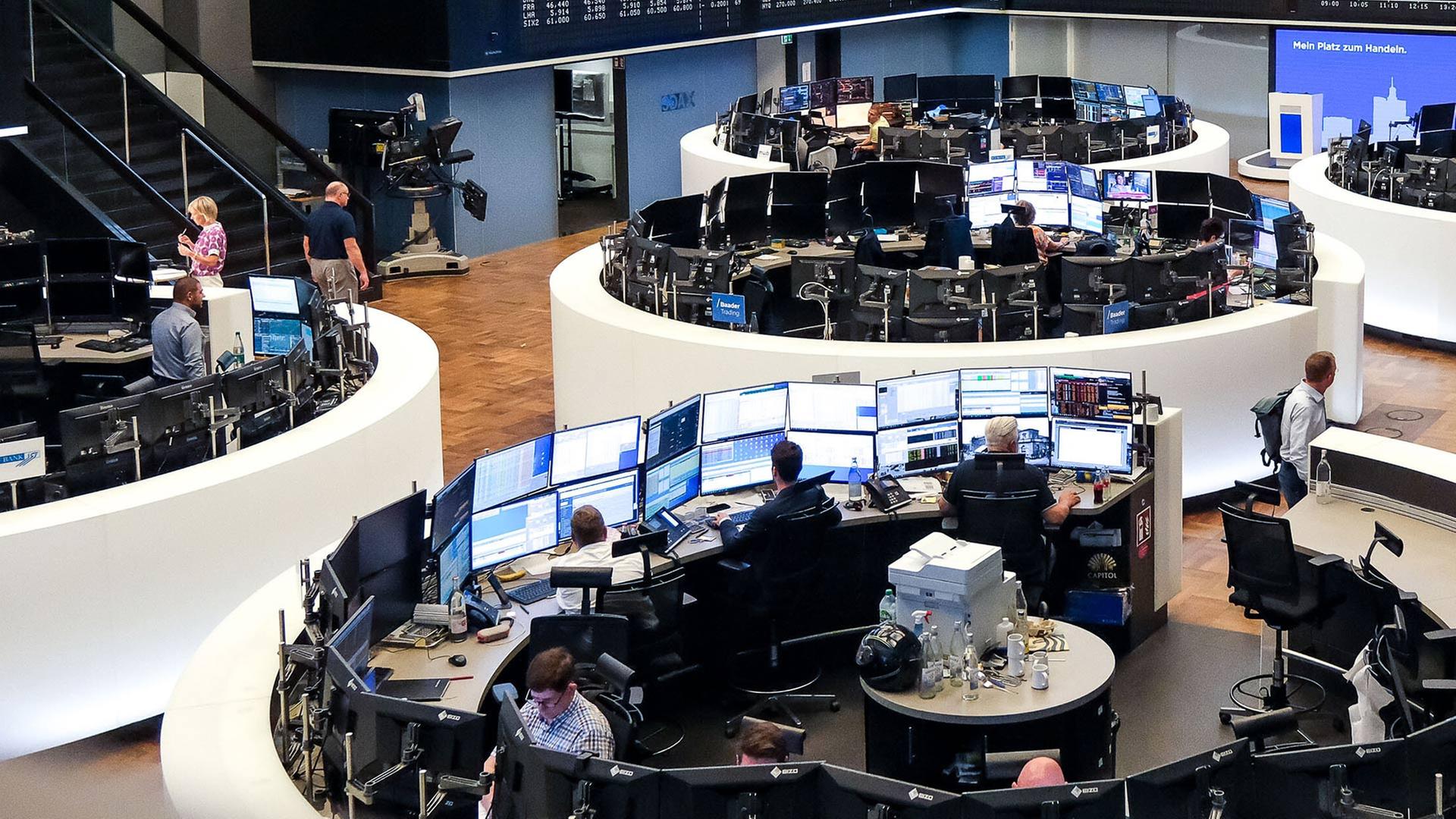
DAX Likely to Tread Water as Investors Find No Reasons to Buy
After four days of losses, the DAX is expected to start the final trading day of the week with little momentum. The bond market remains a key issue, as do high energy prices and inflation concerns.
Following four weaker sessions, the DAX is expected to tread water at the start of trading today. Broker IG estimated the German benchmark index at around 26,000 points ahead of the Xetra open. On Thursday, the DAX closed down 0.4 percent at 25,983 points. Since the start of the week, it has lost nearly 1.5 percent.
Headwinds are coming primarily from the bond market. Concerns over high oil prices stemming from the Iran conflict and rising government debt have driven yields to their highest level in nearly two decades this week. The US Treasury Department announced plans to support long-dated bonds through billion-dollar purchases. However, this artificial demand provided only brief relief.
In this context, many investors are focusing on government debt levels. US national debt hit a record high of $40 trillion this week. The market is increasingly demanding higher compensation for providing Washington with long-term capital. This is creating an uncomfortable feedback loop, commented Serge Nussbaumer, capital markets expert at Swiss securities firm Maverix.
"High deficits increase financing needs, a larger supply of Treasuries must be absorbed by the market, higher yields make refinancing more expensive, and rising interest expenditure in turn puts pressure on the budget," Nussbaumer described the typical market cycle in such a situation.
The bond market is naturally also a major topic on Wall Street. Signals from the US are correspondingly weak. The Dow Jones index of US blue chips lost 1.3 percent to 52,759 points. The technology-heavy Nasdaq fell 1.0 percent to 26,067 points, and the broad-based S&P 500 dropped 0.9 percent to 7,641 points.
"The markets faced some headwinds today," said Mona Mahajan, investment strategist at Edward Jones. These included a renewed rise in yields that occurred despite the Treasury's intervention. The stabilization in the bond market had reversed within 24 hours.
There were also headwinds from the corporate side. Quarterly results from the world's largest retailer, Walmart, disappointed investors. The company missed expectations for comparable-store sales, and profits also declined. Rising gasoline prices had forced customers to cut back on spending, the company said.
Consumer spending is the most important driver of the US economy. Investors are now growing concerned about the state of the US economy.
Rising US bond yields and geopolitical tensions also weighed on Asian stock markets today. The Nikkei index in Tokyo fell 0.3 percent to 66,008 points at the end of the week. The broader Topix index was 0.1 percent lower at 4,054 points.
In China, the Shanghai stock exchange remained virtually unchanged at 3,904 points. The index of leading companies in Shanghai and Shenzhen, however, rose 0.5 percent to 4,616 points.