US Federal Reserve Decision: An Interest Rate Hike as a Signal to Donald Trump?
US President Trump wants lower interest rates. But the Federal Reserve has raised its key interest rate. What does the decision say about the independence of Fed Chair Warsh?
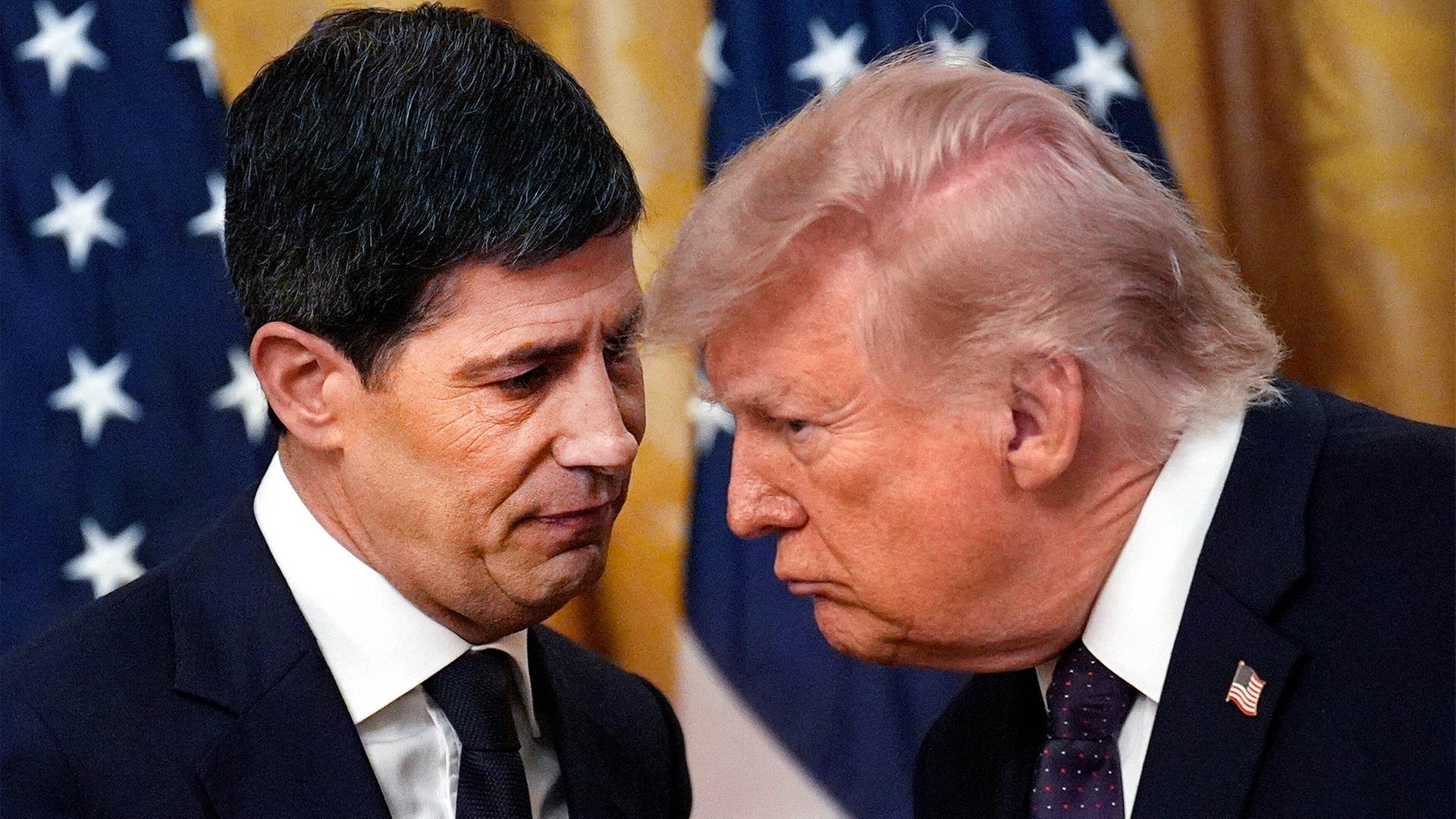
Kevin Warsh sent a clear message on Wednesday evening. "Our decision today was the right one," said the new head of the US Federal Reserve (Fed) following the meeting. Inflation was too high and had been for too long. The Fed therefore raised its key interest rate by 0.25 percentage points to a range of 3.75 to 4.00 percent.
That alone was no surprise. Financial markets had anticipated the increase. What is remarkable, however, is who made this decision: Kevin Warsh, whom Trump himself had placed at the helm of the Fed and from whom the president had hoped for a significantly looser monetary policy.
"The interest rate decision can be interpreted as a declaration of war. Above all as a declaration of war in defense of the Fed's ability to assert itself," said Ascan Iredi, capital markets strategist at Plutos Vermögensverwaltung, speaking to ARD's financial desk.
Trump's Hope for a Change of Course
When Trump appointed Warsh as the new Fed chair at the beginning of the year, it came with the hope of a change in direction. In May, the Republican-dominated Senate confirmed Trump's preferred candidate. The US president had repeatedly attacked his predecessor Jerome Powell over his interest rate policy. In Trump's view, interest rates are too high.
Trump made no secret of his expectations after Warsh took office: the key interest rate in the United States should fall to one percent or below. He reiterated this demand as recently as Wednesday.
Lower interest rates, among other things, make loans and mortgages cheaper and can thereby support the economy and the real estate market. The United States has debt totaling 40 trillion dollars. "Every interest rate increase naturally costs money. And so people are hoping for relief," explained Andreas Lipkow, analyst at CMC Markets, in conversation with ARD's financial desk. Interest rate cuts, however, were wishful thinking on the part of politicians.
Fed Signals No U-Turn for Now
Wednesday's decision does not align with Trump's vision. The Fed raised the key interest rate unanimously by 0.25 percentage points. As justification, Warsh cited persistently high inflation. At the same time, the economy and the labor market were robust enough to withstand a further tightening of monetary policy.
"I believe Warsh is a hawk. He was always a hawk, and he is now enforcing what is ultimately important for monetary stability," said capital markets strategist Iredi. In the financial world, "hawks" refers to decision-makers at central banks who favor a strict and restrictive monetary policy to combat inflation.
The Fed is also signaling no swift U-turn in the coming months. In their new projections, the central bankers anticipate one further rate move by the end of 2026. The majority of Fed members therefore continue to foresee a higher interest rate level.
Warsh Emphasizes Independence
Warsh justified the latest monetary policy decision by citing the Fed's statutory mandate and emphasized its independence. When asked about his message to Trump, Warsh declined to engage with the question at the press conference. Instead, he referred to the central bank's task: part of a central bank's independence, he said, was also to tend to its own affairs.
"The independence demonstration is a very, very important step," said analyst Lipkow. The battle between the central bank and the president had in the past created great uncertainty in the financial markets.
Trump responds promptly
The president continued to describe Warsh to journalists as a "good man," but accused the Fed committee of raising interest rates for political reasons. Interest rates are too high, he also wrote again on the Truth Social platform.
This means the fundamental conflict remains: Trump wants significantly looser monetary policy, while the Fed is holding to a comparatively high interest rate level in view of inflation. The crucial question will be how Warsh responds if Trump continues to increase pressure on the central bank.
"Actually, this interest rate hike was long overdue. It has already caused some minor damage in terms of credibility," said Jörg Krämer, chief economist at Commerzbank. Warsh needs to do more to convince Americans and the financial markets that he is truly independent of Trump.
The dollar gains
In the financial markets, it was less the interest rate hike itself than the Fed's outlook that caused movement. The dollar gained on Thursday. The dollar index temporarily rose to its highest level since late July. The euro temporarily fell to around $1.15.
Currency strategists interpreted Warsh's comments as more hawkish than expected. In particular, the indication of a possible further rate move supported the dollar. Higher US interest rates can make dollar-denominated investments more attractive.
On Wall Street, however, the reaction was negative. The Dow Jones lost 1.2 percent on Wednesday. The prospect of potentially higher interest rates for longer weighed on equity markets.
DAX up at midday
The German stock market initially presented a different picture on Thursday. The DAX gained around 0.6 percent at midday.
One important reason for this was the continued decline in oil prices. Crude oil of the Brent variety had already become significantly cheaper on Wednesday. Indications of a possible partial resumption of an important oil pipeline in Saudi Arabia had weighed on the oil price.
For the markets, it therefore remains crucial how inflation develops in the coming months. Should price pressure remain high, the Fed could maintain its tight monetary policy for longer. Should the energy price surge ease, however, inflationary pressure could recede again.