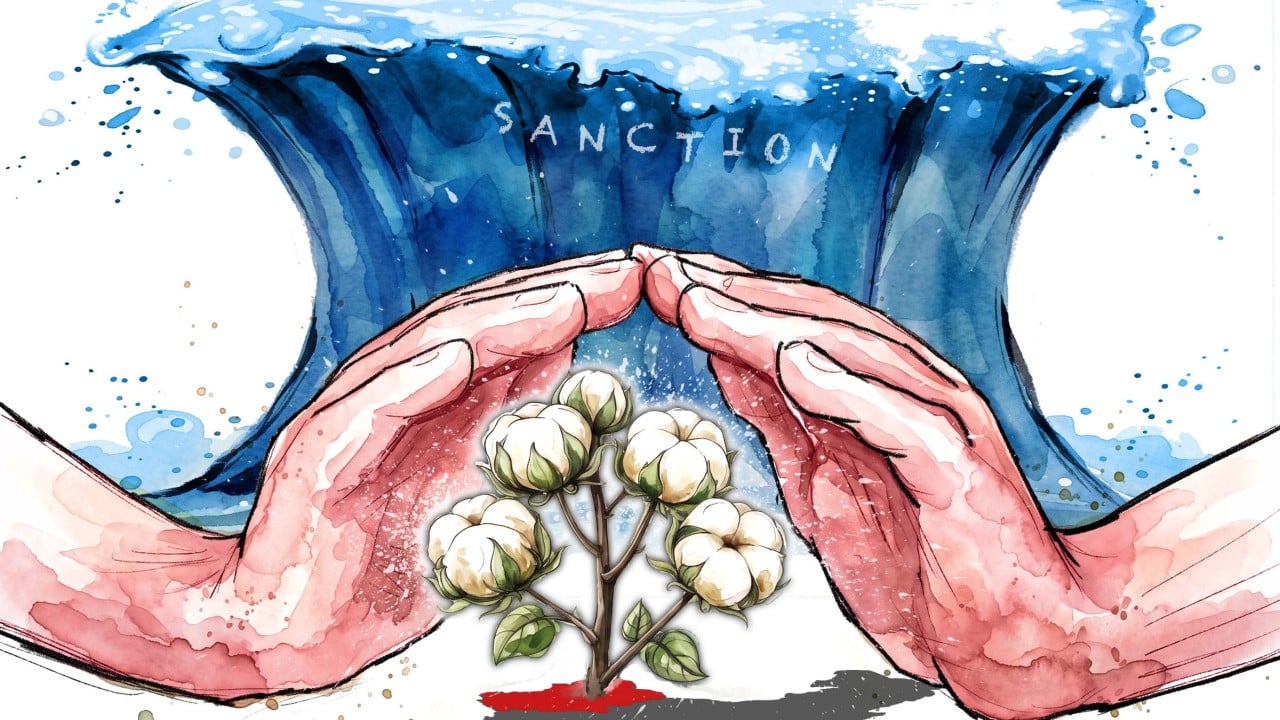
US sanctions forced Xinjiang cotton to adapt, but survival comes at a cost
State support and tech upgrades help producers pivot, but they face tight profit margins, a ‘domestic decoupling’ and EU market spillover
Yusup Molamaiti, a 36-year-old technician, recalled what it was like manually planting and harvesting 37 mu (about 2.5 hectares or 6 acres) of scattered plots of land.
“Planting a single mu took up to three hours with two people laying plastic film by hand,” he said. Harvesting would lock his family into year-round labour, yielding just 250-300kg (551-661lbs) per mu.
Today, his 100-household village is a model for Xinjiang Uygur autonomous region’s agricultural overhaul. Region-wide, over 90 per cent of cotton is now harvested by machine, according to China’s cotton association.

