Election in Mecklenburg-Vorpommern: Why "Woman" Narrowly Trails "Blue"
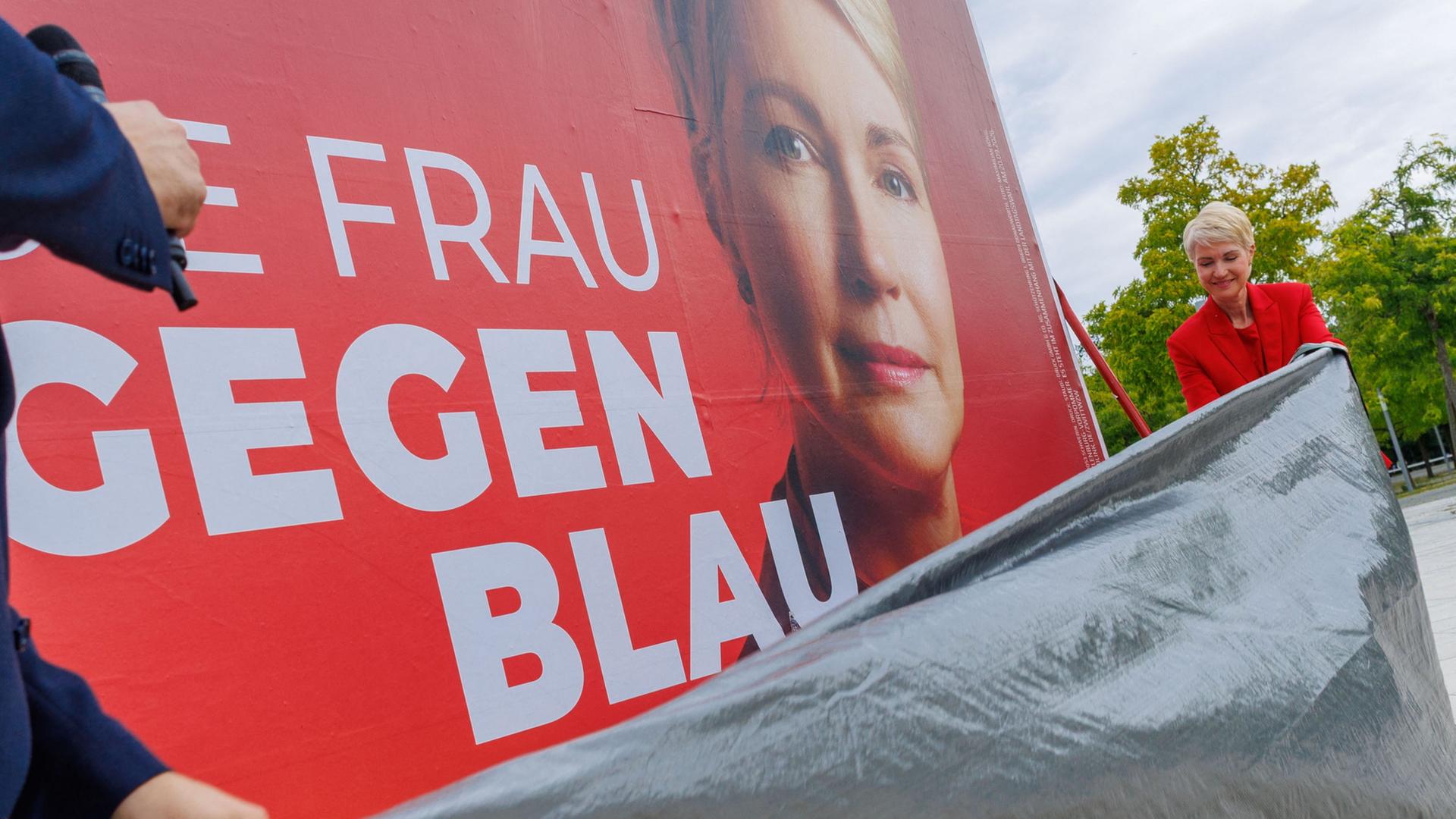
Why did Minister-President Schwesig manage a comeback with the slogan "Woman against Blue"? Why did the AfD still come out ahead? Surveys by infratest dimap provide explanations, as does a detail that must alarm the CDU.
In Mecklenburg-Vorpommern too, many voters used the state election to send a message to the federal government. This benefited the AfD, severely damaged the CDU — and left the SPD largely unscathed.
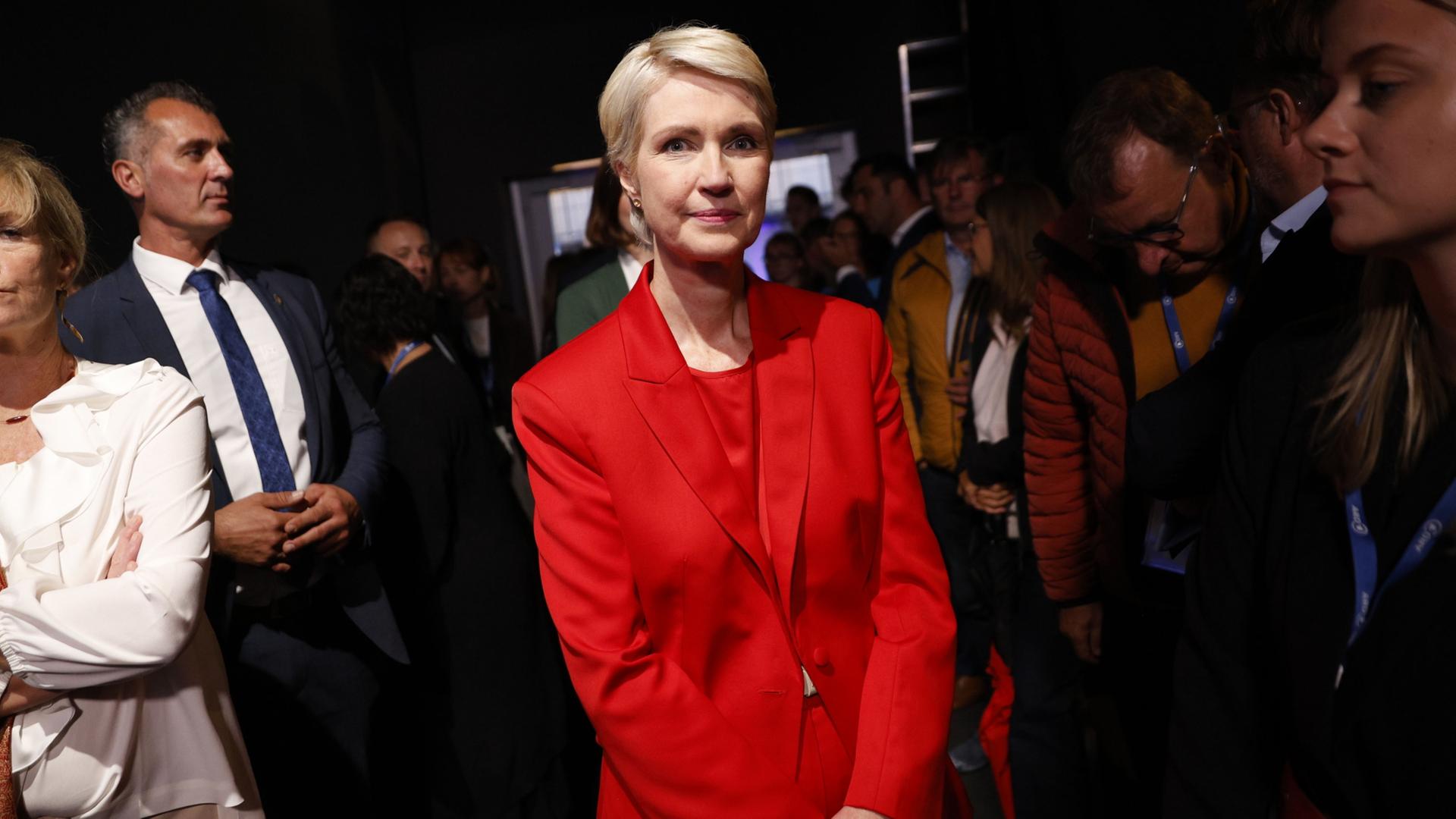
The Social Democrats have Manuela Schwesig to thank for this above all, which one survey makes particularly clear: almost half of SPD voters say they would not vote SPD without Schwesig. And half of SPD voters name the lead candidate as the most important reason for casting their vote for the Social Democrats.
Criticism of the pension reform resonates with many
The incumbent Minister-President had deliberately distanced herself from federal politics and criticised many proposed reforms — above all the planned abolition of the penalty-free pension after 45 years of contributions. Its elimination is a central component of the pension package, without which, in the federal government's view, the entire reform cannot be implemented.
Yet people in the state are extremely critical of this. Three quarters of eligible voters in Mecklenburg-Vorpommern say the penalty-free pension should be retained. And a similar proportion think it is good that Schwesig repeatedly and openly opposes the federal government's reforms. The paradox remains that the federal government is being criticised precisely because it is not making progress with the reforms.
Good marks for the current state government
Schwesig benefits from a second factor as well: she has a clear incumbency advantage and is well regarded beyond her own camp. The work of the red-red state government she leads is viewed positively by around half the population — a good figure compared to other federal states. Sixty-one percent of people in the state are satisfied with Schwesig herself. Even among CDU supporters the figure is half, and among AfD supporters it is still 18 percent.
Schwesig thus leads the lead candidates of the other parties by a wide margin. Leif-Erik Holm, whom the AfD fielded as their challenger, achieves only 28 percent and would stand no chance against Schwesig if eligible voters could decide directly who would become Minister-President.
AfD draws many non-voters, SPD draws many from the CDU
In the final sprint of the campaign, Schwesig had focused primarily on voters who were determined to prevent the AfD from becoming the strongest party. "Woman against Blue" was the corresponding slogan. With it, she managed to almost catch up with the AfD — but she could not overtake them.
A look at the initial voter migration provides clues as to why the SPD fell short: the anti-AfD campaign drew voters primarily from the CDU and the Left Party, but still lost many to the AfD. The AfD, in turn, succeeded in mobilising its own supporters to a high degree — and in attracting a great many people who did not vote in 2021.
AfD gains ground on competence ratings, but SPD mostly leads
The AfD is on the rise nationwide and has roughly managed to double its results in the state elections held earlier this year in Baden-Württemberg, Rhineland-Palatinate and Saxony-Anhalt. It is therefore hardly surprising that it has achieved the same in Mecklenburg-Vorpommern. It is the party that benefits most from general dissatisfaction and disappointment with the federal government.
It has made significant gains among workers as well as employees, the self-employed and pensioners - and across all age groups. Despite these gains, however, it does not lead in all of these population groups. As before, the AfD is chosen significantly more by men than by women. Among male voters, the AfD is also the strongest force by a considerable margin, while among female voters the SPD is clearly in the lead.
As in Saxony-Anhalt, where the AfD became the strongest force by far two weeks ago, voters in Mecklenburg-Vorpommern are increasingly attributing to the party the competence to actually solve problems.
But there is one key difference: while the AfD in Saxony-Anhalt ranked first on almost all policy areas, in Mecklenburg-Vorpommern the SPD leads the AfD on almost every issue. And even on the "meta-question" of who can best tackle the most important challenges in Mecklenburg-Vorpommern overall, 42 percent of voters say: the SPD. The AfD trails clearly behind at 25 percent.
Many consider the AfD to be "rather centrist"
The AfD has, however, managed to be seen as a centrist party by a comparatively large number of people in Mecklenburg-Vorpommern. A comparison with Saxony-Anhalt, which shares many similarities with Mecklenburg-Vorpommern in terms of its population structure, is also interesting here.
In both states, Infratest dimap asked people whether they agreed with the following statement: "While there are individual far-right politicians in the AfD, the party as a whole is rather centrist." Overall, agreement is higher in Saxony-Anhalt, which is due to the significantly larger number of AfD supporters there. But looking at supporters of other parties, one notable finding stands out: in Saxony-Anhalt, only 6 percent each of Left Party and SPD voters classify the AfD as "centrist," while in Mecklenburg-Vorpommern the figures are 10 and 14 percent respectively.
In its election manifesto, the AfD in Mecklenburg-Vorpommern is indeed considerably more moderate than in Saxony-Anhalt, where the state branch is classified by the domestic intelligence agency as confirmed far-right extremist.
The expectation of being disappointed by the AfD as well
The leading candidate had also played a significant role in the AfD's success in Saxony-Anhalt - a novelty for the party. This too was different in Mecklenburg-Vorpommern.
Here, many eligible voters may also not have been clear about who the party's leading figure actually is. In fact, the party ran with a "top duo": Leif-Erik Holm as "candidate for Minister-President" and Enrico Schult as "lead candidate." Holm is considered very moderate within the AfD and campaigned accordingly - though towards the end he appeared more as a lone operator rather than as part of a duo with Schult.
In Mecklenburg-Vorpommern, too, the AfD owes a considerable share of its election victory to disillusionment with other parties — above all to frustration with the federal government. An not insignificant number of AfD voters are, interestingly, already factoring in the possibility that they could be disappointed by the AfD as well. A full quarter of them say: the AfD, too, will not be able to keep its promises once it is in government.
**Record low for CDU on economic competence**
Breaking promises is currently hurting the CDU above all, however. 89 percent of eligible voters in Mecklenburg-Vorpommern say the party promised a great deal before the federal election but delivered little of it. This is not entirely new, as a clear majority of eligible voters had seen it the same way at other state elections this year.
In the current election, another polling figure is likely to be particularly alarming for the CDU: its loss of credibility on the economy. Only 13 percent trust it to offer the best solutions on this issue — and that on a topic the CDU essentially regards as its core brand. Never before anywhere in Germany has the CDU's economic competence been rated as poorly as it is now in Mecklenburg-Vorpommern.
**State politics, federal politics — and the Chancellor**
In keeping with this, around 80 percent of people now say they no longer know what the CDU actually stands for. And even among those who still vote CDU, 40 percent say the same.
The CDU's historically poor result in Mecklenburg-Vorpommern is partly due to the state CDU's failure to establish a clear profile. Added to this is the fact that it fielded Daniel Peters as its lead candidate — someone the vast majority of people in the state barely know.
The main reason, however, is likely to be found at the federal level. Dissatisfaction with the federal government of CDU/CSU and SPD is extreme. And as was already the case at the Saxony-Anhalt election two weeks ago, it is primarily the CDU that is being held responsible — and, within that, the Chancellor in particular.
**Without Merz, the CDU would be an option for many**
Views differ on whether the frustration is being pinned primarily on Friedrich Merz as a person. 19 percent consider criticism of Merz to be exaggerated; among CDU supporters, the figure is 57 percent. On the other hand, 58 percent say they are specifically disappointed in Merz.
Infratest dimap also asked voters in this election whether they could imagine voting CDU if Friedrich Merz were not Chancellor. Among AfD voters, 21 percent say: yes, I could. Among SPD voters, the figure is as high as 40 percent.
**The Left suffers from "big-city party" image**
In Mecklenburg-Vorpommern, too, the Left was once regarded as the party most likely to look out for "ordinary people" and East German interests. In 2011, this image earned it 18.4 percent of the vote. But that image is crumbling.
More than 40 percent of eligible voters now say the Left has lost sight of the "concerns of ordinary people." And on the question of who best looks after social justice, it has always stood in the shadow of the SPD in Mecklenburg-Vorpommern — and is now increasingly facing competition from the AfD as well.
**The Left gains among young voters, but there are few of them**
And more than a third of eligible voters say that the Left has only the interests of people in major cities in mind. This is likely closely connected to the fact that parts of the party that are very active on (social) media are currently discussing primarily Gaza, queer issues, or the expropriation of housing corporations.
In major cities there are many voters who respond to these issues - as the election result in Berlin also shows. And these voters tend to be younger.
But in Mecklenburg-Vorpommern, Rostock is the only major city. And the state has one of the oldest populations - and with that demographic, the Left no longer resonates. Among voters under 35, the Left gained compared to 2021, while among middle-aged and older age groups it lost ground. In total, this is not enough to maintain the election result of 2021.
Greens score points on an issue that currently has little traction
The Greens have had climate and environmental protection as a core issue for many years, one where, in the view of the majority of voters, no other party can hold a candle to them. Their problem in Mecklenburg-Vorpommern: in other areas they are barely credited with any competence - and climate played no role whatsoever in this election.
This may seem surprising. Because the consequences of climate change were clearly felt this summer, and even in Mecklenburg-Vorpommern, just over half of eligible voters say that climate change frightens them. But it was the decisive issue for only four percent of eligible voters - which is in a similar range to the Greens' election result.
And BSW and FDP? The latter has also been voted out of the state parliament in Mecklenburg-Vorpommern with barely measurable figures. Further evidence that through their behavior in the federal coalition government, they have likely permanently shot themselves out of political contention.
The BSW was running in a Mecklenburg-Vorpommern state election for the first time and likely owes its result primarily to its Rus-