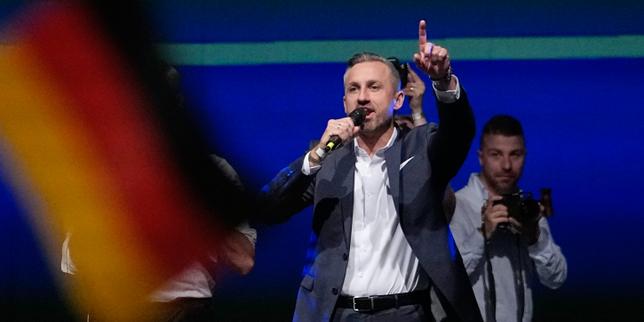
Few British politicians unleash the kind of evangelical zeal among their party faithful as Nigel Farage. Despite being weighed down by weeks of scandal, last weekend’s Reform UK conference showed that – as far as the membership is concerned – the lustre has not come off their man.
So it was notable that Farage felt compelled to reassure his disciples that he wasn’t going anywhere. “I’m only here because of the failure of our political class, and I am determined to lead Reform to victory at the next general election. That is my job,” he told them during his speech.
While support within the party for Farage remains rock solid, the same cannot be said for the wider public. Dogged by financial controversy and with a parliamentary standards investigation hanging over him, as well as the police looking into Reform, it is unsurprising that his ratings have slumped.
The steady drumbeat of speculation over his future has continued. But while he has publicly declared he intends to fight the next general election – and beyond – sources close to Farage have told the Guardian that if Reform UK loses that particular contest, it will be his last.
By 2029, the likely date for the next election, Farage would be 65 years old. That would make him the same age – he tells friends – as Winston Churchill in 1940, the oldest first time prime minister to take office in the modern era. Another five years at the helm would put Farage well ahead by that measure.
Yet four out of five Reform UK members say they would want Farage to continue as leader even if the party is not in government after the next election, according to a poll of 850 members by Lord Ashcroft in June. Just 13% said he should step down if they don’t win.
There are those inside the party who don’t think Farage will stick around even until the next election. “There are all sorts of reasons why Nigel could throw in the towel before then,” one Reform official said, citing family, security and money. “He’d have an easier life on the outside”.
What almost everybody inside Reform agrees on, however, is that if Farage does decide to stand down, it would be on his own terms. The party base is so fervently behind him it would be virtually impossible for a rival to stage a coup.
Whether Reform UK could carry on making the political weather to the extent it currently does without him at the helm is far from clear. So while any doubt remains over his plans, speculation over a possible successor will continue.
One Reform insider said that if Farage did depart, the race was expected to quickly turn into a battle between Zia Yusuf and whichever “anyone but Zia” candidate seemed best placed to beat him, with the home affairs spokesperson a divisive figure even inside the party.
“Everyone loves Zia when he’s on policy and focused, and when we were polling at 32% they didn’t mind when he wasn’t,” they said. “But now it’s more like 23%, and every vote counts, there is a concern that he puts off possible switchers, especially from the Conservatives.
“If you lead a party you have to be able to build internal coalitions, and he’s so combative I can’t see that happening.”
Yusuf’s social media outbursts have prompted even party loyalists to urge him to rein it in. Nadine Dorries, the former Tory culture secretary who defected to Reform last year, said at the weekend: “I think Zia’s got a problem with Twitter and someone needs to take his phone off him.”
One close ally of Farage said the party leader was “unimpressed” by some of Yusuf’s comments, which he felt distracted from Reform’s attempts to make itself look ready for government. “Nigel thinks he’s a wanker,” they added.
But when asked unprompted who they would like to see as the next Reform UK leader, party members were most likely to name Yusuf, with the backing of 22%, according to the Ashcroft polling.
Reform insiders believe he wants the top job – the backstory video he launched online at conference looked every bit like a veiled leadership pitch – even though party bosses have to date appeared less than enthusiastic about finding him a seat to run for parliament.
Richard Tice, the party’s deputy leader, was almost level, on 21%. Tellingly, just 6% suggested Robert Jenrick, the economy spokesman, who is viewed with some scepticism among Reform activists because he defected from the Tories after losing that leadership contest, and was also a key member of the last Conservative government.
“My view is there’s an acceptance that it probably can’t be a former Tory MP, and that Richard would have the authenticity to beat Zia,” one Reform insider said. “It doesn’t mean that Robert wouldn’t think about it, but if it was him against Zia, Zia would probably win.”
Tice, who led the party for three years until Farage’s return to frontline politics in spring 2024, probably has greater public appeal than Yusuf, and as a more moderate figure could win more votes from the Conservatives.
Yet neither Yusuf’s provocative outbursts, nor Jenrick’s ruthless ambition, nor Tice’s more mainstream leanings are ever likely to deliver the same level of cut through that their boss has achieved, and so electoral success could end up eluding them.
For now, despite his increasing toxicity with the general public, Farage remains Reform’s best hope.