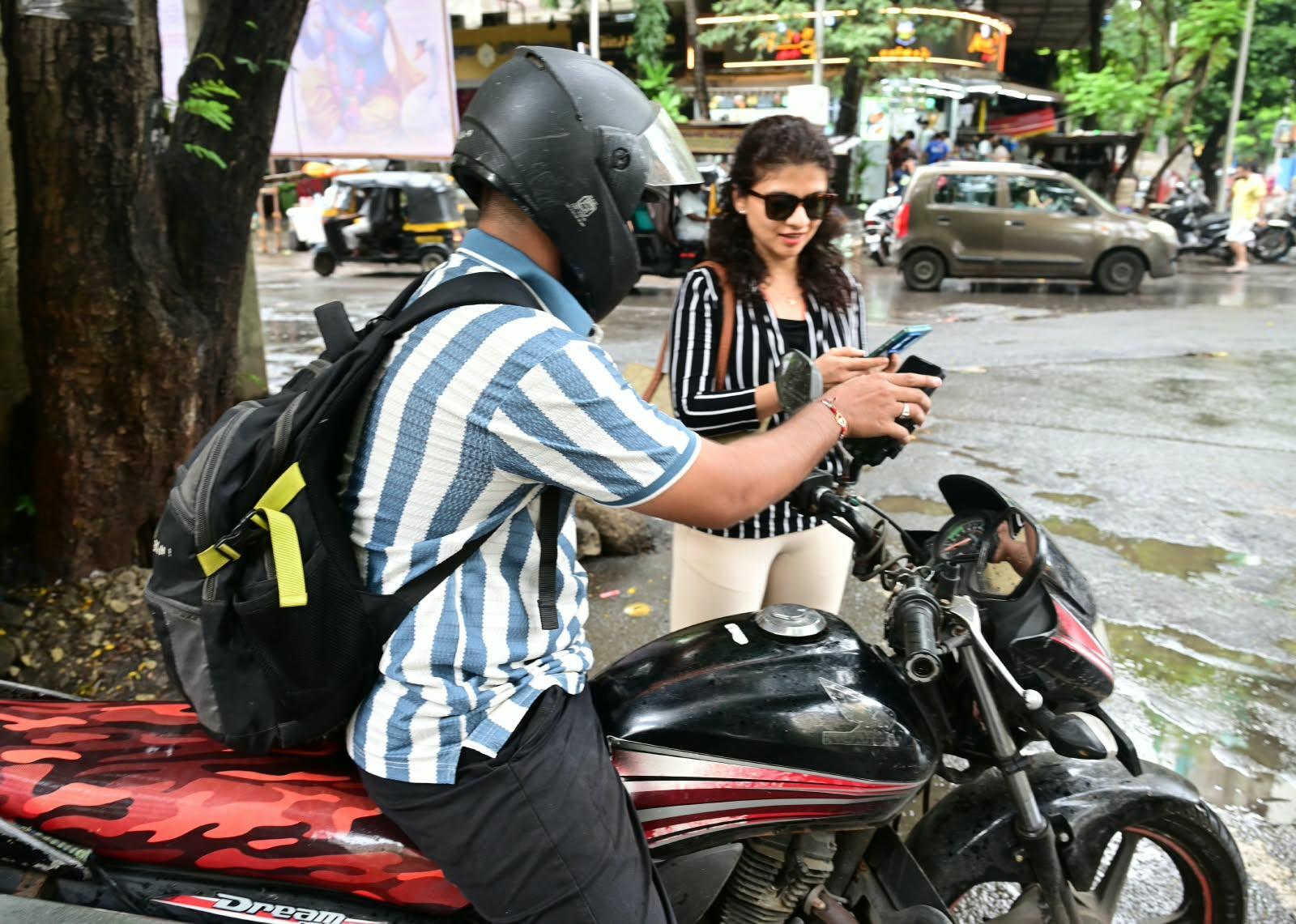
Mumbai: At 8.45am outside Andheri railway station, the monsoon-dampened air is thick with exhaust fumes, blaring horns and long queues of frustrated commuters. As autorickshaws refuse short-distance rides and buses crawl through traffic, 26-year-old finance professional Sneha Kulkarni bypasses the chaos with a few taps on her phone. Within minutes, she is riding pillion on a bike taxi towards MIDC, determined not to miss her morning meeting.
Sneha is far from alone. Across Mumbai and the wider metropolitan region, women and Gen Z commuters are increasingly embracing bike taxis, reshaping long-held perceptions about urban mobility. In a city where riding behind an unfamiliar male driver was once viewed with hesitation, convenience is rapidly overcoming social barriers. The reason is simple: bike taxis save both time and money.
“With fares starting at around Rs 10 per km, compared with an average of Rs 18 for autorickshaws and even higher fares for app-based cabs, the financial appeal is equally strong,” said a media professional from Nariman Point. “In South Mumbai, I’ve used bike taxis several times to go from college to the station or meet friends,” said undergraduate student Shriya Narayan.
“It costs much less than a cab and gets me there faster.”
But there are risks as well. Transport analyst Vivek Pai pointed out: “Women need to recognise that motorcycles are among the most vulnerable vehicles on the road. Unlike a car, there is very little protection if something goes wrong. When booking a bike taxi, the passenger is also placing trust in an unknown rider whose driving habits and risk-taking behaviour are not known. That itself carries an element of risk.”
He further advised: “Safety must remain the top priority. Both the rider and the pillion passenger should wear helmets without exception. As bike taxis become more popular, strict enforcement of helmet use and safe riding practices will be crucial, especially for women commuters.”
Many commuters complain that captains rarely provide helmets to pillion riders, despite double helmets being mandatory under Mumbai’s traffic rules and required under the proposed bike taxi framework. “I’ve travelled several times by bike taxi and never received a helmet,” said rider Akshita Bhat. “With potholes and unpredictable traffic, it is a risk.”
Transport officials also noted that a recommended separator pad between rider and passenger is rarely seen on operating bikes.
Safety concerns have intensified following a handful of accidents involving bike taxis, including a fatal Navi Mumbai crash last year and another serious accident in Worli earlier this year. Experts said the incidents should serve as a wake-up call as the sector expands.
Meanwhile, companies such as Rapido are promoting women-focused initiatives like Bike Pink, which deploys female captains exclusively for women passengers. “Bike Pink is more about making mobility more inclusive and enabling more women to choose rides with women captains,” a Rapido spokesperson said. A few women complained why the Bike Pink was slightly expensive than the normal bike taxi. Sources in bike taxi firms said that the fares were based on demand-supply formula.
For frequent rider Neha Gupta, the attraction goes beyond economics. “It’s quick, readily available and honestly quite enjoyable. I don’t mind a male rider when it gets me to my destination safely and on time,” she said.
Bike taxi captains say female passengers now form a significant share of their daily rides, particularly around corporate hubs such as Bandra-Kurla Complex and major transit points like Bandra and Andheri stations. Digital safeguards including live GPS tracking, SOS buttons, real-time route monitoring and trip-sharing with family members have helped build trust among women riders.
The state government is now moving towards legalising bike taxis, with operators expected to pay a daily licence fee and contribute a share of each fare to a welfare fund. The momentum behind two-wheelers is gaining high-level policy backing as well.
Union Road Transport Minister
Nitin Gadkari recently advocated strongly for the sector, urging state governments to allow private two-wheeler owners to operate bike taxis. Pointing to the massive economic upside, Gadkari noted that liberalising bike taxi rules could unlock livelihood opportunities for nearly eight crore people, particularly across rural and semi-urban belts.
The rules for bike taxis* Crash helmets for riders as per permissible specifications shall be required to be provided for each ride. The helmets shall be cleaned and hygienic
* All the penal provisions for traffic rule violations shall also be applicable to the bike taxis in order to ensure compliance and safety
* The distance between the origin and the destination of a trip shall not be more than 15 km
* Speed limit: 60 kmph
* Bike taxi service providers shall provide facility in their app for women passengers to opt for a female rider and vice versa ensuring enhanced safety
# A look at the faresKm ..........Fare
1.5 km......Rs 15
3 km.........Rs 31
4 km ........Rs 41
6 km ........Rs 62
8 km ........Rs 82
10 km ......Rs 103
15 km.......Rs 154