In short:
Jack Bowd has pleaded not guilty to four counts of dangerous driving causing death after a crash on the Newell Highway, south of Dubbo, in September 2024.
The Dubbo District Court today heard the 25-year-old and his friends abandoned a hunting trip and were driving an injured dog to a vet before the crash.
What's next?
The trial continues before Judge Michael Smith.
A man charged over a crash that killed four people was allegedly filmed by passengers driving at 160 kilometres an hour while holding an alcoholic drink in the lead-up to the deadly impact, a court has heard.
Jack Bowd, 25, is facing a judge-alone trial in the Dubbo District Court, accused of causing a crash on the Newell Highway near Tomingley, in NSW's Central West, in September 2024.
Mr Bowd was the sole survivor of the crash, which killed his passengers and friends Lochie Jacobs, 18, and Joey Urban, 19, as well as Parkes couple Sue and Graham Tait, both 57.
He has pleaded not guilty to four counts of dangerous driving causing death.
The court heard Mr Bowd and his friends had been hunting when he ran over one of his dogs, prompting the group to head to the Orana Veterinary hospital in Dubbo for emergency treatment.
During opening submissions, Crown Prosecutor Michelle Swift told the court Mr Bowd called the veterinary hospital about 8:34pm, advising staff he would arrive in about an hour.
The group had stopped for fuel at a Parkes service station minutes earlier, with CCTV footage showing Mr Bowd getting into the driver's seat of his Toyota Hilux.
The group then continued north towards Dubbo, travelling along the Newell Highway through Peak Hill and Tomingley.
The court heard that in the moments before the fatal crash, Mr Bowd was travelling at 134km/h when he attempted to overtake a B-double truck on a bend, crossing double unbroken lines.
The ute crashed head-on with a Toyota HiAce van carrying Mr and Ms Tait.
The court heard none of the three men in the ute had been wearing seatbelts at the time of the crash.
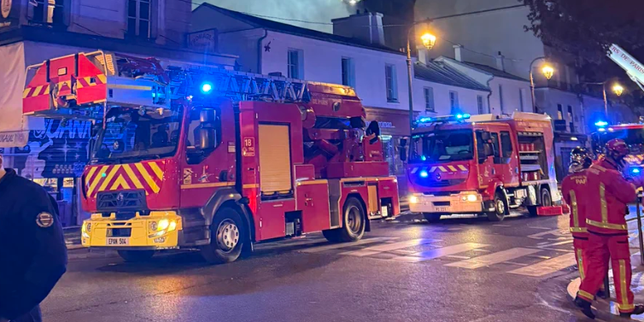
All four victims had died by the time emergency services arrived, while Mr Bowd was taken to Dubbo Hospital, where he underwent surgery on his left femur.
Ms Swift told the court Mr Bowd's blood-alcohol level was such that, if he had been driving, his ability to drive would have been "very substantially impaired".
Dispute over who was driving
The central issue in the trial will be whether Mr Bowd was driving at the time of the crash.
The court heard Mr Bowd repeatedly denied being the driver when questioned by emergency responders, and told police he had been sitting in the back seat.
During a police interview he claimed he pulled over after passing through Tomingley and swapped seats with Mr Jacobs because his injured dog appeared to be deteriorating.
Ms Swift showed the court stills of footage recovered from the mobile phones of Mr Urban and Mr Jacobs, which showed Mr Bowd driving with one hand on the wheel and a vodka drink in the other while the speedometer read 160km/h.
One Snapchat message sent from Mr Urban's phone read, "Coming in hot to the vet".
In another video, Mr Jacobs could be seen in the back seat referring to the injured dog as "precious cargo back here".
Ms Swift said the prosecution would rely on DNA evidence and expert opinions to establish who was driving.
The court heard 38 of 39 blood samples collected from the front of the driver's steering wheel airbag matched Mr Bowd's DNA.
A biomechanics expert is also expected to give evidence that Mr Bowd's account of being in the rear seat had "minimal biomechanical validity".
Defence says accused is 'honest and credible'
Defence barrister Iain Todd argued Mr Bowd's version of events was "honest and credible".
Mr Todd said his client had consistently denied being the driver and had provided detailed accounts of the events leading up to the collision.
"It's the other things he says immediately to those who respond to the collision," he said.
"He repeats in detail certain events leading up to the collision and made admissions against his best interest."
Mr Todd also argued mobile phone GPS data supported Mr Bowd's claim that the ute had stopped to change drivers before the crash.
The trial before Judge Michael Smith is expected to continue for two weeks.