In short:
Plans for a new espionage agency are gathering momentum in Japan, prompted by increasing concerns about military build-up in countries such as China.
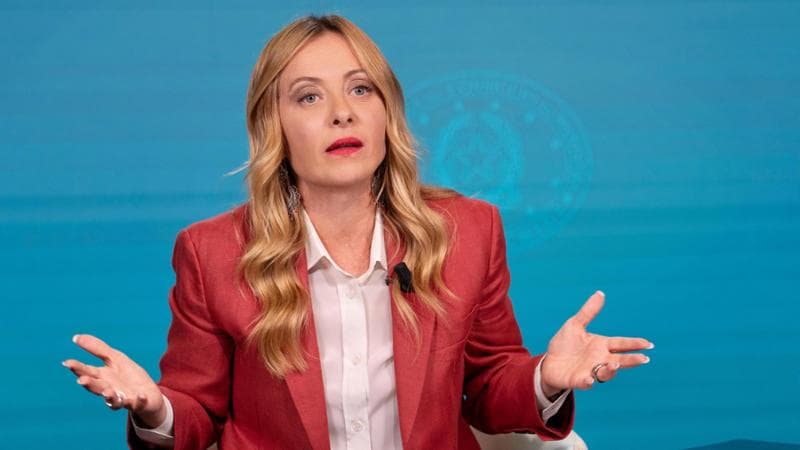
Japan's Prime Minister Takaichi Sanae says strengthening intelligence capabilities is "a matter of the utmost urgency".
What's next?
Japan "really wants" to join AUKUS, according to a leading Tokyo academic, who says Australia has been a "good" role model for many years.
Japan may soon have its own "CIA", as it works to establish its first centralised network of intelligence operations since World War II.
Plans for a new espionage agency have been prompted by increasing concerns about military build-up in countries such as China and threats of foreign interference.
Japan's current intelligence system is fragmented, with police, defence and foreign affairs departments all gathering information, but not always sharing it across agencies.
Japan's Prime Minister Takaichi Sanae said strengthening intelligence capabilities was "a matter of the utmost urgency", given geopolitical shifts across the region.
"We are seeing the military build-up of China and North Korea, as well as strengthened cooperation between China and Russia, and between Russia and North Korea,"she said.
Ms Takaichi also raised concerns about a rise in "the unauthorised leakage of cutting-edge technology involving foreign intelligence agents", cyber attacks on the public and private sectors, and disinformation campaigns "aimed at manipulating public opinion to favour a particular country".
She recently met with a newly formed expert panel tasked with helping create a long-term intelligence strategy.
Japan considers its own CIA
Panel member and senior research fellow at the Nakasone Peace Institute Osawa Jun told the ABC that the old system had "failed to ensure that the nation as a whole carried out intelligence gathering and analysis in a properly coordinated manner".
Already this year, a new overarching security council headed by the prime minister has been established, along with a National Intelligence Bureau.
Next, the government is looking at setting up an independent foreign intelligence agency, which would be similar to America's CIA.
"If we are to possess intelligence capabilities truly on a par with those of the US or the [United Kingdom], it will be necessary to gather intelligence abroad," said Mr Osawa.
"Conceptually, this would be akin to the world of the CIA or Britain's 007."
The intelligence reforms will bring Japan in line with other major countries and comes amid a broader expansion of its defence capabilities.
What are the challenges?
The aim is to establish a foreign intelligence agency by early 2028, according to a policy document prepared by the country's ruling party, and for the agency to "maximise the effective use of limited human resources and be operational immediately after establishment".
Personnel will not be the only issue, with legal and structural changes also needed to facilitate the intelligence work and better protect the country against foreign espionage, to which it is currently vulnerable.
"There are still significant challenges ahead,"Mr Osawa said.
"[Those include] enacting laws to enable concrete intelligence-gathering and countermeasures, establishing the necessary government agencies, and training personnel capable of carrying out these tasks."
Ensuring public support and establishing democratic oversight are also a focus for the independent panel.
But one of Japan's pre-eminent former national security chiefs, Kitamura Shigeru, said the country does "not have to start from zero" and should build on its existing international counterterrorism capabilities.
Mr Kitamura said Japan needed to ensure it limits its focus to gathering information and not engage in political manipulation or subversion overseas.
"In constructing a new intelligence architecture, we should not simply import every function of intelligence services elsewhere,"he said.
While pushing for controls he described secret intelligence gathering as an "indispensable function" of a modern country.
"We cannot depend entirely upon information supplied by others, however close our allies and partners may be," he said.
Australia has been a 'good model'
Japan has examined intelligence systems and foreign interference laws in countries including the US, the UK, France, and Australia.
Tomohiko Satake, from the Aoyama Gakuin University in Tokyo, said Australia has been a "good model for Japan for many years".
"In terms of the scale of the country, we can't be America, of course, we can't be maybe the UK, but we could be Australia, in terms of our intelligence ability," he said.
"I think there are many things Australia can cooperate with Japan on in terms of intelligence capabilities and most importantly, how to establish that intelligence community itself."
He also pointed to Australia's clearance system, which vets who has access to intelligence and governs how it is shared, as an area for Japan to consider.
Increased intelligence sharing with Australia predicted
The changes are expected to increase Japan's intelligence sharing and security relationships with its partners in the west.
During a visit to Australia in May, Ms Takaichi and Prime Minister Anthony Albanese issued a joint statement on Enhanced Defence and Security Cooperation, which included "increased information and intelligence cooperation".
Professor Satake said Japan "really wants" to join AUKUS, a trilateral military technology partnership between Australia, the UK, and the United States.
Australia is also seen as "gateway for Japan to be closer to Five Eyes", a powerful intelligence-sharing alliance made up of Australia, Canada, New Zealand, the UK, and the US.
Jun Osawa said while joining Five Eyes would be difficult for Japan, he did think it could "become a partner close to the Five Eyes, drawing on Japan's unique intelligence".
"In particular, when it comes to analysis regarding China, there are quite a few areas where Japan is superior," he said.
"I believe it is important to build a relationship where we can properly exchange that sort of information."
What does China think?
China has criticised Japan's intelligence reforms, describing them as "another negative move in its domestic and external security policies".
Relations between the countries have been at a historic low after Ms Takaichi said an attack on Taiwan could potentially trigger a military response from Japan. Beijing has also been outspoken on what it calls Japan's "remilitarisation".
"Japan's intelligence agencies historically paved the way for its full-scale pursuit of militarism and the launch of wars of aggression," Chinese foreign ministry spokesperson Mao Ning said after the establishment of Japan's new National Intelligence Bureau.
She accused Japan of "threatening regional peace and stability and raising widespread concerns among the international community".