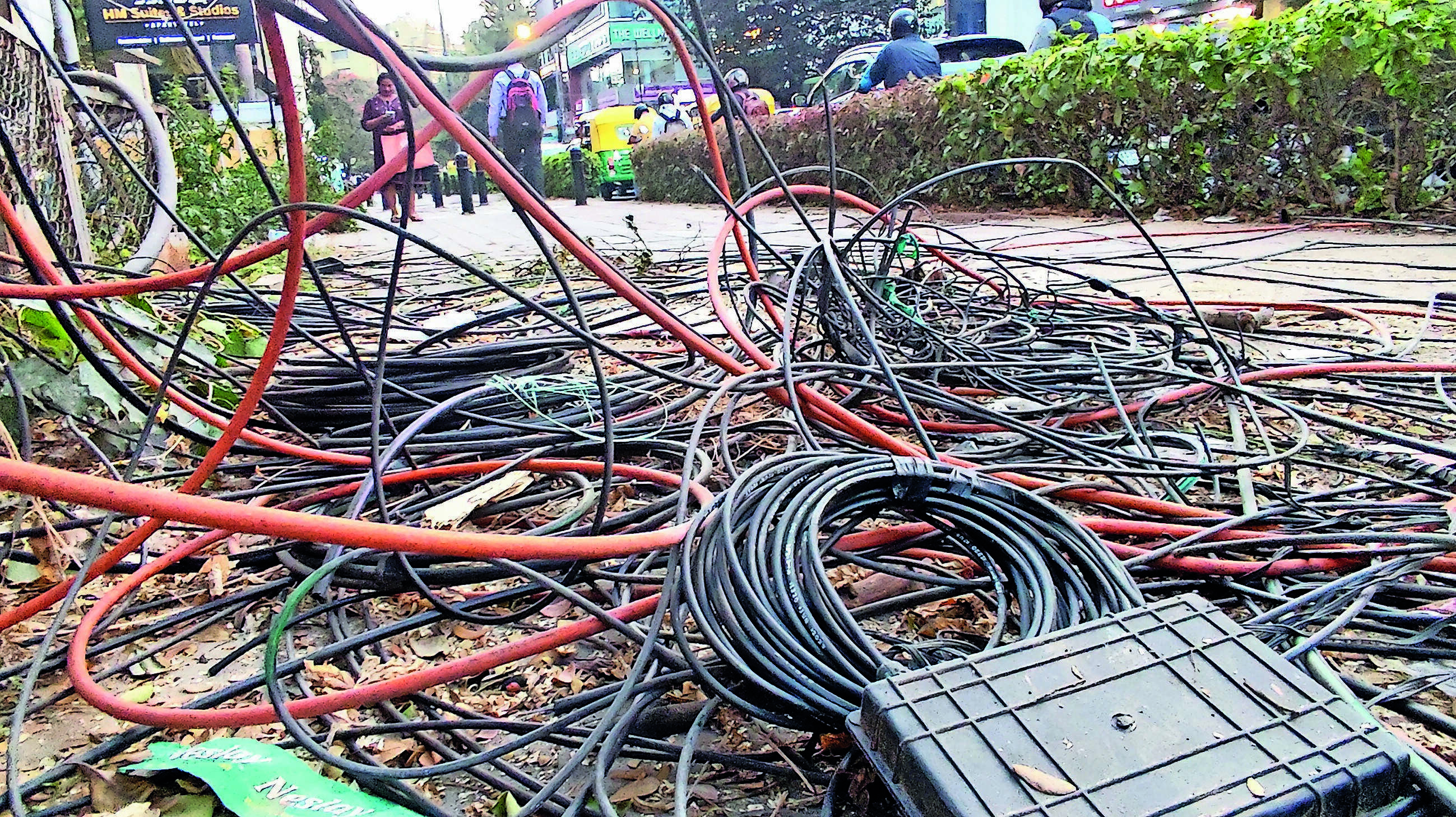
Mumbai: BMC has proposed a revised policy to regulate road digging by telecom and other underground utility agencies, with stricter provisions for unauthorised excavation, mandatory GIS mapping of underground utilities and longer defect-liability periods for reinstated roads.
The Comprehensive Trenching and Reinstatement Policy 2026, to be placed before the civic standing committee at its meeting on Thursday, seeks to replace the existing 2023 guidelines. The civic administration said the revision was necessary as the existing policy had become repetitive and cumbersome to implement, while trench reinstatement charges were higher than those levied by other municipal corporations.
One of the key changes is a sharp reduction in the reinstatement (RI) charge for utility works carried out during road construction. The proposed rate has been reduced from Rs 6,711 per metre to Rs 2,300 per metre, with BMC saying the move is aimed at encouraging utility agencies to complete their work while roads are being constructed, thereby avoiding repeated excavation of newly built roads.
At the same time, the civic body has proposed five times the regular RI charge for unauthorised trenching, up from the existing penalty structure, to improve compliance.
Under the proposed policy, low-voltage electrical and telecom utilities with cables up to 100mm in diameter will have to use existing utility ducts. If ducts are unavailable, the utility agency will have to construct one or the Roads Department will do so.
BMC has also proposed fixed windows during which trenching permissions can be sought. In exceptional cases, permission to dig outside the prescribed period will require the municipal commissioner’s approval and attract an additional 10% RI charge. For emergency fault repairs, utilities will have to first apply online, after which the work can be undertaken in coordination with the concerned civic officials. The assistant commissioner will have to inform the municipal commissioner within 24 hours.
The policy also seeks to make utility agencies more accountable for the condition of roads after reinstatement. The defect-liability period for cement-concrete roads will be increased to 10 years, while it will be five years for non-concrete roads, compared with three years for all road surfaces under the existing policy.
For concrete roads, the use of diamond cutters will be mandatory for trenching. BMC has also proposed that the reinstatement charge be calculated according to the actual size of the trench rather than using a standard width.
Another major provision is mandatory digital mapping. Utility agencies will have to submit details of underground utility conduits through a GIS-based Web Map Service (WMS). If the GIS data is not updated within 30 days of completing the work, the agency will not be permitted to undertake further trenching until the information is updated.
The proposed policy also seeks to simplify the classification of road surfaces for calculating RI charges by reducing the existing 16 categories to just two — cement-concrete and non-cement-concrete surfaces.
BMC has proposed a uniform ₹20-per-metre access charge plus GST for all utility agencies, replacing different charges currently applicable to telecom and non-telecom utilities.
For horizontal directional drilling, which allows utilities to be laid underground with minimal surface excavation, a ₹15 lakh per km security deposit has been proposed. A security deposit of 50% of the applicable RI charge has also been proposed for regular trenching, subject to conditions. A BMC official said, “The revised policy is aimed at reducing repeated digging of Mumbai’s roads as the city expands its underground telecom, electricity and other utility networks.”