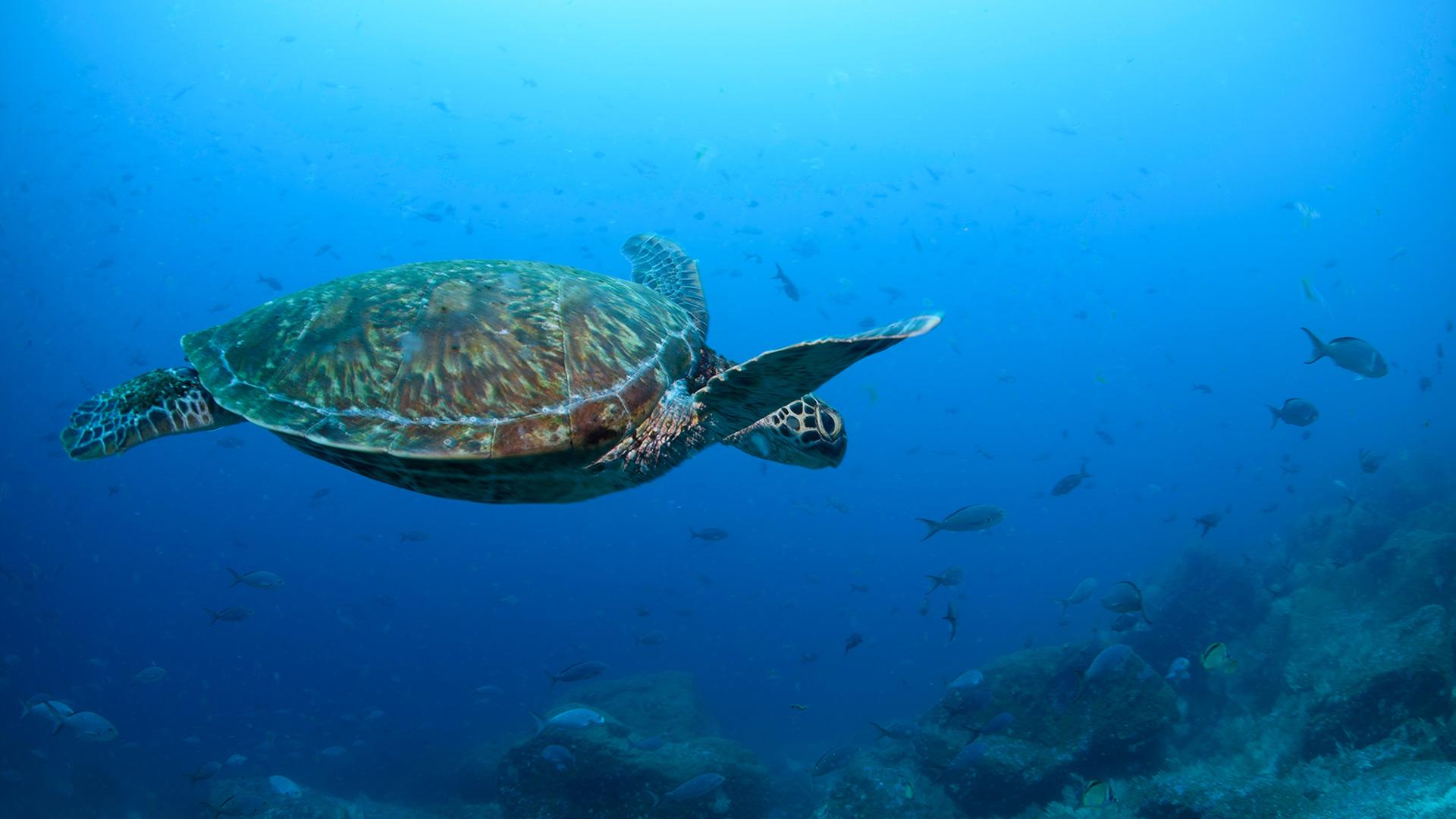
Turtles in Mexico: From Easy Pickings to Tourist Highlight
Once known primarily among poachers, a small beach in the Mexican state of Oaxaca has since transformed into a paradise for ecotourism. The stars of the show are sea turtles.
Thousands of sea turtles come to a small beach in Mexico to lay their eggs. The eggs were long considered a delicacy. The location of Escobilla on Mexico's southern Pacific coast has since become a hotspot for ecotourism. The sea turtles have, in a sense, saved both themselves and the village. Many people here now make their living from the tourism industry.
Eloisa Soledad leads tourists around a remarkable turtle beach. She explains how an olive ridley sea turtle buries its eggs: "The turtle has just finished nesting and is hiding her eggs so that natural predators won't steal them. A few minutes later, the turtle makes her way back to the ocean."
Former Stronghold of Turtle Hunting
Soledad is at the beach almost every day, monitoring it, leading tourists through the protected reserve, and clearing away rubbish. In the past, the Mexican woman used to steal turtle eggs herself. About 30 years ago, the region was still a stronghold of the sea turtle industry. Animals were slaughtered, their hides processed into bags for the international market. The eggs of olive ridley sea turtles are considered a delicacy and can still be found today on markets in the region.
Soledad comes from a poor background and earned the equivalent of a few euros in a single night hunting eggs. "We came here to raid the nests and sell the eggs so we could at least buy a biscuit or a kilo of sugar or a kilo of beans." Her parents were very poor, and the money was not enough for their twelve children. "We had no choice," she says.
Some Species Threatened with Extinction
The hunting of turtles has had consequences that persist to this day. Some species are threatened with extinction. The population of the olive ridley sea turtle has also declined dramatically. In the 1990s, Mexico imposed a strict trade ban — a success for species conservation.
At the time, however, this also posed an existential threat to people in surrounding communities who depended on turtle hunting for their livelihoods. They had to find new directions in order to survive. The area around Escobilla beach has since become a mecca for ecotourism on the Pacific coast. Bars, small shops and surf schools line the narrow lanes of the neighbouring town of Mazunte. Holidaymakers lie on the beach enjoying the town's hippie vibe, or visit the Mexican turtle centre that was founded to protect the animals.
There, visitors can observe a number of specimens up close. Mireya Viadiu works there as an education coordinator: "We do educational outreach here." Former fishermen were offered training and further education so they could find alternative sources of income, according to Viadiu. Today, many fishermen in the state of Oaxaca work in the tourism sector, offering boat tours to see dolphins and whales, and supplying restaurants with their fresh catch.
New Problems Arrive with the Tourists
It is a gentle form of tourism. Instead of large hotel chains, there are eco-lodges, natural cosmetics shops, and yoga centers. The turtles are now a tourist attraction. But tourists also bring new problems, says Viadiu: "Hotels and restaurants generate a lot of waste and also too much light pollution." Light alters the behavior of the turtles. It is very likely that the turtles change their nesting sites because of the light. The problem is even greater for hatchlings, as they too are attracted to light, Viadiu explains. "Instead of moving toward the sea when they hatch, they head inland. Many then die from dehydration."
In Escobilla, where the large female turtles lay their eggs, the ecotourism cooperative run by Eloisa Soledad has also set up hatching enclosures. The aim is to protect as many eggs as possible from external dangers. It takes about six weeks for the eggs to develop into baby sea turtles the size of a hand, which then make their way to the ocean.
For Soledad, the work with the conservation initiative is a supplementary income — she cannot live on it alone. Nevertheless, she is happy with her job: "I am satisfied with my work, I feel good. Whether I earn money here or not. I want to take care of the turtles and make sure there are many of them, to make up to nature for the harm I have caused it."