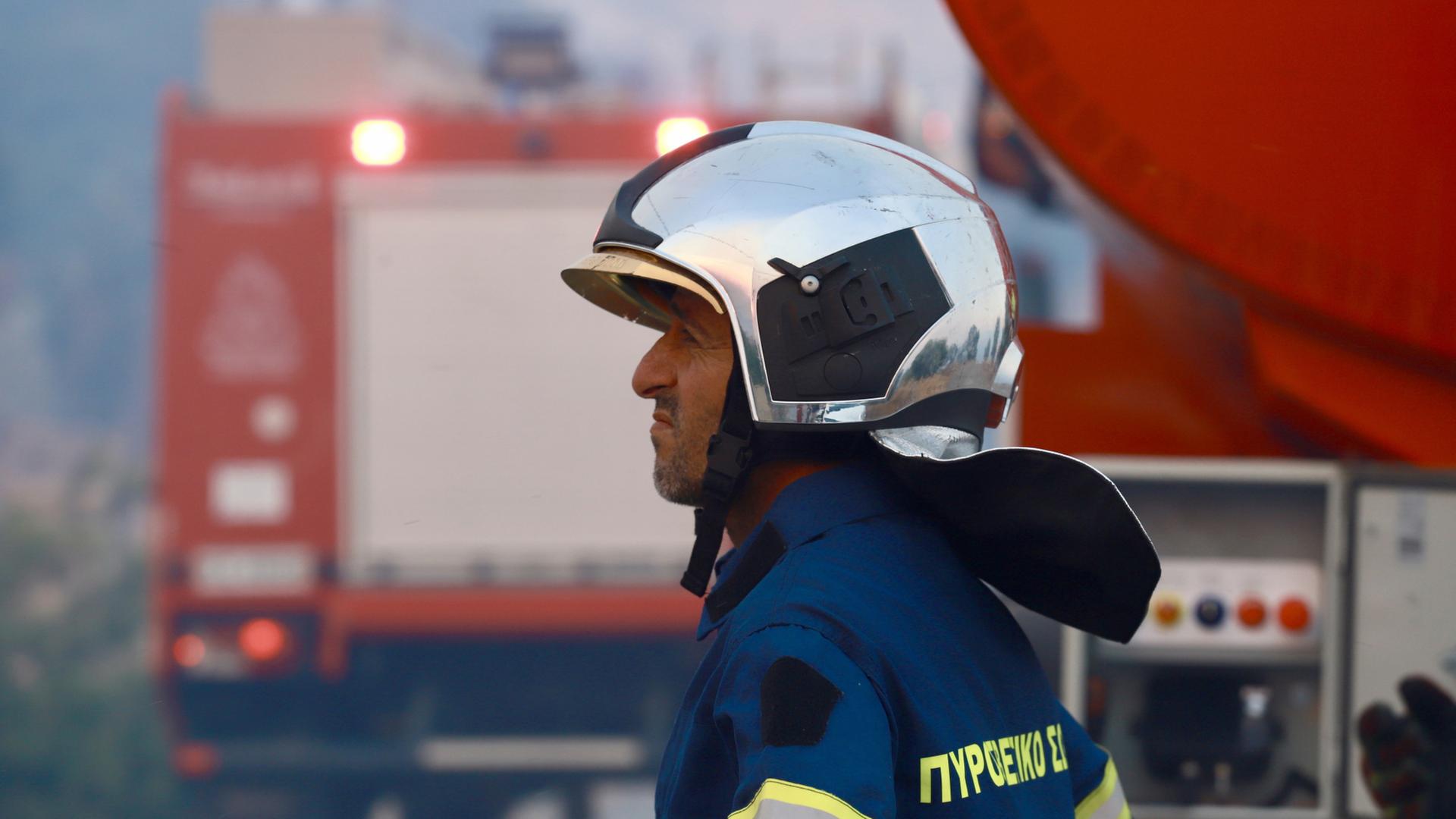
Greece: More Than 300 Arrests Over Fires
Greece has recently experienced several severe wildfires. Drought and heat are causing the fires to spread. Authorities are taking action against arsonists.
Cases like this one repeatedly cause bewilderment: Last week, according to the fire service, a fire broke out on the Greek island of Crete after a vacationer had been grilling with charcoal not far from the forest. According to media reports, he told authorities he had not known that outdoor grilling was prohibited in strong winds and dry conditions.
The Crete example is not an isolated case. Since the beginning of the year, 308 people have been arrested in Greece in connection with fires caused either negligently or deliberately. The cases involve 272 instances of negligence and 36 of intent, said fire service spokesman Giorgos Artopoios on public broadcaster ERT.
According to civil protection authorities, the risk of fire is once again rising due to drought and strong winds. At the same time, temperatures are soaring: in the coming days, temperatures of more than 40 degrees Celsius are expected across large parts of Greece. The extreme heat is set to persist until the middle of next week. These conditions cause fires to spread rapidly.
Fire Detection System for Historic Sites
To protect its historic sites from wildfires, Greece is now equipping them with a modern fire detection system. The new mechanism has already been successfully tested under real conditions at the foot of the Acropolis of Mycenae on the Peloponnese peninsula, the Culture Ministry announced. In total, the system is to be installed at 22 historic sites.
The fire detection system is also planned for the area around the Acropolis in Athens.
The installations are equipped with optical and thermal imaging cameras, some offering a 360-degree panoramic view. Pan-and-tilt cameras enable targeted monitoring of suspicious areas. At selected locations, mobile fire cannons are also intended to allow for an initial response to fires.
During a test at the Acropolis of Mycenae on July 31, a fire was detected quickly, the ministry further explained. By the end of August, six new systems are to be put into operation, including at the Acropolis in Athens, the Palace of Nestor, and the Hosios Loukas monastery. Eight more are to follow in September.
The project is part of the Greek civil protection program "Aigis" and is financed from funds provided by the EU Recovery and Resilience Facility. The aim is to detect fires at particularly valuable cultural and natural sites as early as possible, thereby shortening the response time of emergency services.