Spain: Large fires near Madrid "cannot be extinguished"
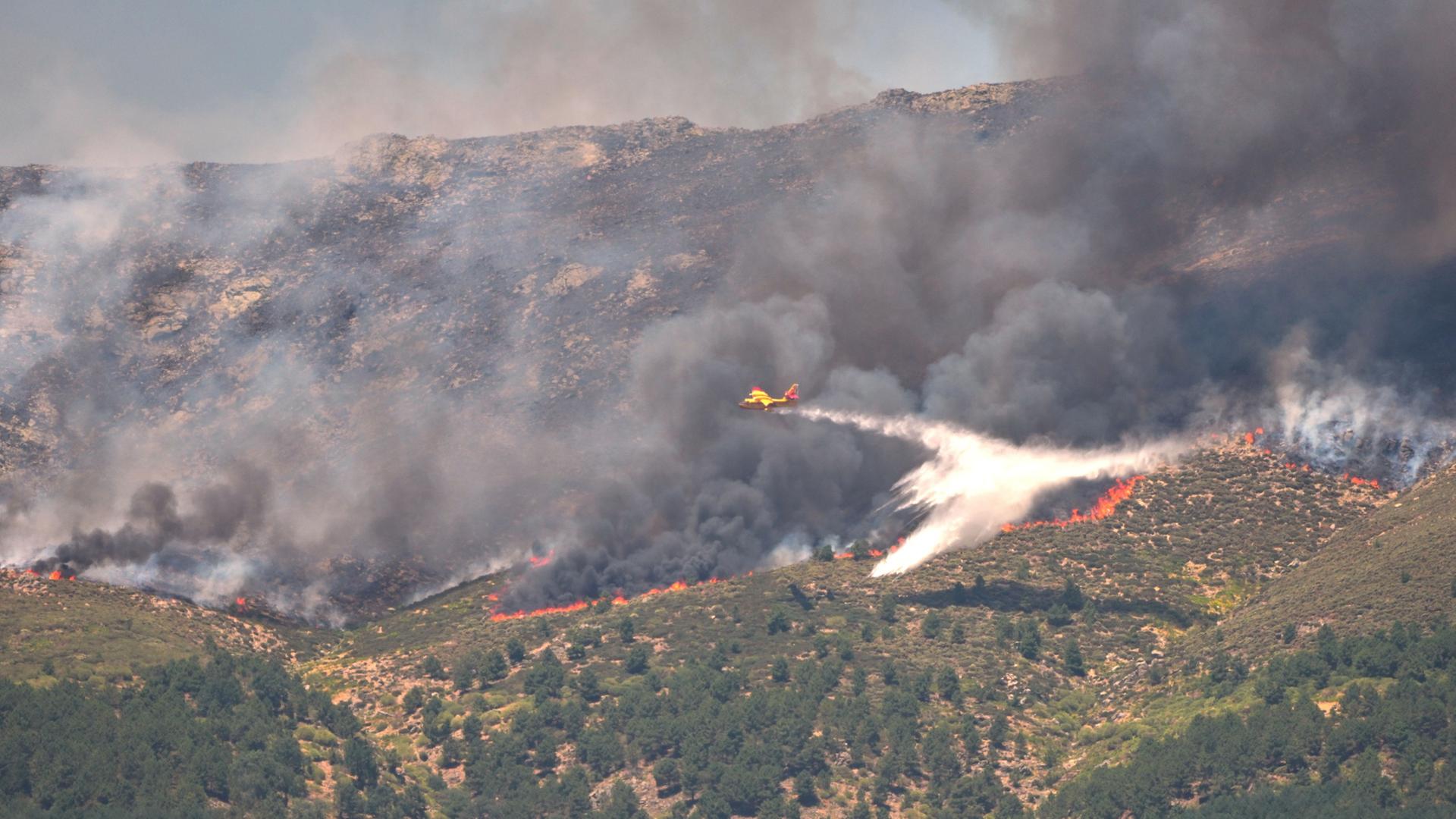
In Spain, the situation for emergency responders fighting the fires appears increasingly hopeless: according to civil protection authorities, the blazes in the Madrid region cannot be extinguished. Further spread is threatening.
The severe wildfires near Madrid remain out of control. According to the Spanish Interior Ministry, around 25,000 people in the capital's area alone have been ordered to leave their homes and apartments.
The large fire there is "at its peak" and currently "cannot be extinguished," said Carlos Novillo, head of civil protection for the regional government. Due to the currently strong winds, the fire could spread further.
Among the total of 63,000 people evacuated or ordered to remain indoors, the Spanish Interior Ministry reported that 5,000 vacationers at a campsite were also affected.
Worst fire in the region's history
Regional President Isabel Díaz Ayuso described it as the "worst fire in the history" of the Madrid region and a "catastrophe." Two of the three fires west of the Spanish capital had already merged into one large blaze, according to authorities. This fire was advancing toward the municipality of Navas del Rey, around 50 kilometers from the capital, and local representatives said it was on the verge of joining another wildfire in the neighboring region of Castile and León.
Another fire in Ávila, approximately 90 kilometers west of Madrid, is now also threatening to merge with the other large fires, according to authorities. There alone, up to 15,000 hectares of land have already burned, according to Interior Ministry data.
According to the local ARD studio, the city of Madrid itself is currently not in danger. However, the sky over the city is orange, large parts of the city smell of fire, and ash is collecting on the ground.
Sánchez visits disaster area
Prime Minister Pedro Sánchez, together with Interior Minister Fernando Grande-Marlaska, visited the operations center in Cenicientos near Madrid and participated in a crisis meeting there. Sánchez had spoken of a "dramatic situation" in several Spanish provinces and in neighboring countries.
Given the relatively early point in the year at which the fires broke out, Sánchez spoke of a "climate emergency." Normally, September is the most critical month for wildfires. A good part of summer still lies ahead, "and then we will see the climate emergency increasingly intensifying," the head of government warned.
Investigations and arrest
In connection with the fire in Ávila, the Spanish Civil Guard announced the arrest of a man. According to the Guardia Civil, he allegedly operated agricultural machinery in an area where this was strictly prohibited due to the fire risk. The sparks produced likely triggered the fire. A second man is being investigated.
Guadalajara fire loses intensity
In Guadalajara, located northeast of Madrid, the situation developed more favorably. According to emergency services, the fire had covered around 32,000 hectares but was losing intensity. Residents of 14 municipalities were allowed to return, and the military emergency unit withdrew. The fire was not yet extinguished, however.
The fires also forced NASA, the US space agency, to evacuate one of its three worldwide ground stations for deep space communication. The flames had swept across the facility in Robledo, around 65 kilometers west of Madrid; possible damage would be assessed as soon as it was safe to do so, the US agency announced.
According to the European Commission, the EU dispatched four firefighting aircraft to Spain and three to France, where severe fires are also raging.
Winds hamper firefighting efforts
In the early hours of Saturday, firefighters had initially benefited from more favorable weather conditions. Less wind, higher humidity and lower temperatures had aided operations, the central government announced on Saturday morning.
For the weekend, however, authorities are expecting rising winds that would make the fight against the wildfires more difficult. The Spanish Interior Ministry warned that gusts of up to 60 kilometers per hour would make conditions harder for firefighters on Saturday.
With information from Kristina Böker and Anna Mundt, ARD studio Madrid.