Former Transport Minister on Trial: Scheuer Rejects False Testimony Accusation Over Car Toll
It is rare for a former federal minister to stand trial. Accordingly, there is considerable media interest in the proceedings against former Transport Minister Scheuer. The case concerns the toll scheme — and matters of memory.
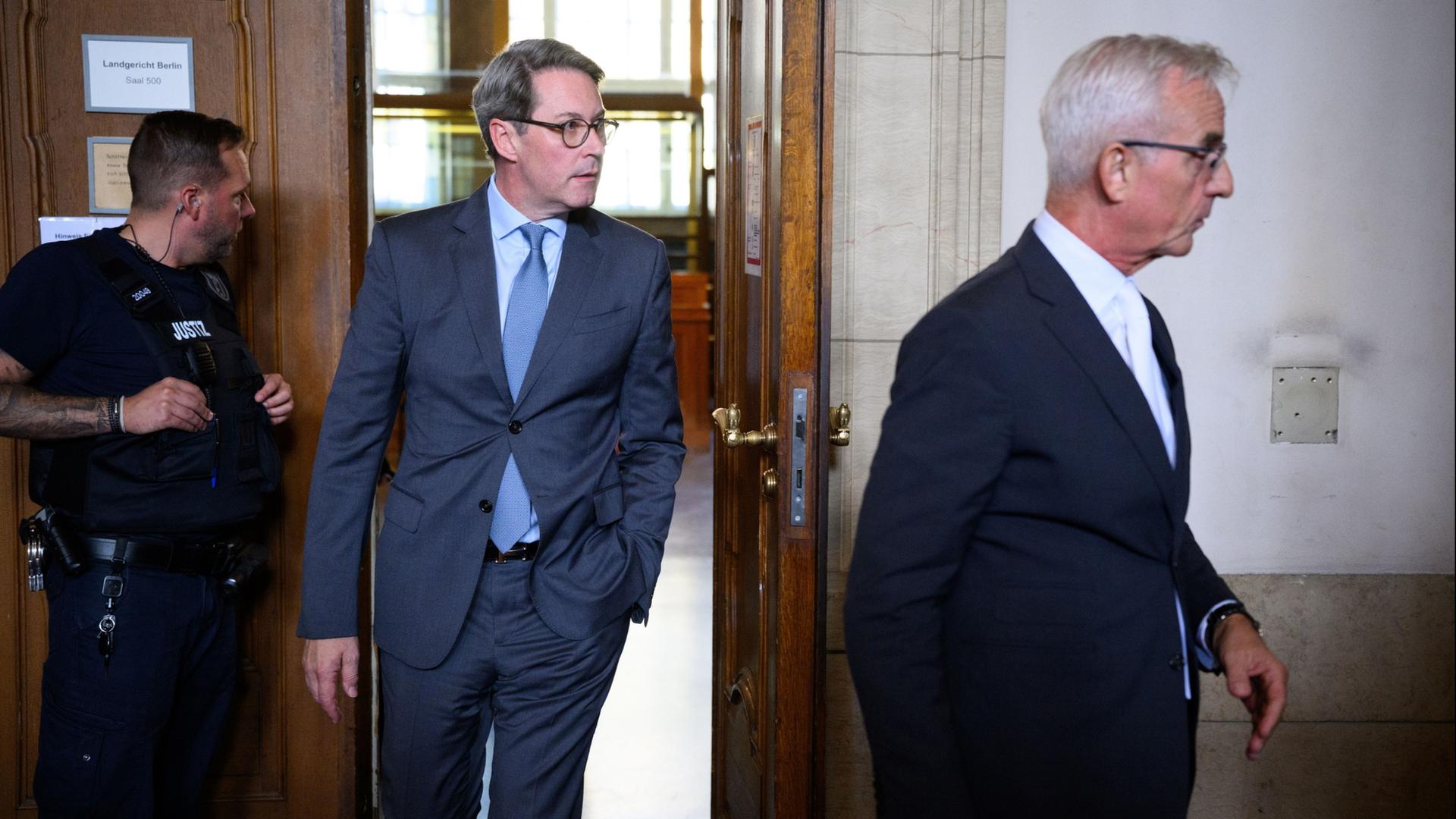
Did former Federal Transport Minister Andreas Scheuer (CSU) lie to a parliamentary inquiry committee in connection with the failed car toll scheme? That question is to be resolved in proceedings in Berlin. At the start of the trial, Scheuer rejected the accusations.
"I did not tell untruths before the inquiry committee," Scheuer told the Berlin Regional Court. "I expressed myself in accordance with my recollection." The inquiry committee had at the time been examining whether the high costs associated with the failed toll scheme could have been avoided.
ECJ Halted Toll Plans
In 2013, then-CSU leader Horst Seehofer had campaigned on the idea that foreign motorists should pay to use German motorways. Even at the time, however, there were legal concerns about whether the CSU's toll concept was compatible with EU law, which stipulates that citizens of other EU member states must not be discriminated against.
While all drivers were to pay the car toll, German drivers were to be compensated through a reduction in vehicle tax. Then-Transport Minister Alexander Dobrindt pushed the legislation through despite all reservations. In June 2019, the toll was declared unlawful and halted by the European Court of Justice (ECJ).
Was There an Offer from the Toll Operators?
According to the indictment, representatives of the designated toll operators allegedly offered Scheuer in November 2018 to delay signing the contract until the ECJ had ruled on a legal challenge brought by Austria against the car toll scheme.
It is alleged that Scheuer and a state secretary had "deliberately and untruthfully" told the Bundestag's inquiry committee, "contrary to their actual recollection," that they could not remember any "deferral offer" made at a meeting on 29 November 2018.
No Memory of a "Deferral Offer"
In court, Scheuer stated: "I have no recollection of a deferral offer." He had not had such a recollection at the time of his testimony before the inquiry committee — and he does not have one today either.
Following the ECJ ruling, the federal government terminated contracts with the designated operating companies. The companies sued for compensation. A settlement reached in a first arbitration proceeding determined that the German state — and therefore the taxpayer — must pay 243 million euros in damages. Following a further arbitration proceeding, the federal government paid an additional approximately 27 million euros in compensation.
It is rare for a former federal minister to be called to account before a court. Accordingly, there was a large media presence at the opening of the trial.
Verdict Expected in Late November
The chamber responsible has so far scheduled a total of twelve hearing days. A verdict could accordingly be delivered on 25 November. Under the law, a conviction carries a custodial sentence of between three months and five years. However, a short custodial sentence could also be converted into a fine, court spokeswoman Lisa Jani said.