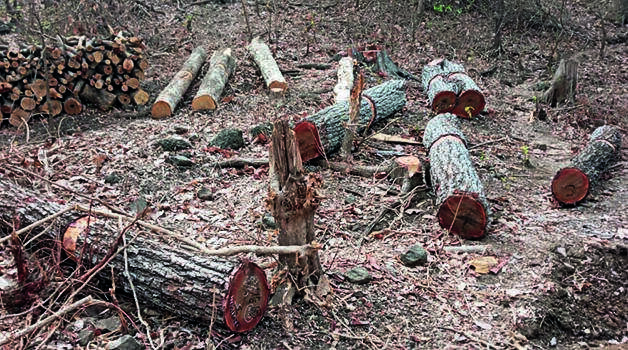
Navi Mumbai: The opposition and environmentalists have objected to the move to cut 32,490 trees in the Saidongar forest area of Karjat in Raigad district for a power project.
Shiv Sena’s
Aaditya Thackeray and NCP’s (SP)
Rohit Pawar have questioned the plan while environmental NGOs such as NatConnect have sought Centre’s intervention to stop the power project of Gujarat-based Torrent Power.
Maharashtra minister of state for power Meghna Bordikar hit back, stating the project received the go-ahead after “complying with all conditions laid down by the Union Environment and Forest Ministry.” Torrent has proposed a 3,000 MW Saidongar-I hydroelectric project in Karjat taluka.
Torrent has proposed to set up a 3,000 MW Saidongar-I hydroelectric project in Karjat taluka.
According to a formal document from the Maharashtra state forest department, signed by Karjat division forest officer Sameer Shinde on Oct 14, 2026, permission was given to clear 32,490 trees in the forest areas. The document also mentions that Prime Minister
Narendra Modi is scheduled to visit Karjat on Nov 3 to lay the foundation stone of the project.
Meanwhile, local villagers alleged the tree-cutting exercise has already begun in Saidongar, Pali and parts of Bhimashankar areas.
NatConnect Foundation has requested Ministry of Environment, Forest and Climate Change to review the project’s environmental implications, saying it would involve the diversion of 233 hectares of forest land, which would impact the Saidongar area’s natural wealth and wildlife and have implications for local communities.
Aaditya Thackeray took to X on Saturday to post: “Under whose blessings is this slaughter (of trees) proceeding?” He questioned whether Maharashtra’s environment was being sacrificed to meet the rush for a proposed groundbreaking ceremony for the project in Nov. Thackeray also criticised govt, alleging it favoured private companies at the cost of the state’s natural resources, arguing that such haste must be tempered by public concerns and environmental considerations.
Rohit Pawar, too, raised serious concerns over the ecological consequences of the project. “This is not merely tree-felling; it is the end of an entire ecosystem, and humanity will have to bear its grave consequences in the future,” Pawar said.
He too alleged the potential impact on wildlife, bird nests, biodiversity, hill stability and the livelihoods of Adivasi communities. Pawar called for the project to be relocated to a less environmentally damaging site.
Environmentalist D Stalin of Vanshakti NGO alleged the local villagers at Saidongar and Pali had protested to ‘Save Karjat’, but their resistance failed. “Karjat’s lush green forest and wildlife will be fully destroyed at this rate. Govt gives away forest lands to private companies at a pittance, while the biodiversity is badly eliminated. This causes less rainfall, and therefore drought conditions,” said Stalin.
NatConnect’s B N Kumar alleged that diverting 233 hectares of forest land and felling 32,490 trees for the Saidongar-I project cannot be treated as a routine administrative exercise. “The authorities must place the complete environmental assessment, tree-felling plan, wildlife impact study and rehabilitation measures in the public domain. A project of this scale will affect not only the forest cover but also water security, biodiversity and the lives of communities dependent on the landscape.”
Vishnu Joshi, an environmental activist from the region, said the proposed felling could have consequences far beyond the project site. “The Saidongar hills are part of a living ecological system that supports wildlife, birds, streams and local communities. Removing thousands of trees will destabilise slopes, destroy habitats and alter natural water flows. The authorities must first conduct a cumulative impact assessment and listen to the people who will bear the consequences,” Joshi said.
RTI activist Anarjit Chauhan said, “Clearing vast forest area which has existed at Karjat for many centuries will lead to bad climate effect, including smog and drought. Govt must respect our natural green heritage, and legally punish the mafia destroying the environment.”
The total estimated cost of this Torrent power project is between Rs 13,500 crore and Rs 15,000 crore, to supply electricity to the Mumbai region.