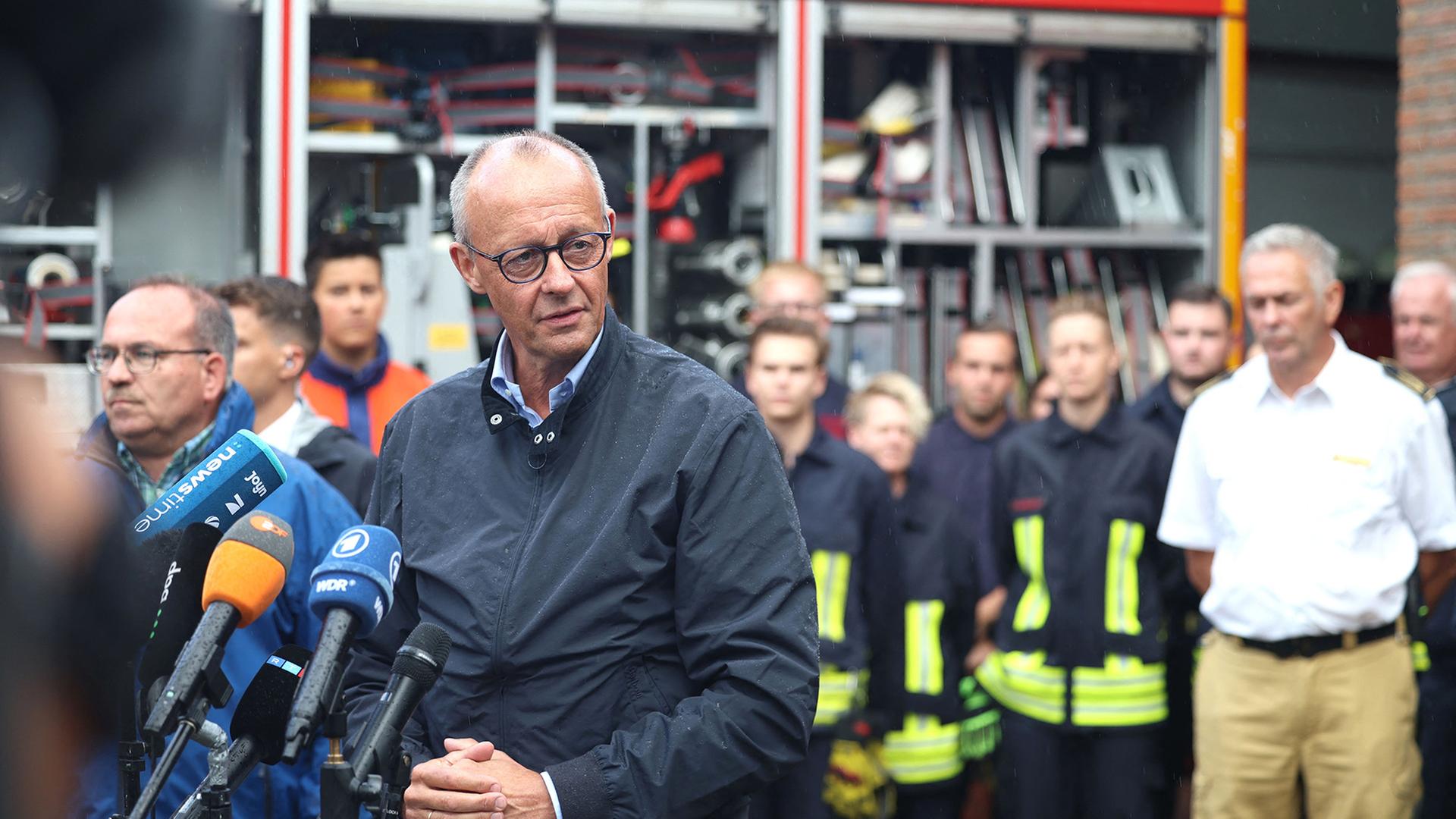
Merz in the Wildfire Zone: The Chancellor Makes His Return
Summer recess, vacation, schedule-free time: there are many ways to describe Chancellor Merz's absence. But now he is back — in the wildfire-affected area in North Rhine-Westphalia. There the fire has been extinguished; the same cannot be said for the political hotspots facing the Chancellor.
"If you haven't been away, you can't very well be back" — with these words, deputy government spokesman Sebastian Hille described the Chancellor's summer this week. Since July 29, Friedrich Merz had not been seen in public and had been criticised from many quarters for it. Heatwaves, wildfires, drone alerts — the opposition in particular accused Merz of inaction.
Now the Chancellor's "summer recess" is officially over — marked by his visit to the municipality of Hürtgenwald. There, the largest wildfire in North Rhine-Westphalia's history has been put out, and Merz wants to thank the emergency workers. He had previously thanked the response teams on the platform X for their "tireless efforts, often to the point of exhaustion." He now wants to do so again in person.
And perhaps also to signal: I'm back. Even if the Chancellery deliberately refrained from calling the schedule-free period a vacation. Merz, it was said, had continued to attend official engagements, kept himself informed about current events, and held conversations.
There was certainly no shortage of things to discuss. Within the CDU in particular, tensions had been simmering before the break. Personnel decisions and cabinet reshuffles following Jens Spahn's departure as parliamentary group leader had drawn public criticism from some within the party.
Wagenknecht Takes Aim at Merz
And then there are the upcoming elections in Saxony-Anhalt, Berlin, and Mecklenburg-Vorpommern. In all three states, polls point to rather poor results for the CDU. For party leader Merz, this represents a distinctly difficult situation. Just how difficult will likely become clear as early as September 6, when the state election in Saxony-Anhalt marks the first major test for Merz — the CDU-led state government of Minister-President Schulze could be defeated by the AfD.
BSW party founder Sahra Wagenknecht puts it starkly: "Whether Sven Schulze can defend the office of Minister-President or not may well help determine how much longer Friedrich Merz remains Federal Chancellor."
SPD Was Active During the Summer Recess
Does the Chancellor really need to fear for his position? In any case, a great deal of work awaits Merz. The economy — still in crisis and now increasingly pressing — demands action and has made this clear in an open letter.
And then of course there is the coalition partner, the SPD: with several proposals, the Social Democrats sought to make use of the parliamentary summer recess for their own ends. On the issue of heatwaves, for instance: should heat protection be enshrined in the Basic Law so that the federal government can more easily participate in protective measures? A question that has not been met with enthusiasm within the CDU. Merz's new Minister of State for Federal-State Relations, Philipp Amthor, publicly rejected "abstract discussions about a constitutional amendment."
But at the cabinet retreat at Schloss Neuhardenberg on Tuesday and Wednesday, the SPD will in all likelihood want to put the issue on the agenda. At that point, the Chancellor will have to take a position.