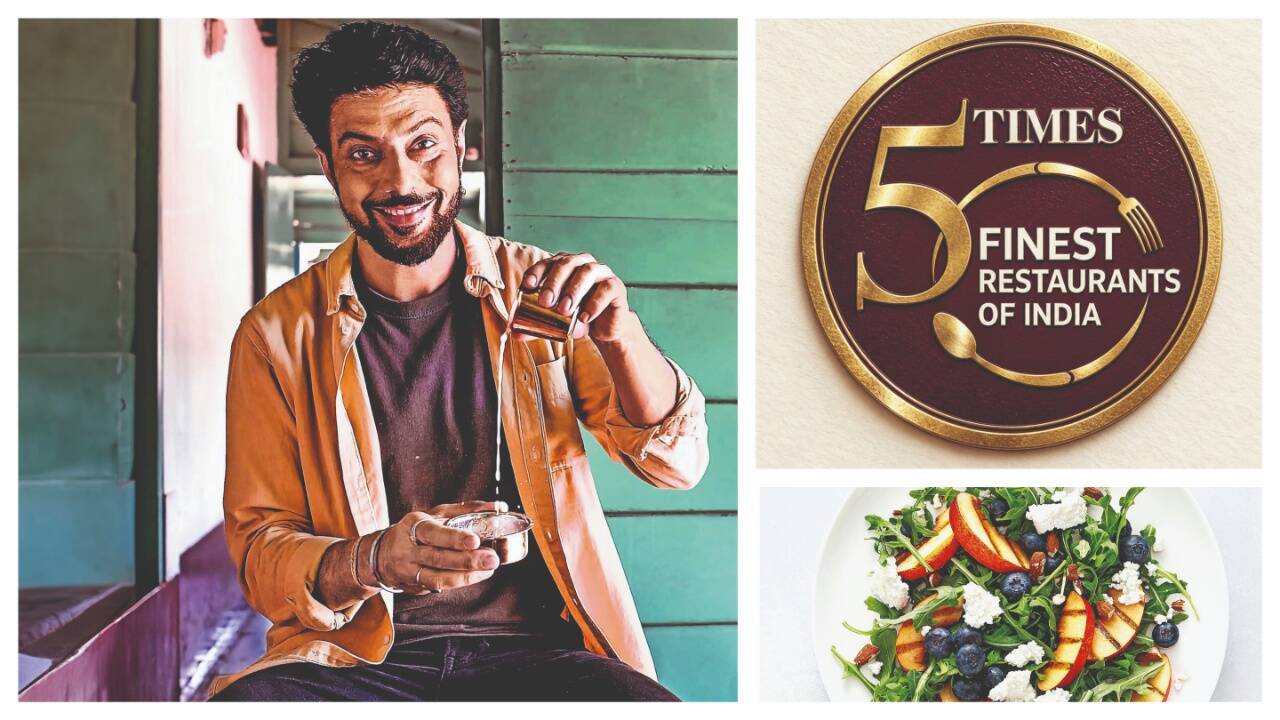
From Lucknow’s kitchens to global culinary stages, Chef Ranveer Brar has made food a vehicle for memory, culture and storytelling. In a conversation around Times 50 Finest Restaurants of India, the jury member reflects on culinary maturity, the growing confidence in regional Indian cuisine and why the country’s restaurants must contribute to the world’s understanding of food. Excerpts:
‘The best restaurants are ultimately the ones that are difficult to replace’
For me, a great restaurant today is about clarity of intent. It doesn’t necessarily have to be expensive, luxurious or technically complicated. It needs to know why it exists, what it wants to say and, most importantly, how it wants you to feel when you leave. For me, the best restaurants are ultimately the ones that are difficult to replace. You leave and think: I couldn’t have had that experience anywhere else.
‘There’s tremendous pride in regional cuisines’
The biggest change I’ve seen is confidence. There was a time when sophistication in Indian restaurants often meant borrowing a vocabulary from somewhere else, whether it was technique, plating, ingredients or even the way we spoke about our food. That’s changing. Today there’s tremendous pride in regional cuisines, indigenous ingredients, forgotten techniques, provenance and our own ways of eating.
‘The word fine is about fineness of thought’
That fine dining has to look fine dining. Expensive ingredients, elaborate plating, tweezers, tiny portions, a lot happening on the plate. None of those things automatically make food sophisticated. For me, the word fine is about fineness of thought. How deeply have you understood the ingredient? Why is something on that plate? What have you chosen to leave out?
‘Go deeper before you go wider’
Sometimes we’re in such a hurry to take Indian food to the world that we start translating it for the world. We simplify it, decorate it or try to make it fit somebody else’s idea of sophistication. I think young chefs should do exactly the opposite. Travel within India. Talk to grandmothers, farmers, halwais, home cooks and craftspeople. Understand ingredients, dialects, seasons, techniques and the reasons behind traditions. Don’t worry so much about making Indian food global. Understand Indian food so deeply that the world becomes curious enough to come to you.
The Times 50 Finest Restaurants of India will be revealed at an event in Mumbai tomorrow.