Work-Life Balance: How to Make Holiday Recovery Last as Long as Possible
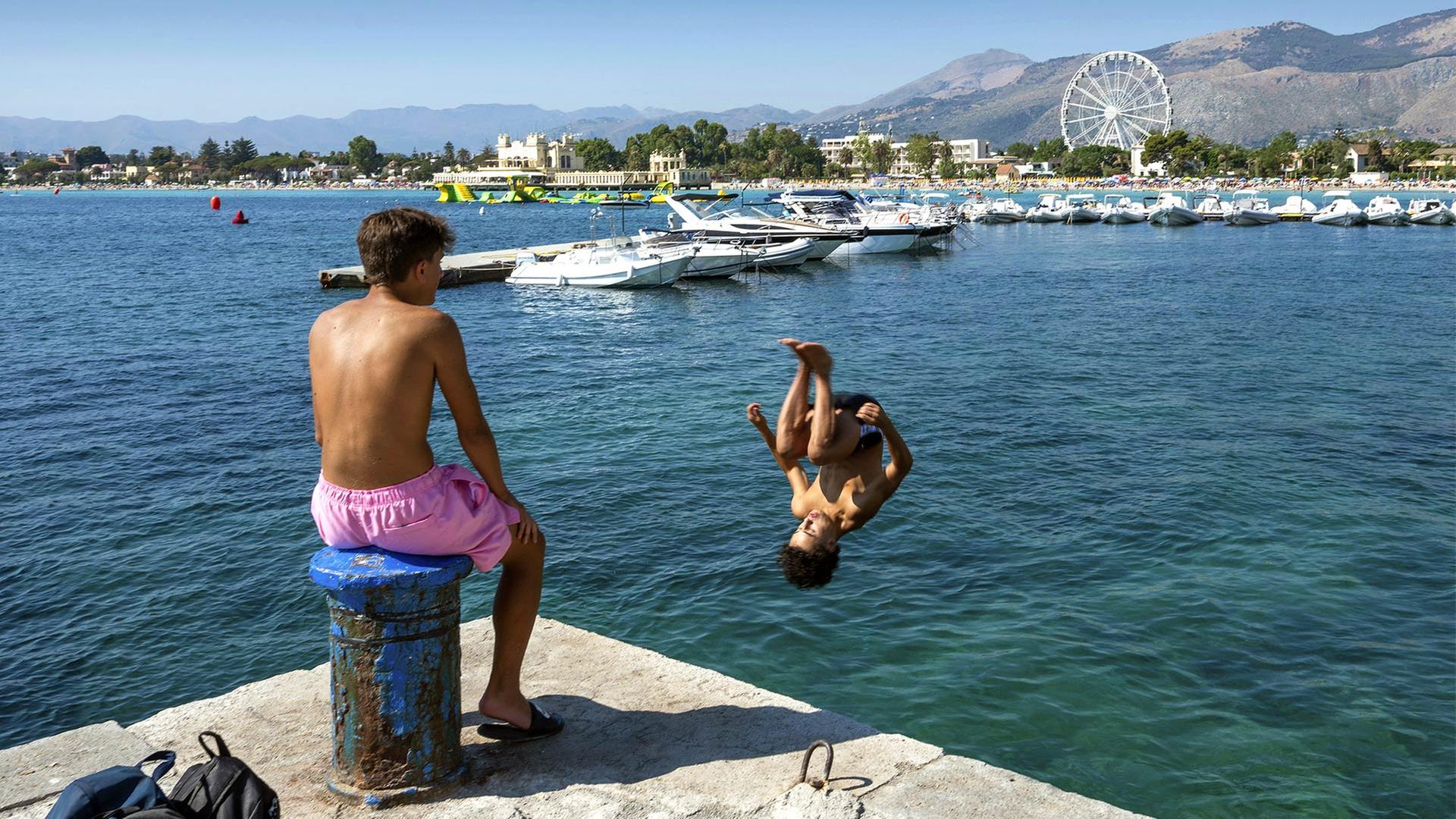
The holiday is over, and relaxation gives way to everyday stress. But does it have to be this way? How can the holiday feeling be carried over into daily life — at least for a while?
Psychologists call the phenomenon that causes holiday recovery to evaporate the "fade-out effect." Back at the workplace and caught up in the stress of daily routine, the sense of calm fades — and the old feeling of stress gradually returns. Just a few years ago, it was thought that a holiday barely benefits wellbeing at all. The effect was considered minimal even during the holiday itself, with everything returning to normal after just a few days.
But recovery does not actually fade quite so abruptly. New research shows that holidays significantly boost psychological wellbeing. Although this does decline again in the first few days afterwards, it remains overall higher than before for several weeks. A holiday has a sustainably positive effect on the psyche for around one month — at least if it is long enough.
Under the law, employers must grant employees a minimum of two consecutive weeks of holiday — which is exactly right from a psychological standpoint, says health psychologist Sonia Lippke: "There is genuine evidence behind this, showing that you need these two weeks to properly wind down and then start again with renewed energy. You can then hold on to that energy for up to a month."
Holiday: Yes, please!
Most Germans appear to share the view that holidays are important, because despite rising prices, the number of holiday trips reached a record high in 2025. This is shown by a tourism analysis conducted by the BAT Foundation for Future Studies. Almost two thirds of Germans travelled at least once for at least five days in the past year. And 44 percent were on the road even more frequently.
Even though holidays are no longer as affordable as they were just a few years ago, Germans apparently prefer to cut back elsewhere when possible. When it comes to holidays, at least, many dug considerably deeper into their pockets: Germans spent around 500 euros more on their main holiday than they did ten years ago — an average of 1,636 euros per person.
Germany's most popular travel destinations were Spain, Italy and Turkey. However, holidaying within Germany is also becoming increasingly popular. According to the 2025 tourism analysis, one in three people travelled domestically. A new evaluation by the Federal Statistical Office confirms this: never before have so many overnight stays been booked in Germany in the first half of the year as in 2026 — around 80 percent of them by Germans themselves.
The Perfect Holiday for Perfect Recovery?
The travel destination itself is not actually that important for recovery, says Sonia Lippke: "What matters more is how well you switch off from everyday life and find new thoughts and renewed strength." This is often easier when you leave your own four walls — but that could even mean the gravel pit lake next door.
According to the health psychologist, there is no real universal recipe for getting the most out of a holiday. "The only reliable thing research can say on the subject is: it has to suit the individual." The best approach is probably a mix of leisure, social and physical activities — but the exact location and activities depend on the individual person.
"Breaking out of routines can be achieved more easily through vacation for some people. But some people may not need a long-distance vacation at all — they simply need a break, or time to sleep in, exercise and detox." How far apart the remaining vacation days should be taken is also an individual matter. However, the psychologist particularly recommends that people working shift schedules incorporate a recovery day from time to time.
Back at the Workplace
How long one remains refreshed after a vacation also depends on what awaits them at the workplace. Stress is not necessarily the main problem, according to Lippke. What matters more is this: those who can choose their tasks more autonomously and have few conflicts are better able to maintain their sense of recovery. Some professions therefore lend themselves more to staying refreshed for longer than others.
However, individuals also have some influence over how quickly or slowly their sense of recovery fades. The psychologist recommends making the return to work as pleasant as possible. For example, anyone who can set an out-of-office notice should ideally indicate a few more days than the actual length of their vacation. One could, for instance, officially be listed as "absent" until Wednesday while actually returning on Monday.
This way, one can take the first two or three days to ease back in at a comfortable pace. Pending tasks can also be tackled during this time. This is because a pile of waiting tasks is a true recovery killer. For this reason, the health psychologist recommends completing as many tasks as possible before going on vacation.
Sharing Memories — but Appropriately
Conflicts at work should ideally also be resolved beforehand. The social dynamics in the workplace play an equally important role. Anyone who gushes about their wonderful vacation while colleagues had to work a great deal or could not afford a comparable holiday will likely trigger a negative dynamic.
Here, the psychologist appeals to people's sensitivity. One should always ask: what does it stir up in the other person when I rave like this? Maintaining one's memories is, however, fundamentally important — among friends and family members, for example — in order to preserve the holiday feeling. It can therefore help to arrange to meet up with friends a month after the vacation to look at photos together and revive the feeling.