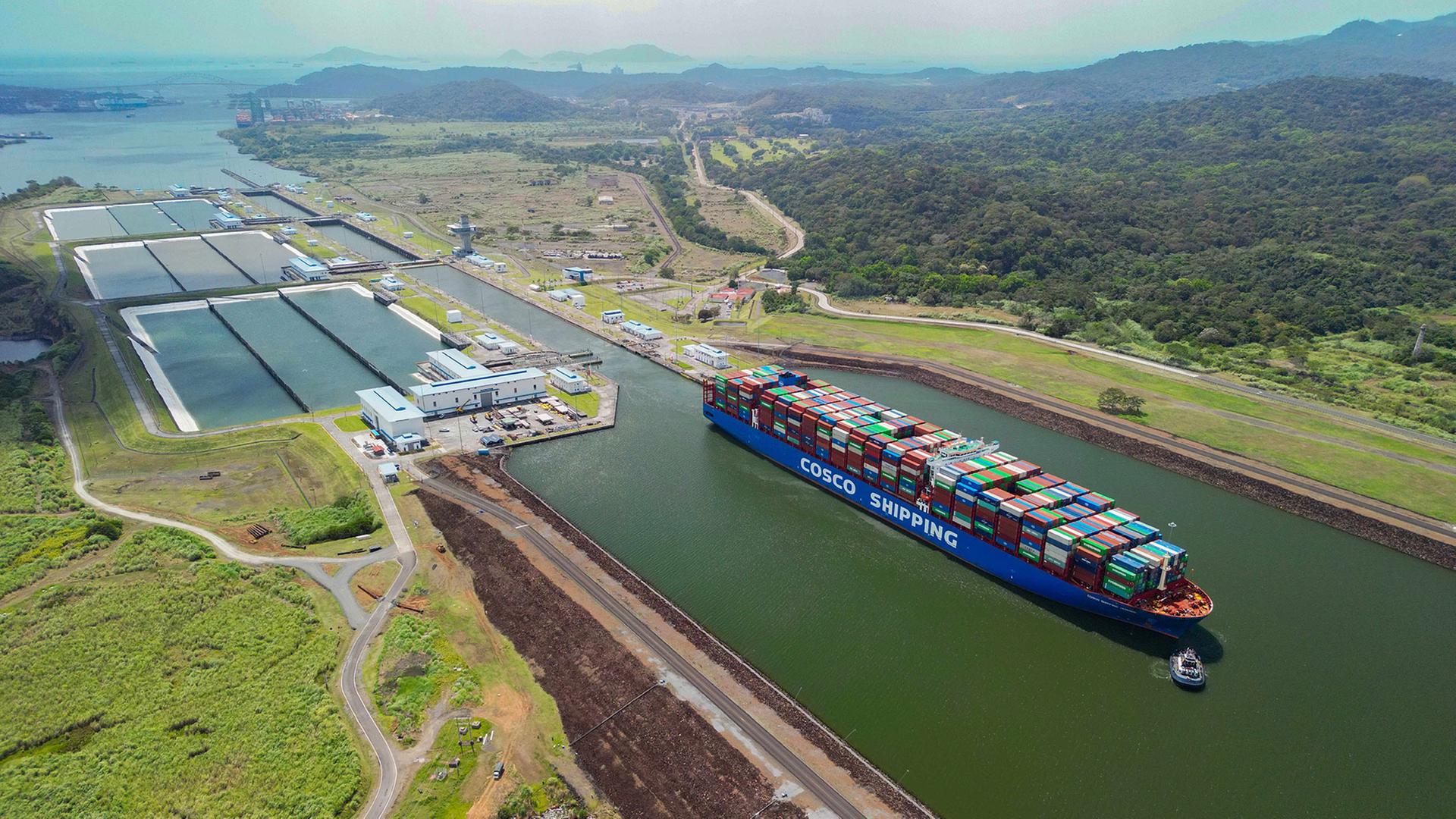
Drought: Ship Traffic Through Panama Canal to Be Reduced
Despite the rainy season, Panama is experiencing unusually dry conditions. This now has consequences for shipping: starting next month, the number of ship passages through the Panama Canal will be reduced.
The El Niño climate phenomenon is bringing significantly less rain than expected to Panama. The unusual drought is now affecting one of the world's most important waterways: starting September 3, only up to 34 ships per day will be permitted to pass through the Panama Canal, the operator ACP announced.
From mid-September, the number is set to drop to just 32. Currently, 36 ships cross the connection between the Atlantic and Pacific each day.
Drought Despite Rainy Season
Despite the ongoing rainy season and water-saving measures already implemented to mitigate the effects of the El Niño climate phenomenon, additional preventive steps are required, according to a statement from the canal authority.
Between May and August, rainfall was approximately 34 percent below the historical average for that period. With the dry season beginning in January in mind, prudent management of water resources and careful monitoring are necessary to ensure water availability.
Passage via Locks
The Panama Canal operates using locks. Large quantities of water are required for its operation, drawn from a catchment area fed by two lakes. Each time a ship passes through the locks, fresh water flows out into the sea.
The 80-kilometer-long waterway cuts through the Isthmus of Panama in Central America. Five percent of global maritime trade passes through it.