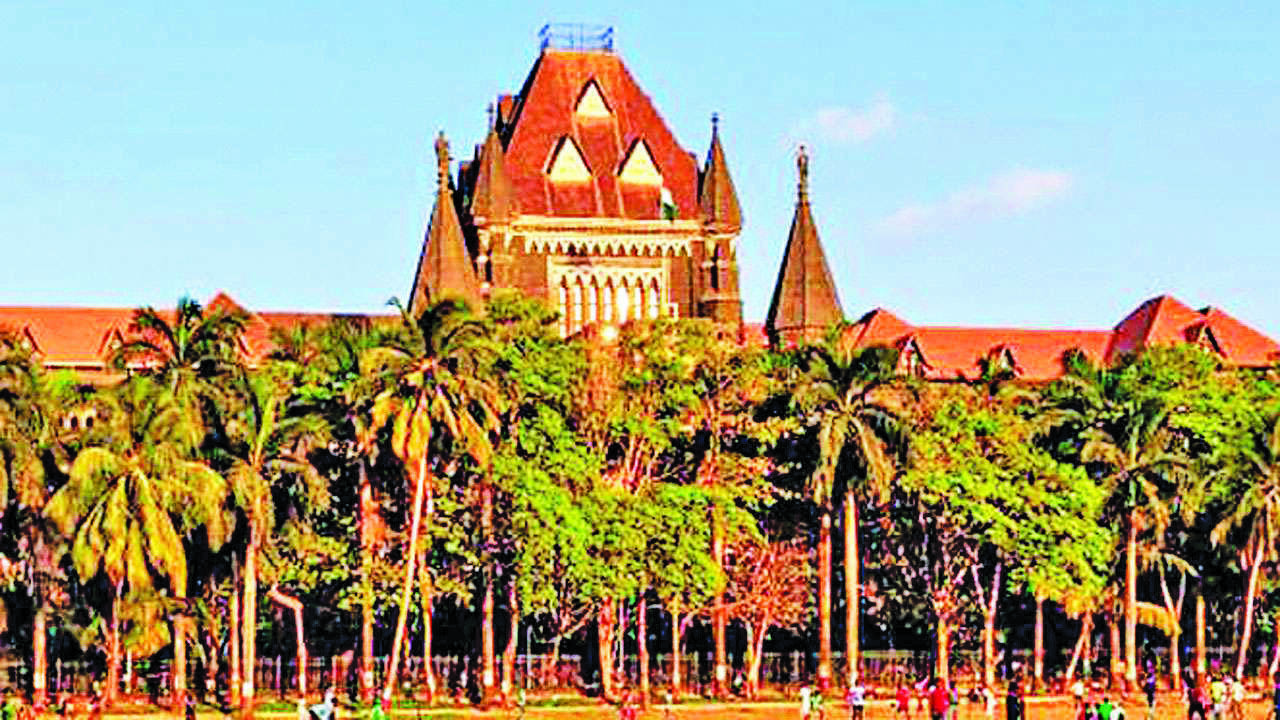
Mumbai: Setting aside the conviction and death sentence of a man (then 29) in the Dec 2016 rape and murder of a physiotherapist (24) in a Mumbai suburb, Bombay High Court held that the prosecution failed to prove beyond reasonable doubt that he committed the offence.
“The evidence led by the prosecution in support of the charge levelled against the accused, in our view, consists of weak, disconnected and/or unequivocal circumstances and in the wake of the nature of such evidence, merely based on suspicion, however strong, cannot take place of proof,” said Justices Bharati Dangre and Manjusha Deshpande in the Sept 7 verdict uploaded on Thursday. They dismissed the state’s death sentence confirmation plea and ordered Debashish Dhara “to be set at liberty.”
The victim stayed with her family in a chawl. She slept in a separate mezzanine room in front of her house. On Dec 6 around 3 am, a neighbour alerted her parents about smoke coming from her room which was bolted from outside. After dousing the fire, she was found with jeans wrapped around her neck. Dhara, employed in a nearby jewellery store, was apprehended on Jan 28, 2017, from Kolkata.
On Oct 10, 2019, additional sessions judge A D Deo found Dhara guilty of several charges, including rape, murder and unnatural sexual offences.
He held that the crime fell in the “rarest of rare category” for the “gruesome, ghastly or horrendous act” executed with “extreme mental perversion.”
HC noted that the sessions court had held that the prosecution had established a chain of circumstances linking him to the crime. Prosecutor Tanveer Khan relied on chemical analysis/DNA report of bloodstains found on Dhara’s jeans and a comb that matched the victim’s sample and on CCTV footage. Advocate Siddharth Jagushte, for the victim’s father, said DNA profiling established Dhara was the author of the crime. Dhara’s advocate Yug Chaudhary argued that the prosecution failed to establish his guilt from evidence on record.
“Right from the needle of suspicion being pointed” to Dhara, the judges found many loopholes in the prosecution’s case. As the CCTV footage did not establish in whose house Dhara was peeping and why, this cannot be an incriminating circumstance. His jeans were seized two months after the murder from the room where he lived and worked with his employer. Bloodstains were not found on the jeans but inside the right pocket, which HC found was “an innovative idea.” While the panchnama said it was a red design on the comb’s handle, the chemical analyser said it was a bloodstain. The judges found it impossible that DNA obtained from the wet bedsheet remained intact and was compared with Dhara’s DNA. They also doubted the manner of collection and preservation of Dhara’s DNA sample.
HC said the prosecution case relied on circumstances pointing to the guilt of the accused and they “are inconsistent with the reasonable hypothesis of innocence.” As a “cumulative effect,” Dhara was entitled to be set at liberty by applying the test: “In the halls of justice, the quest for truth must outshine the desire for victory.”