Millions of Books Burned in Ukraine: "They Are Destroying Our Culture and Identity"
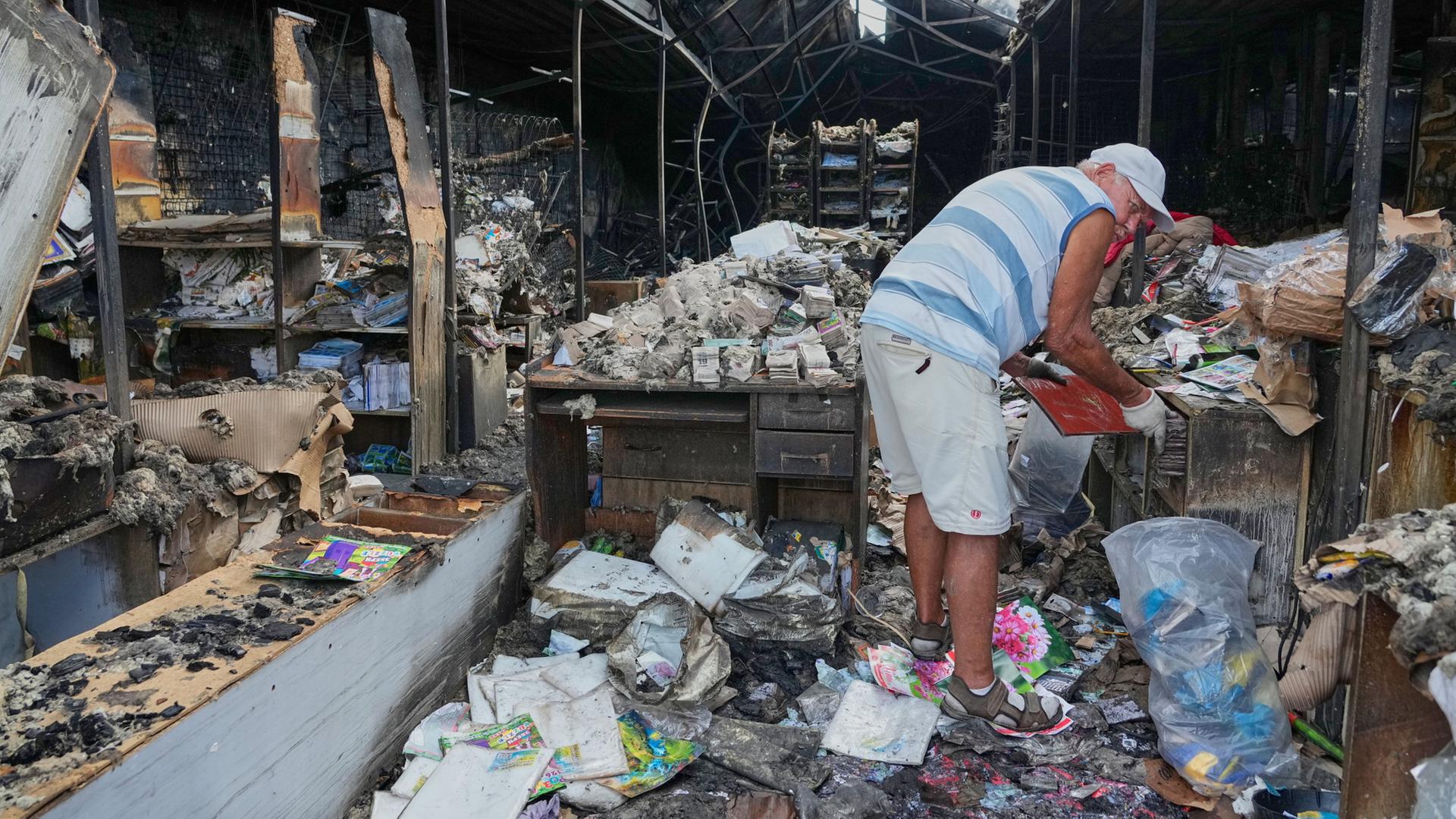
Due to intensified air attacks, the Kyiv Book Fair had to be cancelled this year. Russia is also destroying books directly — through missiles targeting warehouses. For many, this represents a deliberate attack on Ukrainian culture.
A bookshop in Kyiv. Yevhenia Rybak holds a small glass case in her hands. Inside: a half-charred children's book. The bookshop "Readeat," where Yevhenia works, kept it. It is one of eight books that were at least still recognizable after the major fire at the bookshop's central warehouse. All the others were completely charred.
"When literature is destroyed, it makes you desperate. It's as if they want to destroy a part of you," she says. "They won't succeed, but it hurts. So much work by so many people goes into every page of a book. Books like this one were waiting for children, and children were waiting for them."
Days-Long Waits for Books — If They Are Available at All
The ground floor of the bookshop invites visitors to relax, with armchairs, tables and coffee. The shelves are full, but not all books are currently available. Yevhenia, who is responsible for marketing here, points to a monitor: a message to customers. They currently have to wait 15 days for delivery; previously, "Readeat" delivered within 24 hours.
Yevhenia herself ordered some books for herself a while ago. She is not even sure whether they exist at the moment: "Publishers don't have a precise overview of what has burned and what they still have somewhere. But maybe I'll be lucky and the books still exist somewhere in print."
Every Third Book Burned
More than 13 million Ukrainian books have been burned in Russian air strikes over the past two and a half months — every third book printed in Ukraine this year.
This is no coincidence, says Volodymyr Yermolenko, chairman of PEN Ukraine. "The Russians want to subjugate Ukraine. They can only do that if there is no longer any national consciousness among us. If we no longer feel that we are different, that we have our own culture," he says. "So they destroy our culture and our identity. The Russians have done this many times throughout our history."
Yermolenko recalls that the Ukrainian language was already banned in the Russian Empire in the 19th century.
More and More Book Fairs — Despite the War
A young man strolls through the shelves of the "Readeat" bookshop in Kyiv. Maxym Syusura says he used to be more interested in Russian literature. Since Russia's full-scale invasion, he has been reading only Ukrainian authors. He also wants to consciously support Ukrainian publishers.
"In the week after the publishers' warehouses were attacked, I went out and bought two books right away," he recounts. He would like to buy one now too, but his salary is delayed. "I also promote Ukrainian books among my friends and acquaintances."
Expressions of solidarity and orders: these were also enormously important to the "Readeat" bookshop in the wake of the major attack. Ukrainian literature is developing right now — despite Russia's war, despite destroyed books, says Yermolenko of PEN Ukraine.
Ten years ago, there were "three or four book fairs in the entire country." Now there are three or four in every city. Even in places where the war is strongly felt," he says. He had most recently been with the PEN Club at cultural festivals in Kharkiv and Odessa, and had traveled to the book fair in Zaporizhzhia.
Books in the Bunker
The autumn book fair in Kyiv, however, which was supposed to take place these days, was cancelled – due to the increasingly frequent air strikes on the capital.
Twenty-three-year-old Yevheniia from the bookshop "Readeat" always takes a book with her to the shelter when the alarm sounds, as it calms her down. "I'm perhaps not the best person to give advice on calming down. For me, thrillers, crime novels, something scary – that helps," she says. "A bit strange, I know." In these genres too, there are now many Ukrainian authors, says Yevheniia.