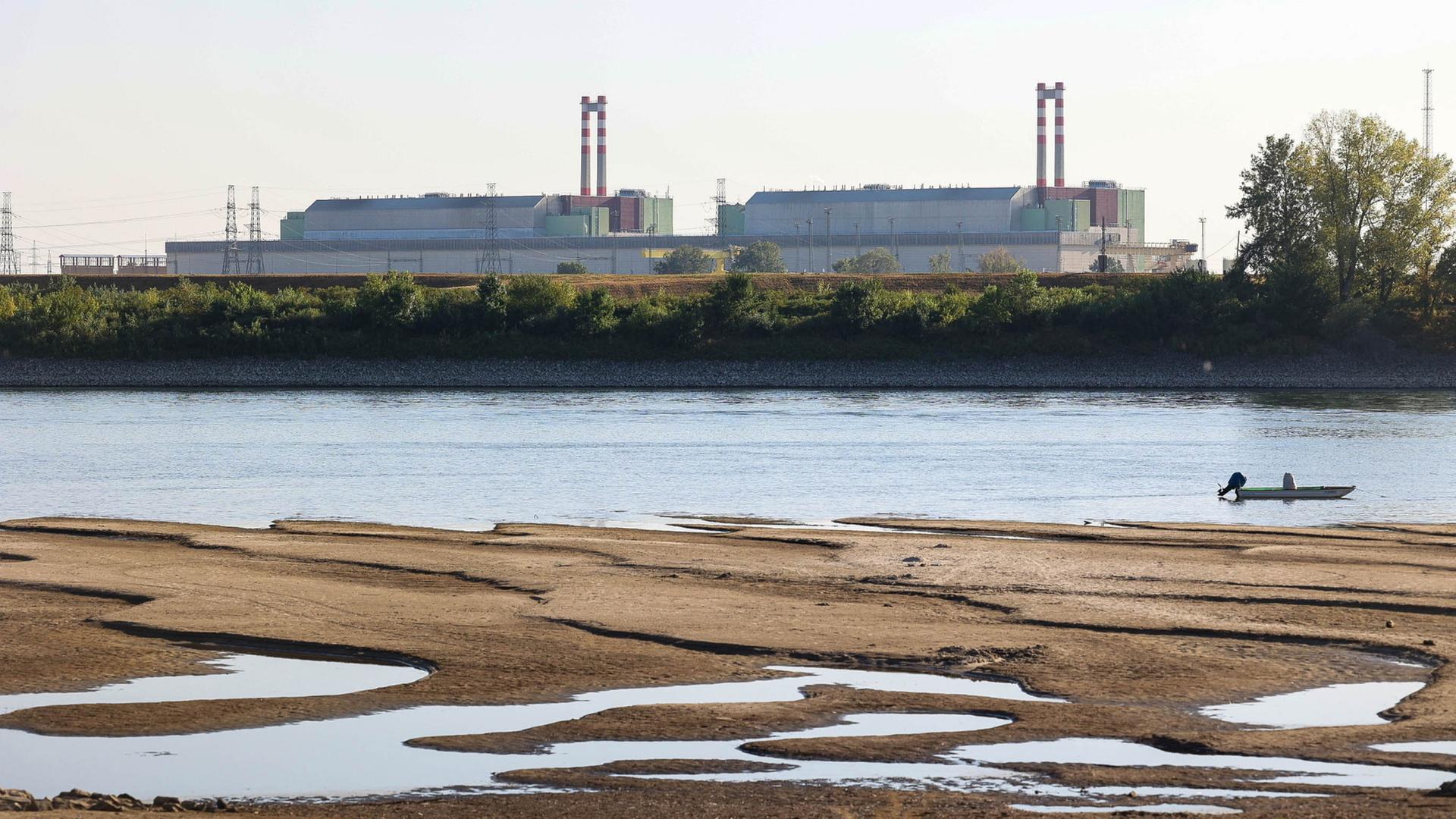
Low River Levels: Romania and Hungary Also Throttle Nuclear Power Plants
Due to heat and lack of rainfall, water levels in many European rivers are extremely low. This is becoming a problem not only for shipping, but also for nuclear power plants, which require large amounts of cooling water — and that water is now in short supply.
In several European countries, electricity production at nuclear power plants has been reduced or halted. The reason is the low water levels in rivers and the resulting shortage of cooling water.
In Romania, two reactors at the Cernavodă power plant are offline, while in Hungary the output of the Paks nuclear power plant has been reduced. In France as well, reactors were shut down this week due to high temperatures.
Cernavodă, located on the Danube, has two reactor units and is Romania's only nuclear power plant. The first reactor had already been shut down a few days ago, and the second has now followed. Operator Nuclearelectrica cited the prescribed procedures "in the event of severe drought." The nuclear power plant normally generates about one fifth of Romania's electricity.
This is the first time both units have had to be shut down due to low water levels on the Danube. The river, which flows from the Black Forest through ten countries to the Black Sea, has reached record lows in some stretches since May due to lack of precipitation and successive heat waves.
The Paks nuclear power plant, whose four reactors are of enormous importance to Hungary's electricity supply, is also located on the Danube. There, according to local water authorities, the river's water level is even 121 centimeters below its previous record low. As a result, one of the four reactor units at Paks has already been shut down. Prime Minister Péter Magyar warned that the same fate threatens the other three, and called on the public to save electricity.
France Shuts Down Reactors
Nuclear power plants running into cooling water problems is something that has already occurred frequently in other countries. France is particularly affected. The country relies heavily on nuclear power for electricity generation and is at the same time especially hard hit by heat waves.
On Wednesday evening, one of the two reactors at the Golfech power plant, located around one hundred kilometers north of Toulouse, was shut down. The energy company EDF had already taken the reactor offline between June 23 and July 3, and again from July 9 to July 27, to avoid further heating the waters of the Garonne river.
Shipping Traffic Also Affected
The low water levels are also having consequences for freight and leisure shipping, as low water restricts vessel traffic. Cruises on the Danube from Passau to Vienna are ending prematurely. Austrian waterway operator viadonau is warning on its website about stretches with particularly shallow water depths.
This week, a cruise ship with nearly 240 people on board ran aground on a sandbank near the Romanian Danube port of Cetate. All passengers were brought to safety. Cargo ships can now only be partially loaded, causing financial losses.