CSU Caucus Meeting: On the Sidelines of the Personnel Carousel
The reshuffling following the resignation of parliamentary group leader Spahn is hitting the Union at an inopportune moment. This is likely to shape the debates at the caucus retreat of CSU Bundestag members at Banz Monastery in Upper Franconia.
There is no sign of a summer recess: Jens Spahn's resignation as chairman of the CDU/CSU parliamentary group and the subsequent gradual cabinet reshuffle are causing unrest and frustration within the Union.
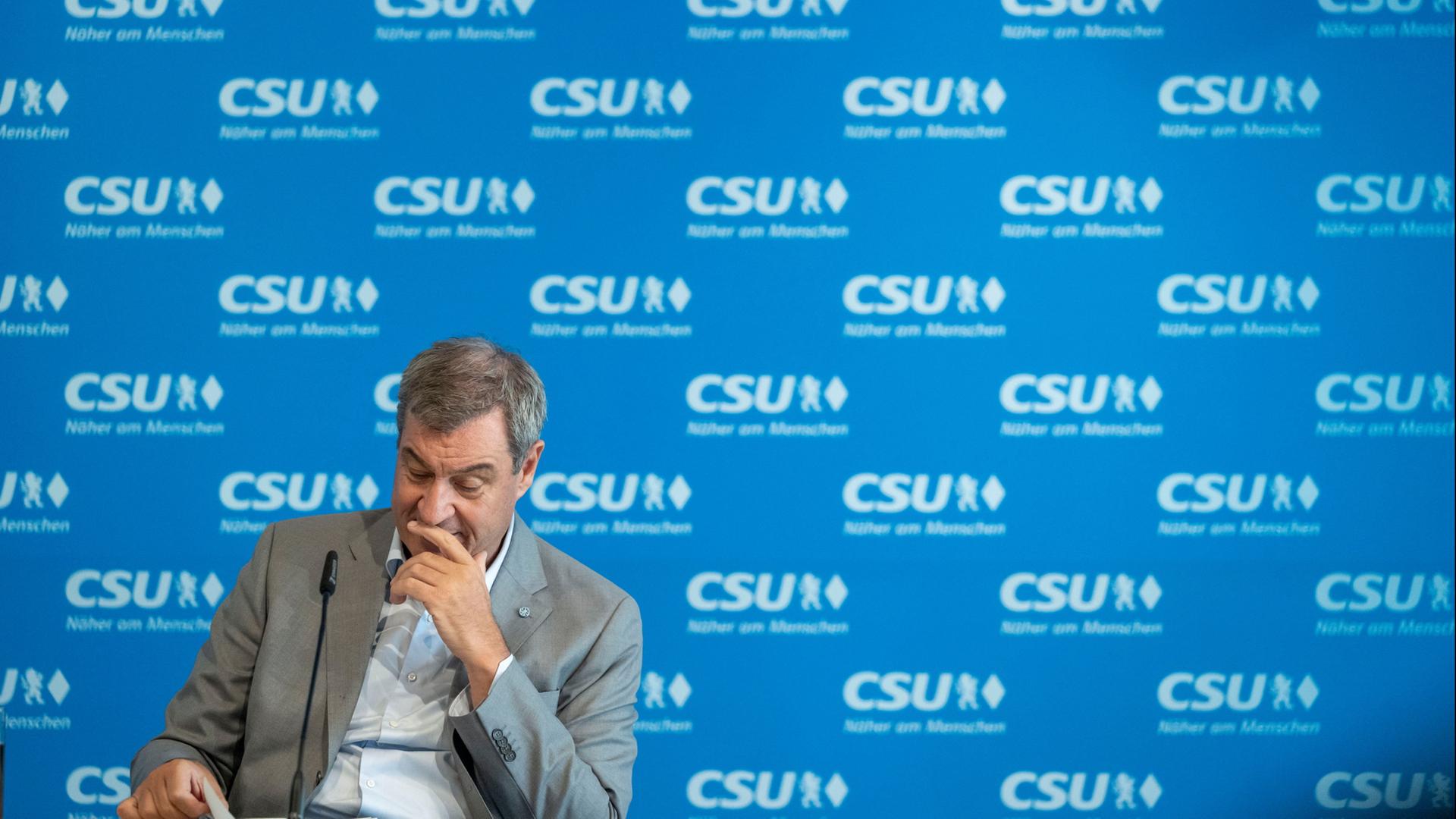
The CSU finds itself in a more comfortable position than its larger sister party, the CDU: it was not directly involved in the difficult succession questions within the cabinet, was able to comment on developments from the sidelines, and over the past few days was once again shown just how important it is to the Union's internal balance of power.
Swift Agreement
This applies first and foremost in purely organisational terms: for Chancellor and CDU leader Friedrich Merz to be able to propose Thorsten Frei as the new chairman of the CDU/CSU parliamentary group at all, he first had to coordinate with his CSU counterpart, Bavarian Minister-President Markus Söder. This took only four days. Merz emphasised on several occasions how smoothly the agreement between the two Union party leaders had proceeded.
In addition, a CSU politician is managing current business until Union members of parliament, who are specifically returning to Berlin from their holidays, are expected to elect Thorsten Frei on Wednesday: state group leader Alexander Hoffmann holds a prominent position as first deputy chairman of the parliamentary group.
Dobrindt Had Been Mentioned as a Candidate
The CSU in the Bundestag could also feel flattered by the fact that one of their own was brought into play during the personnel speculation: Federal Interior Minister Alexander Dobrindt is considered versatile and was likewise mentioned as a possible head of either the chancellery or the Union parliamentary group.
The reason for this is his reputation as a successful mediator within the coalition and as a departmental head who delivers results: as Federal Interior Minister, he is responsible for implementing the tightening of migration policy — one of the Union's key electoral promises. The CSU politician is the only Union minister to have brought governmental experience into the Merz cabinet, and he is exceptionally well connected both in Berlin and with Munich.
Limits of Power...
Even if Dobrindt had wanted the position — the CSU's influence at the federal level has its limits: with 44 of 208 members of parliament, it accounts for roughly one fifth of the joint parliamentary group. Many CDU parliamentarians would not accept the smaller sister party taking over the group chairmanship.
A change involving Dobrindt would also not necessarily have suited the CSU. It insists on holding a ministerial post in a key department and, in its own view, is currently well served by a successful departmental head at the Federal Interior Ministry.
...and Internal Party Disputes
That said, the CSU is not without its own tensions, as demonstrated by the written feud between Munich and Brussels: at Whitsun, CSU deputy leader and EPP chairman Manfred Weber sent a letter to officeholders critically examining the party's situation, which was interpreted as an attack on Söder.
Last week, Weber received correspondence from Munich: two CSU ministers called on him to do more for Bavarian agriculture and forestry — a move that looks like a retaliatory strike.
Quiet Reform Debate
In Berlin, meanwhile, the ongoing negotiations between the black-red coalition on reform plans in the areas of health, pensions, care and taxation have, from the CSU's perspective, proceeded largely smoothly and satisfactorily. The party was able to defend the regulation whereby mothers who gave birth to children before 1992 receive additional pension points credited for child-rearing. Even CDU politicians have criticized the expansion of the so-called "Mütterrente" as too costly.
Whether the CSU can prevent the largely abolition of contribution-free mini-jobs as part of the pension reform remains to be seen: party leader Söder is pushing for workable solutions for the hospitality, tourism and agriculture sectors.
(Unrelated) Orban on the guest list
At the retreat at Banz Monastery in Upper Franconia, the MPs are expected to discuss current developments in Berlin and, in the words of parliamentary group leader Hoffmann, will debate "the challenges of our time and for the future."
Invited to participate are the managing director of clothing manufacturer Trigema, Bonita Grupp, the chief executive of drone manufacturer Quantum Systems, Sven Kruck, and ESA astronaut Alexander Gerst.
On Tuesday, the CSU is expecting Hungary's Foreign Minister and Deputy Prime Minister, Anita Orban. She is a member of the cabinet of pro-European Prime Minister Peter Magyar, who was sworn in at the beginning of May, and is not related to former head of government Viktor Orban. The CSU had also invited the latter to its retreats on several occasions, before distancing itself from him due to his increasingly authoritarian course.