State Election: What's Important About the Vote in Mecklenburg-Vorpommern
It's a two-way race between the AfD, which leads in polls, and the governing SPD: in Mecklenburg-Vorpommern, Manuela Schwesig is fighting for electoral victory. Here's why a two-party coalition may not be enough — and what else matters.
What is the starting situation?
AfD or SPD? That is what it comes down to in Mecklenburg-Vorpommern. And it is around this two-way contest that the SPD's final campaign push, led by Minister-President Manuela Schwesig, has been tailored. Fighting under the banner of "Woman against Blue," she is campaigning for every vote for her party. For a long time the SPD trailed far behind the AfD in polls, but the gap has narrowed significantly.
However, the currently governing red-red coalition in Mecklenburg-Vorpommern looks set to lose its majority. In the last ARD pre-election poll from September 10, the SPD stands at 33 percent. The AfD is the only party to have gained ground compared to the last state election, reaching 38 percent. The Left party is third in the state parliament with 9 percent.
According to the pre-election poll, the CDU would come in at a single-digit 7 percent and would have to suffer another heavy defeat following its catastrophic result in Saxony-Anhalt. The Greens would re-enter the state parliament with 5 percent, while the BSW at 4 percent would remain outside. The FDP looks set to miss entry into the state parliament.
In a direct vote for Minister-President, incumbent Schwesig would receive 59 percent of votes, while AfD candidate Leif-Erik Holm would receive 28 percent. 58 percent of respondents also stated they were very satisfied or satisfied with Schwesig's work. The Left party candidate Simone Oldenburg and Holm each follow with 27 percent.
Who is eligible to vote?
Around 1.3 million people in the sparsely populated federal state are eligible, according to the state returning office, to decide which parties and individuals will represent them in the 9th Schwerin state parliament. It is elected anew every five years. Eligible to vote are all those who hold a German passport and have been registered in the state for at least 37 days. New this year is that voting is permitted from the age of 16.
The first vote goes to the direct candidate for parliament. The second vote elects a party and its state list. This is decisive in determining how many seats a party holds in the state parliament. The five percent threshold applies. At least 71 parliamentary seats are at stake; overhang and leveling mandates can increase this number.
Who is running?
In the current legislative period now coming to an end, the SPD, AfD, CDU, Left party and Greens are represented as parliamentary groups, and the FDP as a group, in the state parliament comprising 79 seats. All of these parties are standing for election again. Joining them are 13 others, including the BSW founded by Sahra Wagenknecht, the Freie Wähler and Volt.
In total, 402 candidates are standing for election across the 36 constituencies — more than two-thirds of them are men. The youngest candidate is 18, the oldest is 89 years old.
SPD: Incumbent Minister-President Manuela Schwesig has led the government since 2017 — first in a coalition with the CDU, now with the Left party. Her focus lies on family and social policy, strengthening the economy and representing eastern German interests.
- AfD: The top candidate on the state list is Enrico Schult. He also holds the positions of co-state party chair and parliamentary group leader. In the state parliament, he focuses on education and financial policy. Then there is Leif-Erik Holm, whom the AfD has designated as its "candidate for Minister-President." He faced Schwesig in televised debates and is running in Schwerin in the same constituency as her. Holm is the AfD's federal parliamentary group spokesman for economic policy. He is not secured a seat through the state list.
The leading candidates of the other major parties: Education Minister Simone Oldenburg is running for the Left Party. She is also currently Deputy Minister-President.
Daniel Peters, who is also the parliamentary group leader, is campaigning for "the center" as the CDU's top candidate. Given the poor polling results, he sees his party in an "existential struggle."
Federal MP Claudia Müller is running for the Greens. The BSW is fielding a dual leadership: Peter Schabbel and Sabine Firnhaber. Jessica Mendle and Jakob Schirmer form the leading duo for the FDP.
What were the most important campaign issues?
In the MV Trend survey at the beginning of September, when asked about the most pressing problems, voters cited education, schools and training in first place. This was followed by the economy and migration. Fear of unemployment ranks fourth.
The dominant campaign topic in recent weeks has been the AfD's high polling numbers. At the latest since the AfD's electoral victory in Saxony-Anhalt, where it has been classified by the domestic intelligence agency as confirmed right-wing extremist, the campaign has intensified on this issue.
What coalition options would there be?
Since an absolute majority is not in sight for any party, the smaller parties could prove decisive. According to political scientists, the most likely scenario is a red-red-green coalition, which would allow Schwesig to continue governing. Should the Greens or other parties fail to clear the five-percent threshold, minority governments or an alliance between the SPD and CDU would also be conceivable.
Should the BSW enter the state parliament, cooperation with the AfD or its toleration of a government could also become possible. All other parties have ruled out a coalition with the AfD.
What happens after the election?
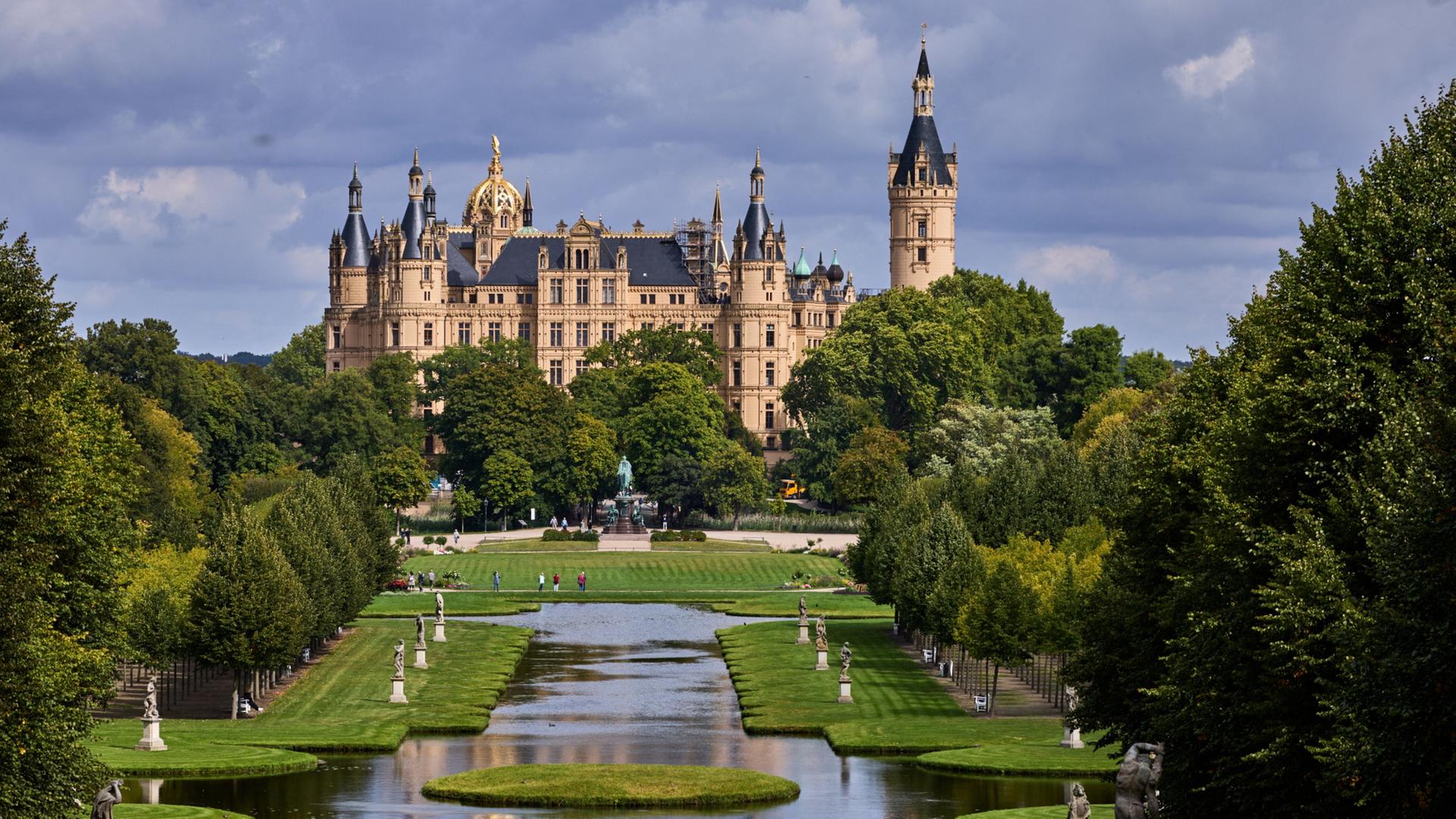
According to the state constitution, the new parliament, which is based in Schwerin Castle, must convene for the first time no later than 30 days after the election. The first session must therefore take place by October 20 at the latest, at which point the terms of office of the Minister-President and ministers expire. However, they are obliged to continue conducting official business until their successors take over.
The parliament elects the head of government by secret ballot. In Mecklenburg-Vorpommern, this person does not necessarily have to be a member of the state parliament. Elected is whoever receives the votes of a majority of members. This must happen within 30 days. The new head of government then appoints the ministers who form the state cabinet.
If the election of the Minister-President fails within the set deadline, a majority of members of parliament may vote within 14 days to dissolve the state parliament. This would mean a premature end to the legislative term, and new elections would be held. If the dissolution is rejected or the required majority is not achieved, a further ballot for the position of head of government takes place on the same day. In that case, whoever receives the most votes wins.
What does the election mean for federal politics?
Manuela Schwesig had repeatedly distanced herself from the policies of the federal government even before the election and called for corrections — for example on the question of abolishing the penalty-free pension after 45 years of contributions. Should she pull ahead of the AfD, she is likely to further assert her already considerable influence within the party and as Minister-President.
If the AfD wins by a clear margin, the SPD's grassroots are likely to blame the federal government — which is faring so poorly in polls — and with it SPD leaders Bärbel Bas and Lars Klingbeil, who simultaneously hold ministerial posts.
For the CDU, the situation in the run-up to the election is far more dramatic: a result of seven percent or even below would be the worst at a state election since the founding of the Federal Republic. Lead candidate Peters largely avoided campaign appearances with Federal Chancellor Friedrich Merz and said his party finds itself in a "serious situation" due to the ongoing criticism of the federal government.
Within the CDU, the debate over replacing the Chancellor had already erupted in full following the election in Saxony-Anhalt. Things are unlikely to calm down around Merz after election Sunday in Mecklenburg-Vorpommern and Berlin — probably not even if the CDU manages to continue governing in the capital. Voting is also taking place there today.