Debate on Fuel Price Relief: Hoppermann Proposes Up to 25 Cents Per Litre
How can motorists and hauliers be relieved of the burden of high fuel prices? Many proposals are on the table, and now CDU Secretary General Hoppermann has put forward specific figures for the first time.
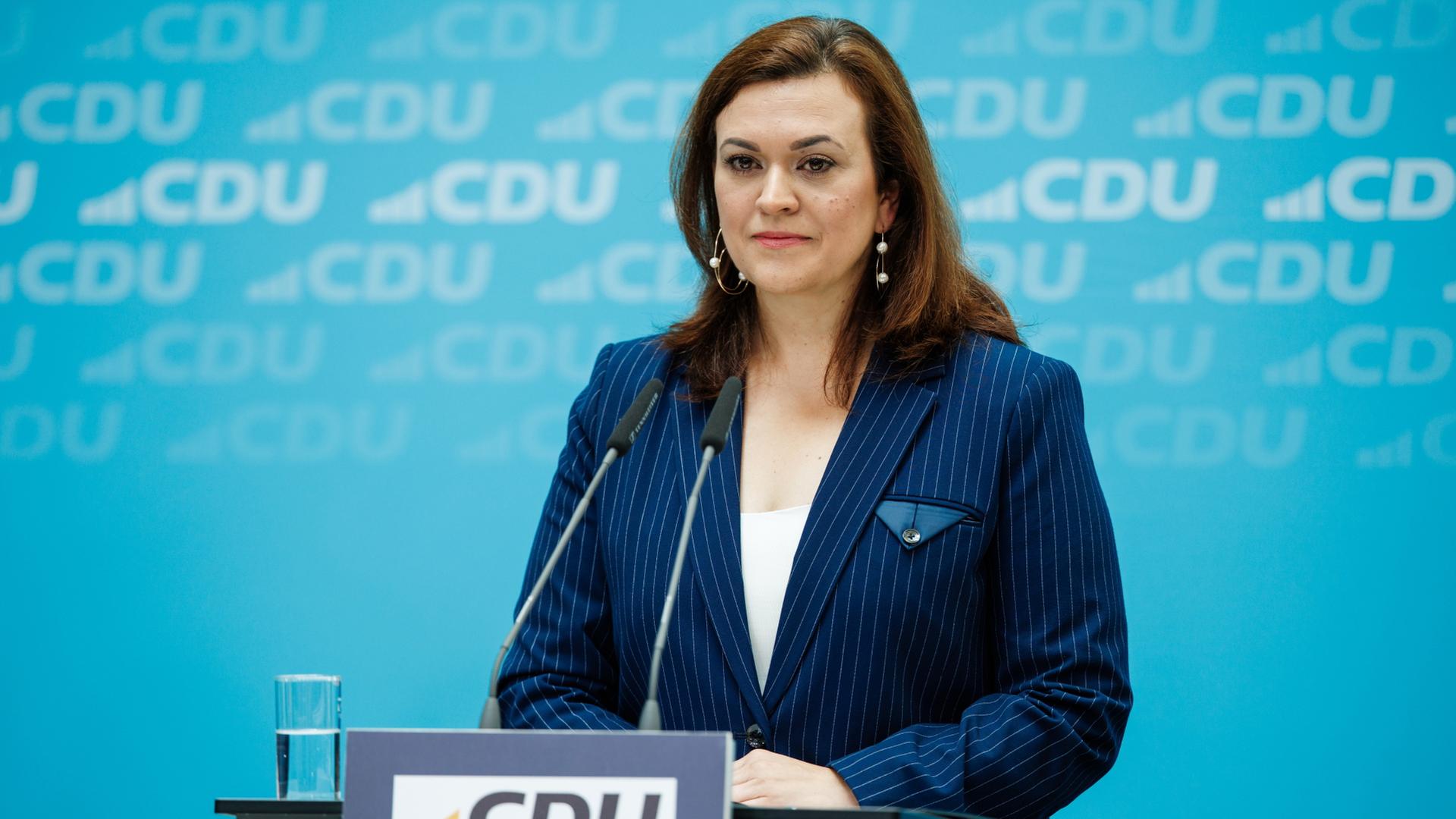
Four days after Chancellor Friedrich Merz announced swift relief measures in response to high fuel prices, CDU Secretary General Franziska Hoppermann has named concrete amounts for the first time. She said she considered "relief of around 21, 23, 25 cents" per litre to be "a tangible relief," speaking on the ZDF programme Maybrit Illner. "And that is what we will now be addressing at the beginning of October."
The next step, she said, would be to discuss the right approach with the federal states. Hoppermann, however, rejected the windfall tax on oil companies demanded by Finance Minister Lars Klingbeil (SPD). A windfall tax, even if introduced, "is not a single cent of relief for the people driving past those fuel prices of two euros fifty, three euros," Hoppermann criticised.
Within the black-red governing coalition, there is disagreement over how relief should be implemented. The Union has recently put forward proposals to reduce the energy tax or VAT on fuels. The Union also raised the idea of direct payments to people on low incomes.
The SPD favours a windfall tax on oil companies — that is, skimming off excess profits generated by high prices. Another proposal from within the SPD ranks: the introduction of a fuel price cap. Under this approach, binding maximum prices for petrol, diesel and heating oil could be set on the basis of price developments on international markets.
Reduction in Electricity Tax?
The ADAC motoring club and the skilled trades sector have also re-entered the debate, calling for a reduction in the electricity tax. This would ease the burden on private households while simultaneously creating an incentive to purchase electric vehicles, an ADAC spokeswoman told the Rheinische Post. Alongside a lack of charging infrastructure, the high purchase price is one reason why consumers are hesitant to switch to electric cars. Current subsidies for new vehicles merely expand the group of people who can afford such a car, she added.
Trades federation president Jörg Dittrich also advocated for a lower electricity tax as well as a reduction in non-wage labour costs. Political measures to lower fuel prices should only be used on a temporary basis at most, the head of the Central Association of German Trades (Zentralverband des Deutschen Handwerks) told the Redaktionsnetzwerk Deutschland (RND). The government must not shy away from addressing the underlying structural problems. When fuel prices are too high, people cancel expenses such as haircuts to offset the additional costs, which is immediately felt by domestic family-run businesses. Added to this are the burdens on companies with large vehicle fleets and high mileage.
Government Consultations Ongoing
According to a report by the portal Table.Briefings, representatives of the federal government and the states held a video conference yesterday evening to discuss possible avenues for relief. Participants reportedly included Chancellor Merz and Finance Minister Klingbeil, as well as Rhineland-Palatinate Minister President Gordon Schnieder (CDU) and Lower Saxony's state premier Olaf Lies (SPD).
Previously, SPD parliamentary group leader Matthias Miersch, Union parliamentary group leader Thorsten Frei and CSU regional group leader Alexander Hoffmann had joined a call with the rapporteurs to prepare possible solutions, it was further reported. Federal Economics Minister Katherina Reiche (CDU) did not take part in the talks, according to the report.