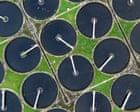
Water companies in the UK made more than £340m in revenue last year by pouring billions of litres of industrial and commercial wastewater into sewage treatment works that experts say are not designed to remove most chemicals, leaving pollutants to pass into rivers, seas and farmland.
Water companies are required by law to take industrial wastewater and issue permits called “trade-effluent consents” that allow businesses to send it to sewage works, though water companies can refuse applications.
However, no independent regulator oversees the trade-effluent process and there is no central register, so Watershed Investigations, the Guardian and the campaign group River Action compiled a database of 26,000 consents, providing the first ever national picture of the system.
The investigation found an annual total of 608bn litres of industrial wastewater entering sewage works from sites such as power stations, pharmaceutical plants, food factories, hospitals, abattoirs and waste facilities.
The permits are issued and enforced by the water companies themselves, with environmental regulators having no direct role. “It’s a bit of a black box,” one industry expert said.
Most sewage works only have biological treatment facilities, which are not designed to remove industrial chemicals, including flame retardants, Pfas, solvents and pharmaceuticals. Some permits on the database feature chemicals such as cyanide, chromium, cadmium and mercury. Watershed has mapped every sewage treatment works and the industrial companies permitted to send waste to each one.
Pollutants that survive treatment are discharged into rivers, lakes and seas as “treated effluent”, while those captured in sewage sludge are spread on farmland as fertiliser. The waste also adds to the overloading of sewer networks that triggers raw sewage spills, which have caused outrage, community protests and calls for the industry to be nationalised so that profits can be reinvested in improving the system rather than going to shareholders.
United Utilities made the most revenue from industrial waste last year, at £61.6m, followed by Yorkshire Water at £48.8m. However, these companies included revenues from tankered waste in their figures, while some others did not. Welsh Water, Scottish Water and Wessex Water said they routed commercial tankered waste through separate companies within their groups.
Thames Water has the largest volume of permitted industrial sewage, at 113bn litres, followed by United Utilities at 105bn litres and Severn Trent Water at 79bn litres.
Across the sector, revenues from receiving industrial and commercial wastewater have risen sharply in five years, with Anglian Water’s increasing by 62%.
The industry expert said water companies had “a financial incentive to accept far more toxic material than they should”.
The permit regime was very old and not fit for purpose, they added. “Currently the Environment Agency doesn’t know exactly how much of this waste is going into waterworks each year.”
Waste handlers also drive tankers carrying industrial effluents, landfill leachate and other liquid wastes to sewage works. An Environment Agency (EA) officer said landfill leachate was its “greatest concern” because of the harmful chemical cocktail it can contain.
Both the officer and the industry expert identified Davyhulme wastewater treatment works in Manchester, operated by United Utilities, and Avonmouth, operated by Wessex Water, as big receivers of tankered waste. “Carriers will drive [long distances] to dispose of their wastes here … You can see lines of tankers queueing outside Avonmouth,” the expert said.
Checks by water companies across the sector can involve taking a sample and carrying out basic pH tests, but these do not identify most contaminants, “and by the time you’ve identified [that] it had something nasty in it, it’s already gone”, the EA officer added.
But “ignorance is no defence”, said the officer. “They should be seeking sufficient information from the producer of that waste to satisfy themselves so they can treat it properly.”
The industry expert said the UK needed a dedicated liquid-waste treatment sector rather than relying on a “dilute and disperse” model.
Amy Fairman, the head of campaigns at River Action, said: “Industrial pollution must not become a lucrative business for water companies … Polluters must be held to account and made to pay, rather than passing the costs and consequences down the line.
“The public has a right to know what is being put into our sewage works and where those pollutants ultimately end up. The government has promised to clean up our rivers through the clean water bill – it must confront this hidden industrial wastewater trade and address the serious failures exposed by this investigation.”
“Water companies should never profit from pollution,” said a spokesperson for the Department for Environment, Food and Rural Affairs. “We know the water industry hasn’t been working in the public interest for far too long and that’s why we are reforming it, including how wastewater is disposed of.”
An EA spokesperson said the trade-effluent framework was “developed over 30 years ago”, before many of today’s concerns about Pfas were fully understood, and that it was working to improve how contaminants in wastewater were managed.
A spokesperson for the trade association Water UK said: “Water companies are legally obliged to accept trade effluent and charges are set by Ofwat. The Environment Agency sets the permit conditions, but they make no account of the fact that sewers are not designed to treat a range of toxic substances such as forever chemicals and mercury, which is still, sadly, used by many dentists.
“That’s why we have long called for the government to ban these toxic substances and to force the manufacturers to pay the costs of removing them from the environment.”
A United Utilities spokesperson said it had “strict consent and control processes” operating under “regulatory requirements designed to protect public health and the environment” and that it “assesses, monitors and treats wastewater”. It added that tankered waste, including landfill leachate, was accepted only at specifically permitted sites.
NI Water said applications involving “priority substances” were referred to the Northern Ireland Environment Agency, and dedicated teams sampled sewer and tanker effluent to “oversee compliance”.
Scottish Water said it assessed trade-effluent applications based on factors including sewer and treatment capacity, protection of infrastructure and staff, and compliance with environmental standards. All water companies included in this article were contacted for comment.
Companies can also discharge industrial wastewater directly into rivers and seas, but this is subject to permits issued by the environmental regulators.