Regime in Central America: Nicaragua's President Ortega Wants to Abolish Elections
Until now, the regime in Nicaragua maintained the appearance of elections, with presidential elections scheduled for next year. But there will be no more: never again, President Ortega has now declared.
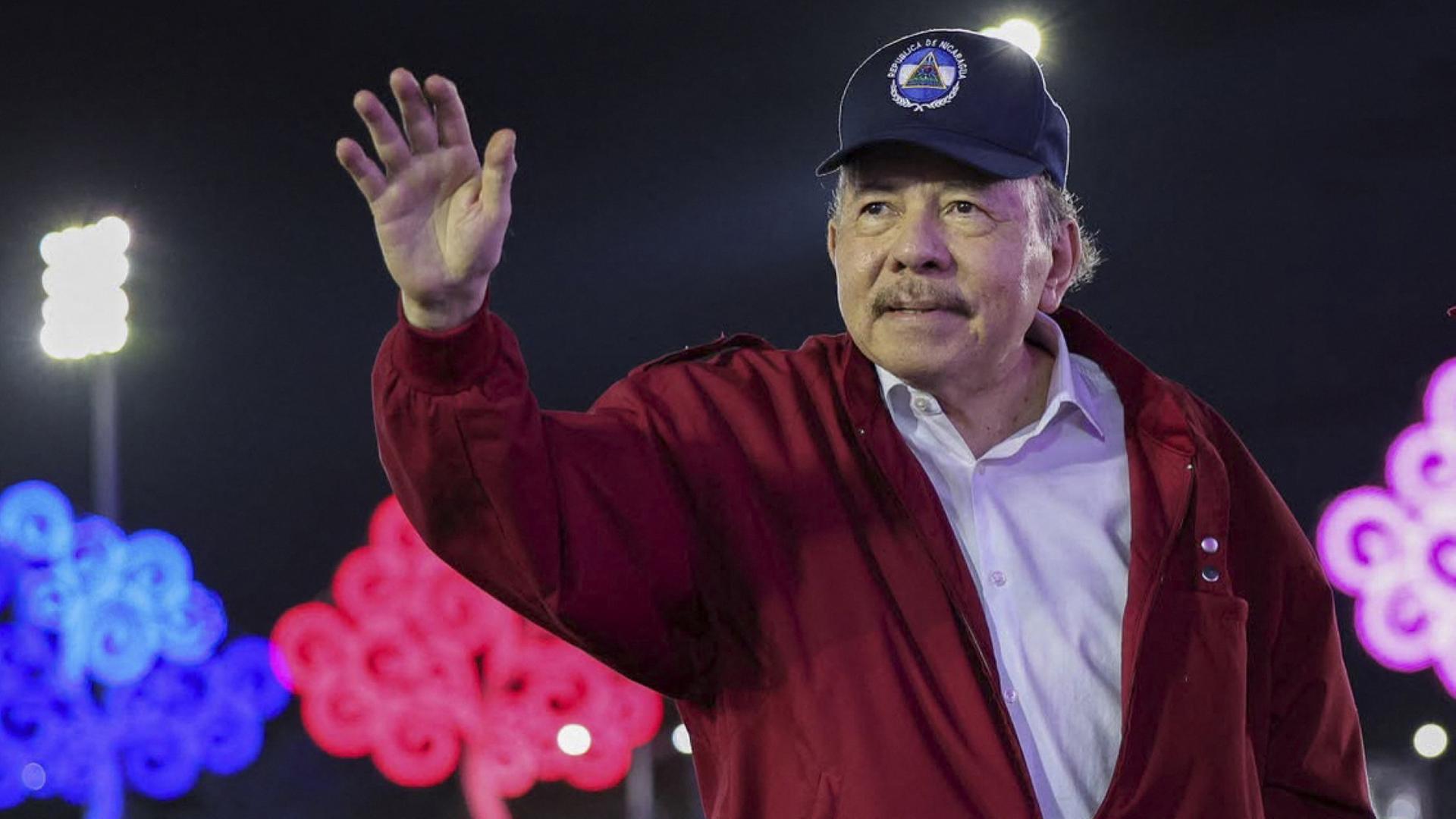
Daniel Ortega announces the country's future without elections on Sunday in Nicaragua's capital Managua before tens of thousands of Nicaraguans. They stand in rows — mobilized civil servants, teachers, and beneficiaries of his system — celebrating the 47th anniversary of the Sandinista Revolution.
"Don't think for a moment that we are living in peace just because there is no longer a war," says Ortega. "This is where history ends. Never again will the parties installed by the Yankees and Somozistas come to power."
Somozistas are the followers of dictator Anastasio Somoza. The Sandinistas under Daniel Ortega overthrew him on July 19, 1979. Ortega was internationally regarded as a radiant revolutionary figure. This celebration now commemorates that historically significant day. Ortega's promise back then: never again a dictatorship. His promise 47 years later: never again elections. "There will be no more elections, so that they cannot try to seize the government, to seize power."
Nearly 20 Years in Power
Nicaragua was not a democracy even before this. The long-ruling strongman has governed continuously for nearly 20 years, always with his wife Rosario Murillo at his side, who has been so-called Co-President for two years. Since the regime violently suppressed protests in 2018, 800,000 Nicaraguans have fled abroad to escape possible arrests, forced disappearances, and torture.
NGOs and the Catholic Church are banned, and the press is suppressed. Dora María Tellez also lives in exile — once a commander of the Revolution, she was eventually arrested by Ortega and expelled after nearly two years in prison.
For Tellez, the abolition of elections is a sign that Ortega continues to feel threatened: "Since 2006 there have been no free elections; Ortega has committed one act of electoral fraud after another, each bolder than the last. The announcement shows his tremendous fear. He no longer even trusts his own social base, not the people who work in his inner circle."
Could the United States Intervene?
As early as the 2021 elections, he had all rival candidates arrested. The establishment of their dictatorship has so far gone unpunished, even at the international level. The United States has long demanded free elections. U.S. Secretary of State Marco Rubio has now sharply criticized Ortega's announced plans.
The fact that the U.S. military this year first arrested Venezuela's long-ruling strongman Nicolás Maduro and that U.S. President Donald Trump is now isolating Cuba — this could intensify Ortega's persecution mania, estimates Tellez, who lives in exile: "There is also a rumor that there is great discontent within the army. Many police officers also disagree with being required to suppress citizens themselves. And the regime is afraid that it could turn out as it did in Venezuela, with civilians negotiating with the United States over the fate of the tyrants."
Meanwhile, Daniel Ortega, now 80 years old, has become physically severely weakened by a chronic illness. He repeatedly says incoherent things, forgets names, and has difficulty walking. His co-president Murillo, herself 75 years old, has significantly expanded her power. But with her tyrannical and impulsive manner, she has lost the base, according to Tellez's analysis. Because they missed the opportunity to pave the way for a democratic transition, they have no choice but to continue isolating themselves.