After Extensive Study: What Is Being Done About Racism in Public Authorities?
A study initiated by the Interior Ministry showed in February: racism is a structural problem in public authorities. Yet the publication was notably low-key. What follows now from the findings?
When Maria came to Germany from Mexico many years ago, she had a vision: she wanted to learn the language, study again, and find professional fulfillment. How difficult all of this would be, she had no idea at the time. Maria's real name is different and she does not wish to speak publicly about her experiences.
For example, about the fact that her qualifications were never recognized by a German authority. Or that once, when she was looking for a job, she was told: yes, there was something available — "exactly for people like you." What was meant was: for the unskilled.
Time and again she had the feeling that what she had learned in her home country was not good enough. And that this might have something to do with her origins — even though she has since become a German citizen. "No matter how much I know, how much I can do, it is not recognized here," she says.
Study: Racism Structurally Embedded in Authorities
That she is not alone in these experiences is shown by the study "Institutions and Racism" (InRa), published in February: authorities are dominated by the habit of initially perceiving certain "migrants as uneducated, unmotivated [...] and as 'different,'" it states. Accordingly, those affected are addressed in a condescending manner regarding their educational backgrounds.
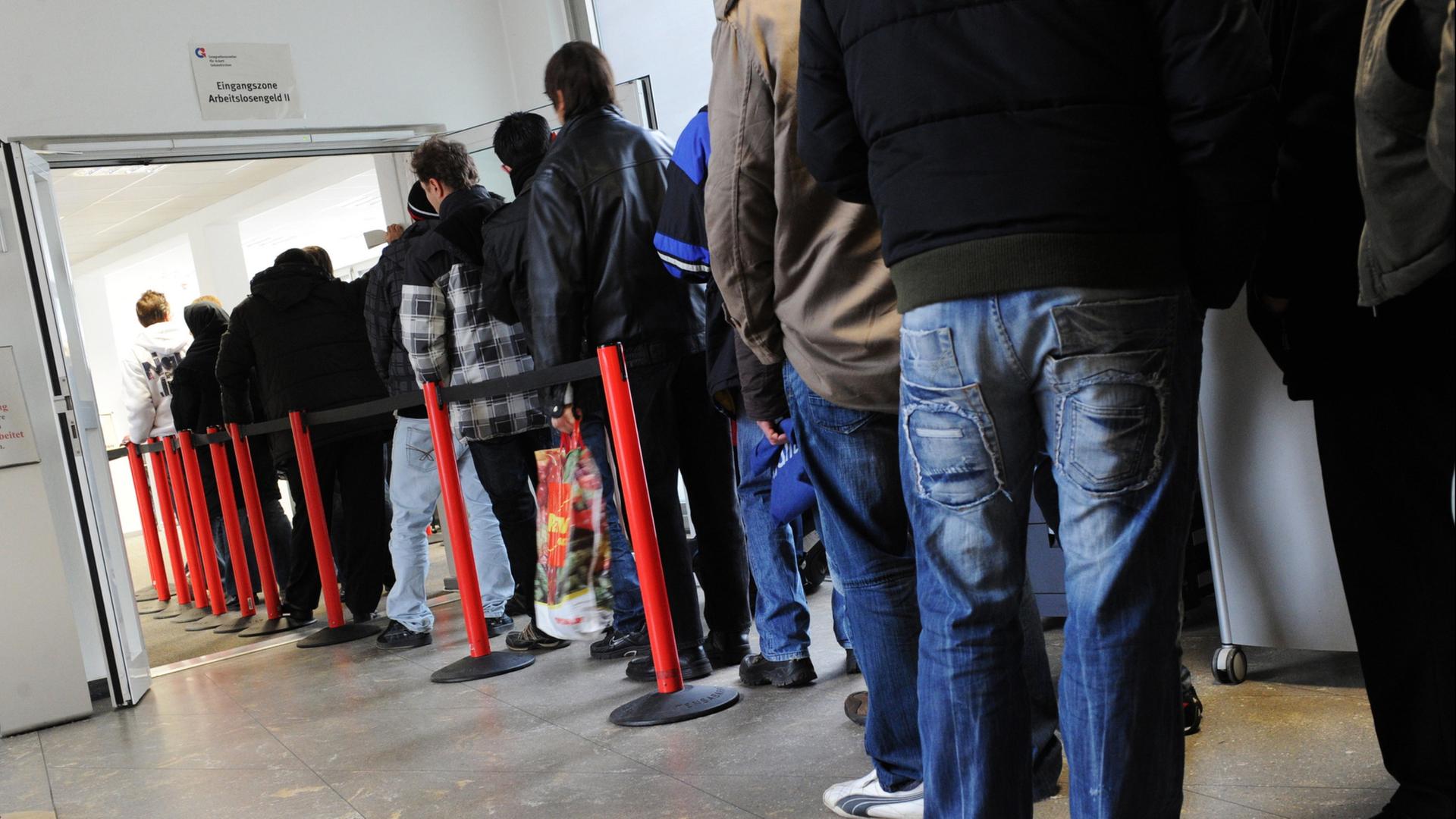
A central finding of the study is: racism is structurally embedded in German institutions. It occurs in all the authorities examined — in job centers, immigration offices, police, customs, the justice system, and public health and youth welfare offices. According to a survey of employees, authorities do not show a uniformly elevated level of ethnically discriminatory attitudes compared with the general population.
The racism often manifests not overtly, but in hidden ways: through stereotypes, microaggressions, disrespectful language, or unequal treatment in decisions and the provision of services. To counter this, the authors developed concrete proposals for action.
The study also advocates for greater diversity in public administration, recruitment and promotion procedures sensitive to discrimination, and stronger academic monitoring and evaluation of measures.
Publication Notably Restrained
At the Hessian District Assembly, for instance, the study was entirely unknown until HR made an inquiry. That is not entirely surprising. For the responsible Federal Interior Ministry under Alexander Dobrindt (CSU) presented the findings in a notably restrained manner. Instead of a press conference or a media release, there was only a notice on the website — under the "Brief News" section.
Project director Gert Pickel expressed disappointment: after the good cooperation at the technical level, the impression had forced itself upon him that "the leadership of the Ministry does not stand behind the findings of the scientific study."
For the study, scientists from ten research institutions collaborated on 23 sub-projects. Depending on the sub-project, quantitative and qualitative methods were employed, including employee surveys, interviews, ethnographic observations, and document and discourse analyses. Authorities at federal, state, and municipal levels were examined.
Job Center Draws Consequences
At the job center of the Hessian Main-Kinzig district, the findings of the study are being taken seriously, says board member Corinna Geßinger. "It naturally concerns us greatly and we are looking very closely at this topic." Since the refugee movement of 2015/16, the job center has relied on intercultural training for all employees and employs people with refugee experience who provide support with translations, applications, and consultations.
As a consequence of the InRa study, the center now intends to further improve communication in particular — for example through a website in plain language, more comprehensible official notices, and digital applications that can be completed in the respective mother tongue.
Geßinger also emphasizes, however, that the center's own advisory practice does not reflect the study's findings to the same degree. Complaints with a racist background are the exception. The only case she is aware of from her time in office turned out to be a communication problem. The impression of racist discrimination often arises when discretionary decisions are made. While the principle of treating identical cases identically applies — "but the cases are not always one-to-one identical," the board member says.
Interior Ministry Speaks of "Absolute Exceptions"
The Federal Interior Ministry (BMI) explains in response to an inquiry from HR that the results of the InRa study are being incorporated and discussed in the drafting of the National Action Plan against Racism. Results, however, are still pending.
The ministry also points to existing initiatives: measures against discriminatory behavior are "firmly embedded in the BMI and its area of responsibility. They begin during training and are continuously further developed," according to a spokesperson. These include, among other things, internal complaint offices as well as the Federal Anti-Discrimination Agency. At the Federal Office for Migration and Refugees, reporting channels are to be communicated more clearly in the future and external expertise is to be more strongly integrated.
At the same time, the BMI emphasizes that the study confirms the "vast majority" of employees carry out their duties professionally and that discrimination remains "the absolute exception."
Expert Views Complaints as an Opportunity
Christa Kaletsch of the German Society for Democracy Education advises and trains authorities in dealing with racism. She emphasizes that many people, due to their experiences — "rejection, trivialization, or in the worst case hostility or a reversal of perpetrator and victim" — do not dare or no longer see any point in making their stories public. Some are also unaware that the possibility of filing a complaint even exists.
She is convinced that the InRa study is a "landmark" investigation that absolutely must be engaged with. However, she does not currently see this attitude. "For our work, it would have been much better if we had had the same attitude as in 2020, when it was a matter of saying we need to address institutional racism."
It would be a good start, says the independent consultant, if complaints were understood not as an attack but as an opportunity to improve one's own work. The point is not to blanket-label employees as racists, but to question routines, laws and administrative processes that disadvantage people.
"Simply getting even better"
In recent years there has been progress in addressing institutional racism, says Kaletsch. For example, she can now openly use the term racism in training sessions. In the past, the "door would immediately close."
The study's recommendations for action are also being taken into account in various places, emphasizes study director Pickel: in the development of the National Action Plan against Racism, for example, or in processes at the state and municipal level. Nevertheless, overall one must "simply get even better," says consultant Kaletsch. Anything else would be unworthy of a democratic society.