Renowned Award: Körber Prize for Finnish Cell Researcher
Cell biologist Wickström investigates what happens in our cells under mechanical pressure — research that is also relevant to cancer studies. Today, the Finnish scientist receives this year's Körber Prize for European Science.
At the Max Planck Institute for Molecular Biomedicine in Münster, Sara Wickström's team researches the basic units of the human body: our cells — and what happens to them when they are pulled, compressed or squeezed. For this work, she is receiving this year's prestigious European Science Prize from the Körber Foundation. The award ceremony is taking place at Hamburg City Hall.
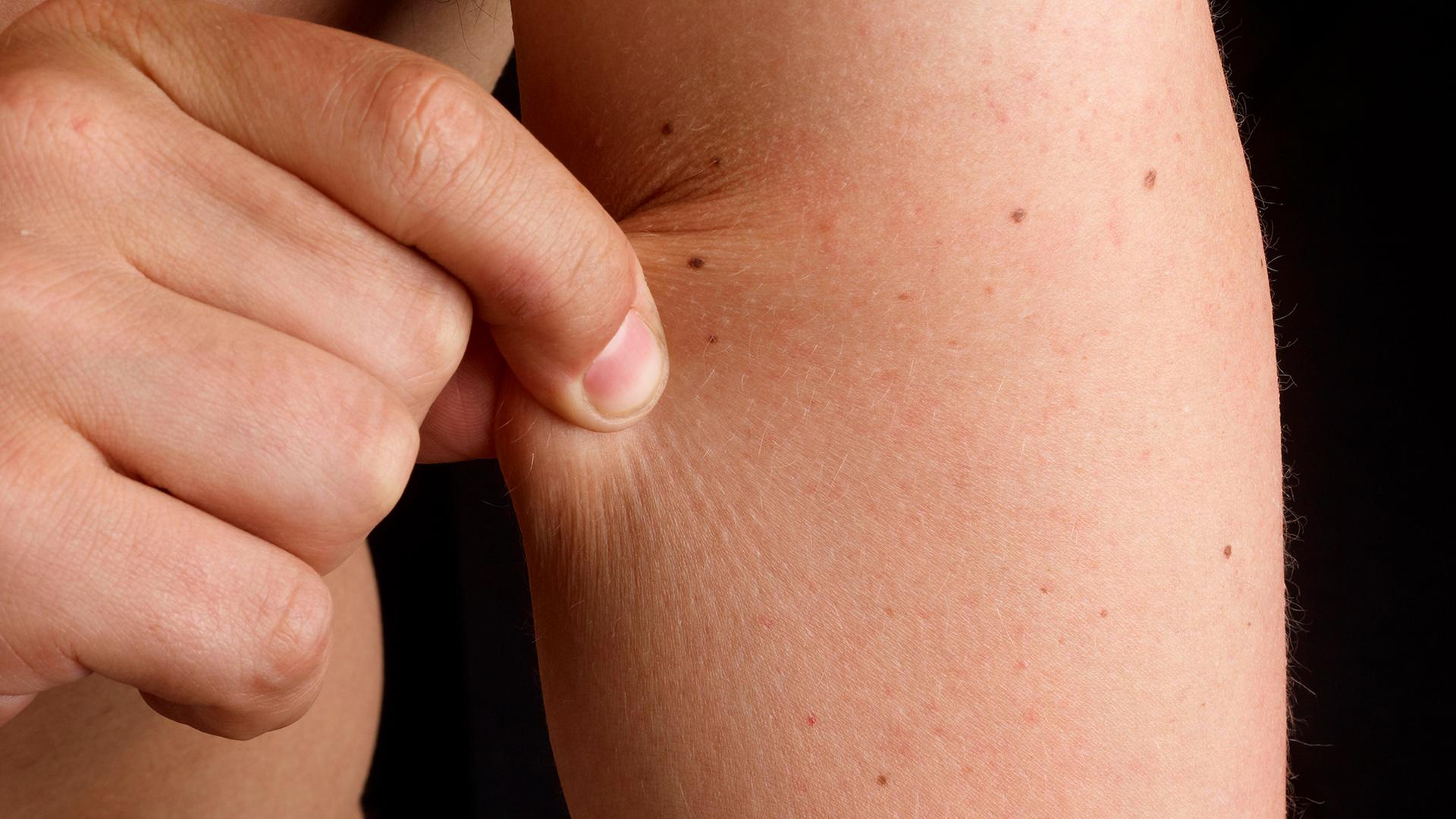
Cells being exposed to mechanical pressure, pulling or stretching happens constantly — and it leaves traces, as the cell biologist demonstrates using her own body: "One of my favourite examples is the skin on the elbow. It is completely different from the skin on the eyelid. The stress forces the tissue to change in order to withstand it."
Finnish-born Sara Wickström has been conducting research in Germany for more than 20 years. She originally studied medicine, and later biology as well. Through her work, she has laid the foundation for a new field of research: cell nucleus mechanobiology.
Finnish researcher Sara Wickström has been working in Germany for more than 20 years.
Pressure leads to profound changes in the genome
Wickström and her team have been able to show that when our cells are compressed or stretched, not only their outward appearance changes. A great deal also happens deep within them. Markers on the genome that indicate which parts of the DNA should be read and used change when cells are put under pressure. Different genes are read and utilised. The cell adapts — and more quickly than expected.
"There were two surprises in our discoveries: firstly, that these changes are so extensive. And secondly, how quickly it happens," says Sara Wickström. "Experts had assumed that genetic changes take days and that cells are reprogrammed slowly. But we were able to show that it happens within minutes," says the Körber Prize laureate.
Foundation for cancer research
Her findings are also relevant to cancer research: Wickström's team investigates, for example, how tissue changes when a tumour presses against it. The surrounding cells can stiffen. A better understanding of this process could prove important in the treatment of cancer patients.
"Sara Wickström has made a lasting impact on modern cell biology," says Edvard Moser, Nobel Prize laureate in Medicine and chair of the Körber Prize Committee for the Life Sciences. "Her work shows how physics and biology interact within the body and lays the groundwork for future advances in medicine."
Prize money for research into pathological scarring
Alongside her fundamental research, the trained physician always keeps practical applications in mind: "Most of the time I am more of a cell biologist than a physician," says Wickström. "But I often choose a perspective in which we view basic research in the context of human health and disease. Especially when we make a discovery, I immediately think about how it could benefit people."
For her research, Wickström is now receiving the Körber Prize for European Science. It comes with one million euros, which she can use for her research. The cell biologist and physician intends to use the prize money to investigate whether cells develop a "memory" for injuries and mechanical stress. In the long term, this could give rise to new approaches for preventing pathological scarring.