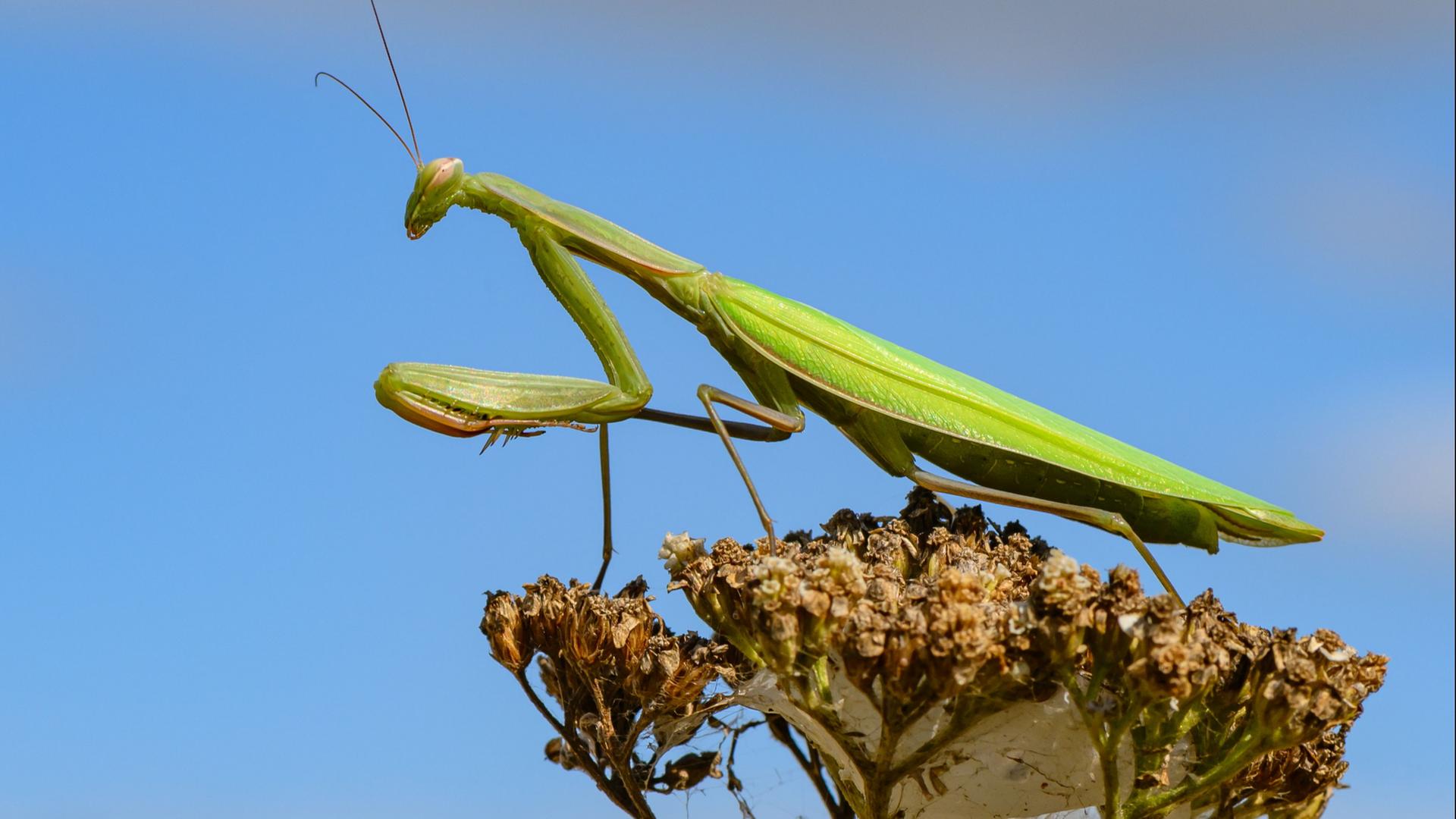
Consequence of Global Warming: Praying Mantis Spreads Across Germany
Long considered an exotic species in this country, the praying mantis has now spread rapidly – a consequence of climate change. It can be found primarily in two regions of Germany.
An unusually high number of praying mantises were recorded in Germany this summer. Since the beginning of July, more than 15,000 sightings of the exotic insect have been reported, according to the nature conservation organization NABU. That is significantly more than in the entire previous year.
NABU operates an online portal where citizens can report sightings. Due to the insect's distinctive appearance, even non-experts almost always identify it correctly: 99.9 percent of submitted photos are accurate.
"Climate Change the Decisive Factor"
For a long time, the praying mantis was only found at the Kaiserstuhl in southern Germany. It has since also been spotted along the Rhine. A separate population is spreading in an area between Berlin and Thuringia, according to NABU.
Warmer temperatures in Germany are benefiting the animals because the egg cases laid by females require warmth to develop, explained NABU expert Helge May. "Climate change is the decisive factor here."
Macabre and Lightning-Fast
The praying mantis is notorious for its seemingly macabre mating behavior: around one third of males die immediately after mating – because the female devours the smaller male.
The insect can lie in wait for its prey for hours. The strike lasts 50 to 60 milliseconds – making it roughly six times faster than the blink of a human eye. The praying mantis poses no danger to humans.