White Stork or Beethoven – Europeans Have a Say in New Banknote Design
The design of euro banknotes has aged. As a redesign approaches, the ECB is now inviting citizens to have their say. Voting is open until Monday.
Sometimes watercolour-like with just a few brushstrokes, sometimes true to life as if from a biology textbook, sometimes abstract with geometric shapes: Europeans can vote online on a total of ten design proposals for the future euro banknotes. The survey runs until next Monday (21 September 2026).
According to the European Central Bank, around nine million people have participated so far. "Considering that around 359 million people live in the eurozone, that might seem like a small number at first," says Nils Gerhardt, a banknote expert at the central bank. Nevertheless, he says it is a great success compared to similar surveys of this kind.
Famous faces or animals instead?
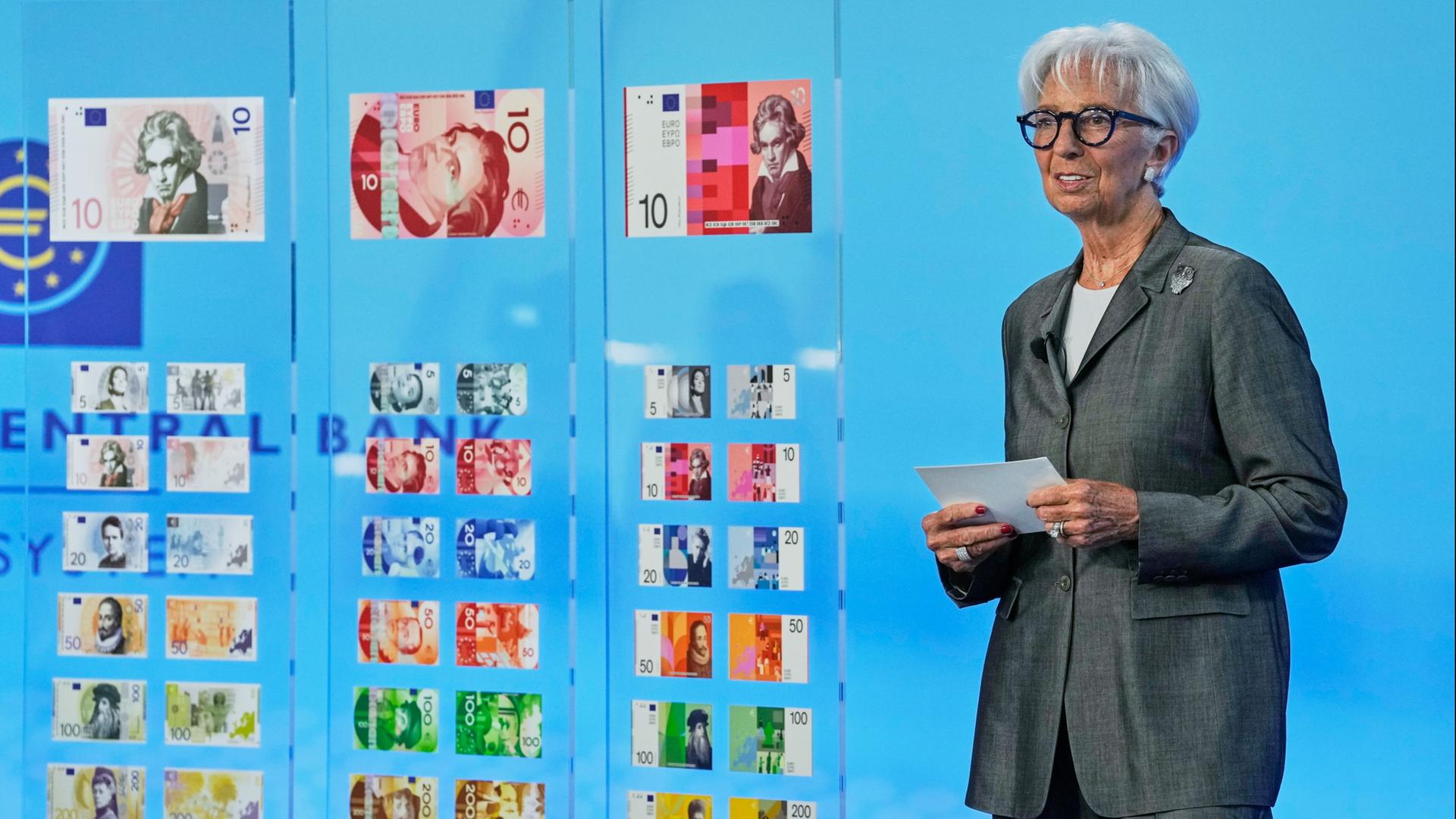
When the survey launched in July, the head of the central bank, Christine Lagarde, said that all the design proposals centred on two major overarching themes. One is nature – birds and rivers – and the other is Europe's culture, represented by European personalities.
"You can see important celebrities from European history on the banknotes, for example the scientist Marie Curie on the 20-euro note and the composer Ludwig van Beethoven on the 10-euro note," she explained at the presentation of the new banknotes at the time. Other notes featured birds typical of Europe, such as kingfishers and white storks.
One design proposal for the new 5-euro banknote features the opera singer Maria Callas.
Birds know no borders
Opinions are divided in Frankfurt's pedestrian zone about which banknotes are more attractive. Frankfurt tram driver Cem Kabakci would be pleased if the opera singer Maria Callas, for example, made it onto a banknote: "I think it's important that we introduce such personalities to our young people." Other passers-by are also in favour of notes "with faces," as they are accustomed to that from the Deutsche Mark banknotes.
The nature motifs also appeal to a number of people. One of them is Henry Knauber, a 30-year-old deep-sea biologist working at the Senckenberg Society in Frankfurt. "I prefer the proposals with the birds and rivers," says the animal lover: "Because those bird species genuinely exist across the whole of Europe, regardless of national borders."
Birds also feature in the new designs.
Abstract windows, gates and bridges
Many of these passers-by have already taken part in the survey. While some are genuinely enthusiastic about having a say in what their future money looks like, others would prefer to keep the old banknotes. Among them is Shirley Lauenburger, a fairground worker from Hanover who has a wallet stuffed full of notes. She has no idea what is currently depicted on them: "I'll have to check," says the 20-year-old with a laugh: "The banknotes have windows and gates on them."
The current euro banknotes feature windows, gates and bridges.
Windows, gates and bridges in the architectural styles of various epochs: that is the design of the old banknotes that have been in circulation since 2002. The images are entirely fictitious. The ECB deliberately avoided depicting specific buildings so as not to favour any one euro country.
Will individual countries now be favoured?
This neutrality may well be a thing of the past if celebrities are soon to appear on the new banknotes. Although banknote expert Gerhardt puts it in perspective: "With the painter and sculptor Leonardo da Vinci, we have a person who was born in Italy but whose influence extended far beyond it." The same applies to Marie Curie, who was born in Poland but is equally well known across Europe.
According to the ECB, these personalities are therefore symbolic of Europe. But what do birds have to do with it? "Birds and rivers know no borders," ECB President Lagarde said at the presentation of the new banknote designs in July: "They symbolise freedom and connectedness within Europe, including with nature."
The new €10 note could feature Ludwig van Beethoven.
Banknotes – now sometimes portrait format too
Not all Europeans can identify with this, however. Lela Kokir, a 48-year-old office worker from Frankfurt, is sceptical, for example. She also finds the design of some of the notes unusual in other respects. Not all of them are designed in landscape format as before, she believes, but rather in portrait format. "But I don't think something that has stood the test of time for so long should suddenly be turned on its side," says Kokir.
The central bank is thus experimenting with many aspects of the new money, while also seeking to improve certain security features. It intends to retain the colours and sizes of the notes, so the ten is set to remain red and the twenty blue, for instance.
The new notes are still years away
The outcome of the survey remains open. It will then be submitted to the ECB Governing Council, which will make a decision by the end of the year. However, it will be years before consumers can hold the new notes in their hands, the ECB says. It does not wish to commit to a specific year.
The background to this is that the first euro banknotes were issued in early 2002, making them almost a quarter of a century old. From the ECB's perspective, they have therefore aged considerably, and a new design is long overdue. The new notes are to replace the old banknotes gradually, while the latter will continue to remain legal tender throughout.