Anger in Venezuela: "You Built Garbage!"
Many Venezuelans will likely never be able to recover their relatives and friends from the earthquake rubble. The anger toward the government is all the greater for it. Faced with the catastrophe, many people are now daring to openly criticize the government.
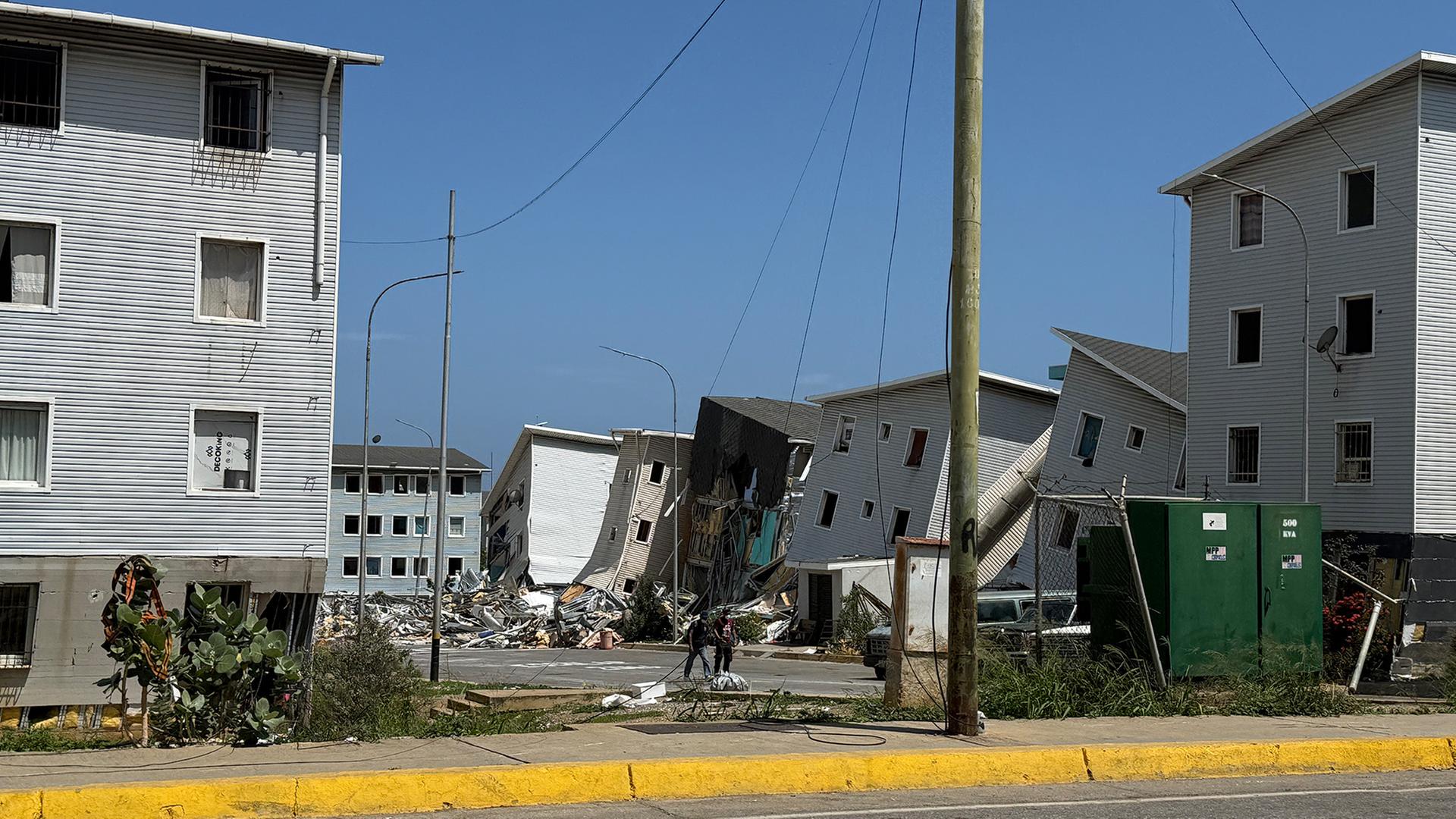
"They should all go to prison. You built garbage!" Damely Díaz cries out in fury. She stands before the rubble of her apartment block in Catia La Mar, beside herself with rage. She confronts Nicolás Maduro Guerra, a legislator for the ruling party and son of the former president Nicolás Maduro, who was ousted in January 2026 and has since been held in the United States. He was already sanctioned by the US in 2019 on allegations that he had enriched himself under his father's rule.
Díaz lost her daughter in the earthquake. With cameras rolling, she holds the government responsible for the building's collapse. The scene, captured by the Norwegian broadcaster TV2, is unusual for Venezuela: a government representative is publicly called to account — and does not contradict her.
When asked by the Norwegian reporter whether he could understand the mother's anger, Maduro Guerra replied: "Yes, I understand her. I support her."
Social Housing Under Scrutiny
The mother's rage is directed at the government's social housing program. Many people in the state of La Guaira, which was badly hit by the double earthquakes, had already lost their homes in the mudslides of 1999 and later moved into these state-built housing complexes. Now some of them are once again left with nothing. Katiuska Cartaya is among them: "They handed us these apartments after our houses were completely destroyed. From the very beginning there were problems with the construction."
To this day, the program is considered one of the most important social projects of Chavismo — the political movement founded by former president Hugo Chávez and then continued by his successor Nicolás Maduro. For years, however, there has been criticism of the construction quality, maintenance, and oversight. Whether individual buildings collapsed due to structural defects has not yet been definitively established.
The fact that many Misión Vivienda housing developments were severely damaged or collapsed is placing additional pressure on the government. Interim President Delcy Rodríguez has announced further measures for reconstruction. New earthquake-resistant homes are to be built in the state of La Guaira in partnership with private companies. According to the state news agency AVN, an export ban on construction materials has also been imposed, intended to keep available materials within the country for reconstruction.
Thousands Dead, Countless Missing
Nearly three weeks after the double earthquakes, the full scale of the catastrophe is becoming ever clearer. According to official figures, more than 5,000 people lost their lives. The government has provided no information on how many people remain missing. A privately maintained database estimates around 30,000 missing persons.
At the La Esperanza cemetery in La Guaira, white crosses stand in rows. Beneath many of them there is no name, only a QR code. It links to data on victims who have not yet been identified, and is intended to help relatives find their family members at a later stage. For many families, the search for certainty is still far from over.
The state-built houses were meant to alleviate the housing shortage in Catia La Mar as well. But due to poor construction, they could not withstand the devastating earthquake.
Fear of a Life in Temporary Shelters
While aid organizations distribute food, drinking water and hygiene products, additional emergency shelters are being set up in La Guaira. At the same time, concern is growing among those affected that the temporary accommodations could become a permanent solution. Numerous residential buildings have been deemed at risk of collapse following the earthquakes or require extensive renovation before they can be reoccupied.
In addition to food, people are in urgent need of psychological support, says Jonas Brenner of Caritas International. Many have suffered trauma. Aid will be needed for a long time to come. Some people have lost everything: family, their home, their livelihood.
The government, meanwhile, points to the deployment of military and rescue personnel and emphasizes that it acted swiftly. Residents, however, criticize the fact that assistance from their own government got off to a slow start. This criticism is also supported by investigations conducted by the non-governmental organization Transparencia Venezuela. It concludes that Venezuelan authorities mobilized their search and rescue forces significantly more slowly than in the aftermath of comparable earthquakes in Chile, China, or most recently in Turkey.
According to official figures that have been analyzed, approximately 83 percent of survivors in the first few days — that is, before international aid arrived — were saved through self-rescue or help from immediate neighbors.
Freedom remains a demand of many Venezuelans. But in the wake of the earthquake, the immediate priority is day-to-day survival — and the search for victims.
More Courage Born of Desperation
Katiuska Cartaya, too, is demanding answers. "There are still so many missing people. We are told they are in hospitals. But they cannot be found there. Where have these people gone? For us, that means: perhaps they are still buried under the rubble of their homes." Rubble that is now being cleared using heavy machinery.
The disaster has changed something in Cartaya. She says she now has more courage to speak up. "I have more strength now. We have a voice. We know our rights and we are fighting for them. We didn't do that before."