Flood of Lawsuits in Court: How Artificial Intelligence Is Slowing Down the Justice System
Social courts in particular are experiencing the phenomenon: an increasing number of plaintiffs are apparently using artificial intelligence to formulate their submissions. For the justice system, this means more work dealing with partly nonsensical legal briefs.
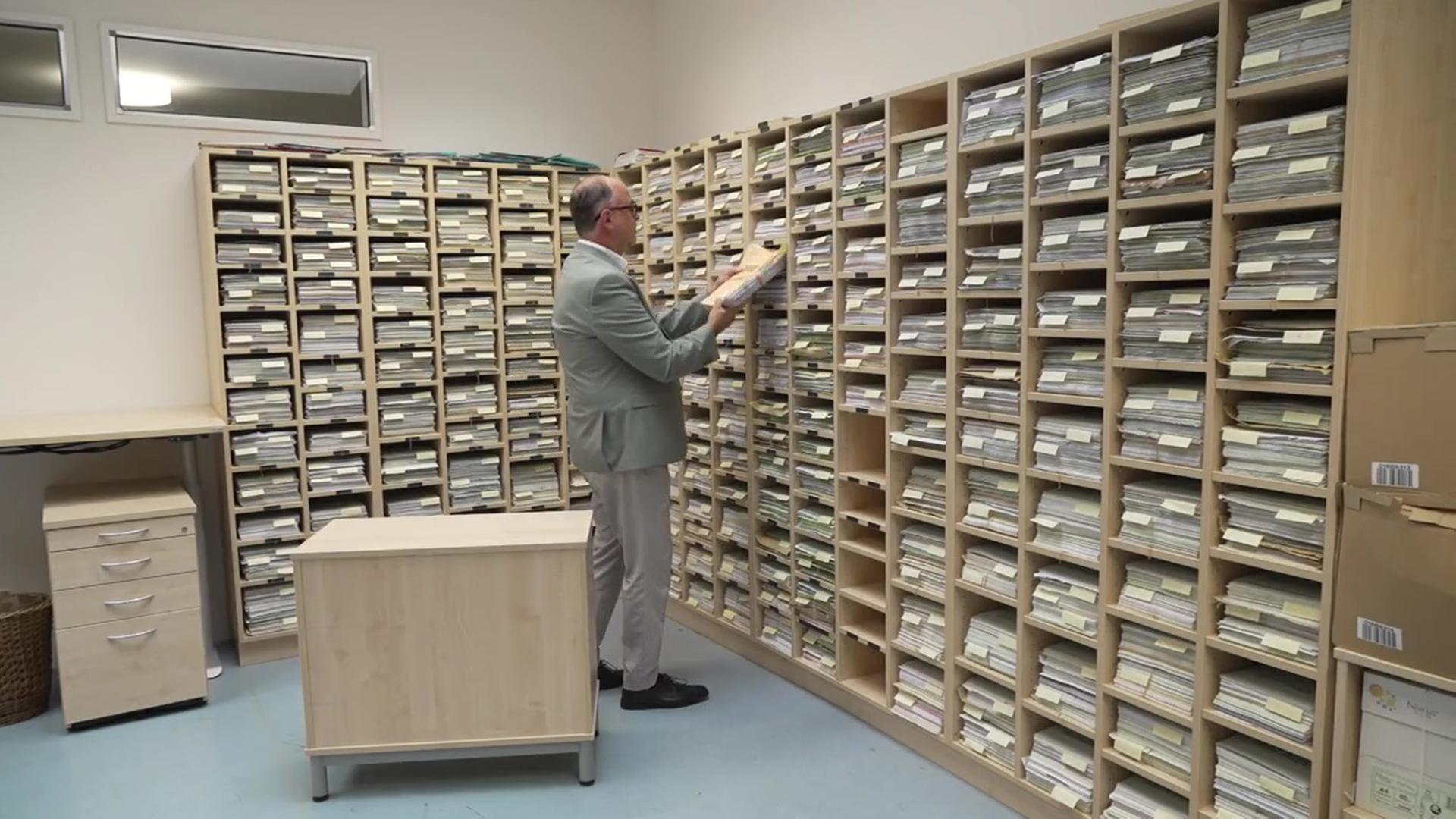
The case is not always as clear-cut as in the statement of claim that Bernd Mutschler, President of the State Social Court in Stuttgart, first pulls from the shelf. The very first sentence of the document gives pause: "Thank you so much for your trust, I am happy to prepare everything individually for you," it reads. Here, the plaintiff apparently forgot to delete their dialogue with the AI from the text.
One might smile at this — Social Court Judge Mutschler does so too. But the matter also has a very serious side. Similar passages keep appearing abruptly throughout the statement of claim. And the document is more than 300 pages long in total. "The facts of the case could have been set out in five pages," says the judge. Knowing that AI was used brings no relief. "We still have to work through it in full, and the effort involved is often immense."
Flood of Lawsuits at the Social Courts
In other cases, Mutschler has only circumstantial evidence that AI played a role in drafting the texts. One indicator is the excessive length of the documents. Another: the number of expedited proceedings relating to social welfare, citizen's income or basic income support at the social courts in Baden-Württemberg has more than doubled since the beginning of 2026 compared to the previous year. Nationwide, the increase stands at 47 percent. Administrative courts report similar developments.
"My father gave me a loan, and as a result the job centre reduced my payments — what can I do about it?" In response to an illustrative question like this, artificial intelligence initially offers practical advice. On request, however, it also produces letters to the court that appear well-formulated at first glance. It recommends expedited proceedings too readily, for example in cases involving the continued payment of state benefits, says Mutschler — even when the requirements for such proceedings are not met at all.
"The Essential Is Lost in the Inessential"
It is the expedited proceedings that put his colleagues under particular pressure. Frank Seeberger is one of the social court judges in the building. He says it makes sense that plaintiffs turn to AI for help in social court cases — because there is no obligation to be represented by a lawyer. For him, however, the workload has increased significantly as a result. Above all because the texts have become much longer. Moreover, this is a development that does not even help the plaintiffs themselves, he warns. "Because the essential is lost in the inessential. The things we need to address promptly are buried in the mass of text."
Seeberger often reads through many pages of general information. And when things become specific — for example when decisions of other courts are cited — they frequently have nothing to do with the case at hand. "Because the AI, as far as we can tell, simply lacks legal competence," he says. "A false sense of security is created, which may then lower the threshold for going to court."
Mandatory Legal Representation as a Remedy Against the AI Flood?
That people can go to court without too many inhibitions, that they can access the justice system with a low threshold – that is actually desirable. Because of the AI flood, however, judges in Stuttgart are hoping for stricter rules. One idea: upper limits on the length of documents. "Or perhaps one must also introduce a mandatory representation by lawyers, which does not yet exist in our system," suggests court president Mutschler.
First, however, it will not be possible to manage without more staff. At the end of the year, the social courts in Baden-Württemberg will be hiring new judges due to the flood of lawsuits. "We are in a comparatively fortunate situation," says Mutschler. This will not be possible everywhere.